



Transportation infrastructure: Making a federal case for local power
From the Crenshaw/LAX Transit Corridor project to the Regional Connector Transit Corridor to a 10-mile P3 tunnel through the Sepulveda Pass, the force behind these projects is local.

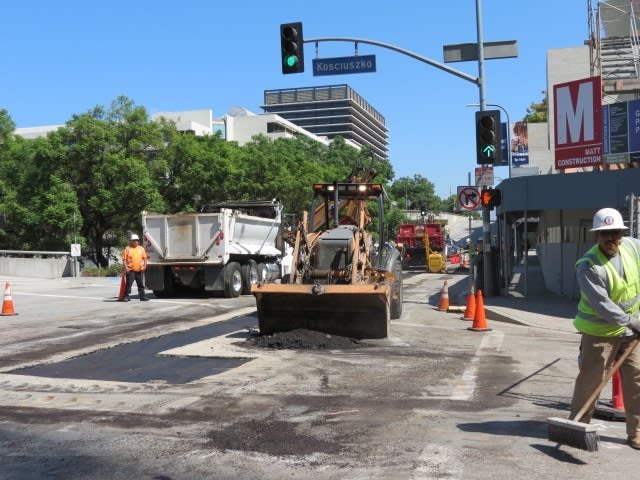
Repaving of Hope Street near new station (September 2013).
Repaving of Hope Street near new station (September 2013).
By Arthur Schurr
Ezra Pound said, “All great art is born of the metropolis.” Without knowing it, Pound described what could be the most profound trend in both transportation and urban planning.
Art takes many forms. But what is happening in cities and metropolitan regions around the U.S. is definitely as much art as it is politics, government, finance, transportation, and science.
“A revolution is stirring in America. Like all great revolutions, this one starts with a simple but profound truth: Cities and metropolitan areas are the engines of economic prosperity and social transformation in the United States.” With that as its launching point, Bruce Katz’s "The Metropolitan Revolution: How Cities and Metros Are Fixing Our Broken Politics and Fragile Economy" details how cities and metropolitan regions are redefining the urban landscape, transportation funding mechanisms, federal government involvement, and the future.
Katz and co-author Jennifer Bradley consider Los Angeles no small player in this process. In an interview for this article, Katz explained the critical role Los Angeles is playing in this revolution.
“What is happening in Los Angeles is emblematic of the new way that leadership plays out in the U.S. I’m talking about the packaging and execution of Measure R, the building of a modern, state-of-the-art transit system in Los Angeles primarily financed by local resources. For a long time we only thought of transportation and transit in a very narrow way. The way in which Measure R was sold and is being implemented really reminds us of the comprehensive impact and possibilities of transit and transport.
“What we talk about in the book is the smart federalism that has played out after Measure R was adapted. The ability of Los Angeles, together with a network of other cities and metropolitan areas, to go to the federal government and advocate collectively for innovative financing that would allow Los Angeles to accelerate the construction of transit was obviously a hard thing to do for cities. But it shows how when the federal government acts in the service of metro innovation, we finally get the federal government we need and frankly we should demand in this century.”
Metro CEO Art Leahy agrees.
“We’re redesigning the urban fabric of Los Angeles. We’re in development with 27 major capital projects. In addition, we’re looking at 3 or 4 major P3 projects. And one of the best things is that the board [Metro Board of Directors] wants us to develop and implement these projects. They want us to experiment and innovate, to advance projects as quickly as possible. We also enjoy a very high level of public support. The public has given us a lot of money and they expect results.”
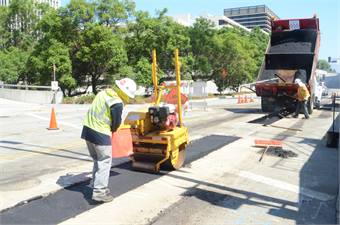
From the Crenshaw/LAX Transit Corridor project to the Regional Connector Transit Corridor to a 10-mile P3 tunnel through the Sepulveda Pass to a P3 train project in the north of LA County, the varied projects Leahy speaks of are proof positive of Katz’s theory. Though some federal monies are involved, the force behind these projects is local. That is a fundamental change in the way transportation projects have traditionally been realized.
WTS-LA President Lynda Bybee adds, “We’re not the only self-help county. You’re seeing more transportation measures going on the ballot nationwide. Locally, voters appreciate what it means to tax themselves to improve their mobility and quality of life. The truth is there is only a discrete amount of federal funding available for infrastructure. So it makes abundant sense to invest in as much local control as possible for projects and funding. If we go to the federal government with a project and the support of local taxpayers in terms of funding, that makes us a more attractive partner for the federal government. That’s what we’re looking at with our America Fast Forward program.”
As Bybee suggests, Los Angeles is not the only jurisdiction turning the traditional funding model on its head. Entities around the country are finding it a compelling model as well.
“Fundamentally, the way infrastructure has been delivered has been forever changed,” adds AECOM vice president Diana Mendes. “But this is all very much a lesson in learning to apportion risk. Right now, we’re in a period of true innovation, where people are crafting new approaches. It’s a time of experimentation, and that’s pretty exciting. Look, we can’t build our way out of congestion. So we need to use all of the tools we have in our toolbox. The overall message has become pretty clear: don’t wait for federal direction. Get out ahead of that on your own.”
CH2M Hill International Division President Jacqueline Hinman sees the new paradigm as a natural outgrowth of America’s evolving demographics.
“Local entities conceiving and implementing major infrastructure projects is fantastic for several reasons. As major population centers get denser, the need for congestion relief and ease of mobility becomes more pressing. Cities know they need smart transportation infrastructure planning and development because they have a direct and tremendous impact on quality of life. Cities like Los Angeles understand this, especially when you consider the popular support for Measure R. And I don’t really see any downside of doing this. Smart transport and infrastructure planning make good cities great and great cities even better. And this is a very effective way to ensure optimum planning and implementation.”
“The transportation story of Los Angeles plays out on many different levels," explains Katz. "I think Los Angeles is at the vanguard of a new kind of federalism in the U.S. where metros lead and ultimately the federal government follows.”
Arthur Schurr is a New York-based freelance writer whose articles on transportation infrastructure appear frequently in national magazines.
The ARTI of the Deal: Illustrating Why Local Can Be Better
Think globally; initiate locally. With that as doctrine, Metro and the California Department of Transportation (Caltrans) have created the Accelerated Regional Transportation Improvements (ARTI) project, a prime illustration of the growing movement of locally initiated and funded major infrastructure projects.
“The ARTI is an excellent example of how transportation is being transformed through innovation measures propelled at the local level. This project never would happen—never would have been conceived—except at the local level,” explains Fredric W. Kessler, a partner at Nossaman, LLP, a Los Angeles-based national law firm with expertise in alternative delivery, particularly public-private partnerships (P3). “ARTI is a product of Metro’s P3 program, drawn from a number of different elements in their long-range transportation plan. It’s a new way to bring them all together and package them to improve the efficiency of financing, overall cost, the use of different local sources of financing, and to accelerate project delivery by 20 years.”
The $725 million ARTI project will be procured as an availability payment P3, a P3 where a public entity compensates a private entity based on achieving particular project milestones and keeping the facility up to operating and maintenance performance standards. A combination of several smaller projects, the ARTI includes the resurfacing of the general-purpose lanes and the addition of two managed lanes for approximately 10 miles of the I-5 north in Los Angeles County, the expansion of the SR-71 gap connector in Pomona, and the construction of several sound walls. By grouping these projects together in a P3 procurement, Metro looks to improve significantly the benefit-to-cost ratio through economies of scale. But the procurement choice saves more than money. Had Metro pursued these projects traditionally, they could not have been completed until 2040. With the P3 methodology, the projects can be built and available for public use as early as 2019. Kessler sees ARTI as a bellwether for the nation.
“The federal government is not the impetus or funding source for moving these projects forward. Most of the money for ARTI is local money: Measure R, Proposition C, a little bit of Regional Surface Transportation Program funds, and some Congestion Mitigation Air Quality Management money. There is also tolling of the I-5 HOT lanes, which is critical to the financing package. But even if there is a little federal money, as there is in ARTI, that invokes an entire overlay of federal laws and regulations on procurement, contract document elements, and certain approval rights over the whole project.
“One of the things we’re starting to see because of this change in the sources of funding is a push to remove the federal regulatory overlay when the majority of funding on a project is non-federal, like ARTI. Tolling faces a similar federal issue. In general, federal law prohibits tolling of interstates or any other highways funded with federal gas taxes. MAP-21 introduced a number of significant exceptions to this tolling ban on federally funded projects. And that makes sense. Tolling is a quintessentially state and local decision. Local users pay the bulk of tolls. So political accountability should be at the state and local levels. Many want to see federal law further changed to remove all federal controls over tolling, other than requirements to use the tolls for transportation purposes, and leave this decision to state and local governments. This is where the money is coming from for many projects, particularly here in Los Angeles. So the movement to initiate and fund things locally is having growing national effects.”
More Bus

New York MTA Plans Largest Bus Fleet Upgrade in More Than a Decade
The agency is seeking manufacturers for 650 new CNG buses to replace aging vehicles, improve reliability, and advance its broader fleet modernization strategy.
Read More →
Building a Flexible Path to Transit Electrification
John Hroncich discusses BAE Systems’ modular and scalable approach, lessons learned from decades of real-world operations, and how agencies can identify electrification strategies that fit their fleets.
Read More →
Bus Tech Talk: Keeping Transit Technicians Ahead of the Technology Curve
LA Metro’s Obed Mejia discusses technician training, evolving maintenance technology, fleet replacement, and strategies for getting the most out of today’s transit fleets.
Read More →
Biz Briefs: RIPTA Unveils New Frontrunners, Clevland RTA Adds New Siemens, and More
In METRO's latest installment, we take a look at recent news from Siemens, Prevost, Dodge, and more partnerships making headlines across the transportation sector.
Read More →
People Movement: Holly Arnold Joins Transdev and More
In this edition, we also cover recent appointments and announcements at Pace, CamTran, MCI, and more, showcasing the individuals helping to shape the future of transportation.
Read More →
The High Cost of Transit Buses: Industry Leaders Look to Procurement Reform
Transit leaders and policymakers examine how standardized bus designs, streamlined procurement, and predictable funding could help agencies stretch budgets and deliver better service.
Read More →
The Business Voice Behind Public Transportation
As chair of APTA’s Business Members Board of Governors, Ray Melleady explains how more than 850 business members are partnering with transit agencies to advance funding, innovation, and industry-wide collaboration.
Read More →
From Surviving to Thriving: Building Stronger Transportation Organizations
Bus Business Consultants founder Brian Dickson shares lessons on leadership, organizational health, and creating options for long-term success in a changing transportation industry.
Read More →
Finding the ‘Happy Medium’: Optimizing Maintenance Without Sacrificing Reliability
The key to maintenance optimization isn’t doing less work—it’s doing the right work at the right time on the right assets.
Read More →
LA Metro, City of West Hollywood, and Partners Advance Smarter Bus Lane Enforcement
The award-winning partnership combines AI-powered detection with human oversight to improve bus reliability, accessibility, and enforcement efficiency.
Read More →