



TriMet kicks off light rail bridge construction
Will be the first cable-stayed bridge for the region, extending 1,720 feet over the Willamette River. It is the first of its kind, carrying light rail, buses, bikes, pedestrians and a future Portland Streetcar extension, but no private vehicles.

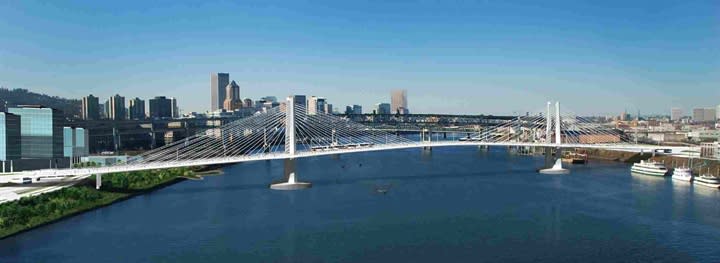
The light rail bridge will be the first cable-stayed bridge for the region, extending 1,720 feet (.326 miles) over the Willamette River. It is the first of its kind, carrying light rail, buses, bikes, pedestrians and a future Portland Streetcar extension, but no private vehicles.
[IMAGE]TriMet-Portland-Milwaukie-light-rail-bridge-2.jpg[/IMAGE]Last week, after nearly a decade of planning and community outreach, TriMet and project partners celebrated the start of construction on the Portland-Milwaukie Light Rail Bridge. The bridge is the first to be built over the Willamette River in more than 40 years.
It is also the first of its kind, with light rail, buses, a future Portland Streetcar and wide bike and pedestrian paths — and no private vehicles.
The Portland-Milwaukie Light Rail Project (PMLR) is the agency's sixth MAX construction project and will expand the rail system to 60 miles.
"The bridge and the overall project will link east and west, improve and expand transit, and most importantly, create up to 14,000 jobs when we most need them," said TriMet GM Neil McFarlane.
The PMLR project is the second MAX extension into Clackamas County after the MAX Green Line opened in 2009.
The light rail bridge will be the first cable-stayed bridge for the region, extending 1,720 feet (.326 miles) over the Willamette River. It is the first of its kind, carrying light rail, buses, bikes, pedestrians and a future Portland Streetcar extension, but no private vehicles.
The 7.3-mile project is the region's sixth MAX construction project to be built and extends from the terminus of the MAX Green and Yellow lines at Portland State University to South Waterfront, SE Portland, Milwaukie and Park Avenue in Clackamas County.
The project includes 10 stations. It will create up to 14,000 direct and indirect jobs and generate up to $573 million in personal earnings. Federal funds will pay for half of the $1.49 billion project; state and local partners are funding the balance. TriMet's share is less than 5 percent of the project budget and will not be needed until FY2013. The line is set to open in September 2015.
The overall project is still in the Final Design phase. The Federal Transit Administration has approved early construction work on the bridge, as construction in the Willamette River is limited due to migrating fish. The "fish window" allows in-river work from July 1 through October 31 each year.
Project partners include Clackamas County, Oregon Metro, City of Milwaukie, Multnomah County, City of Oregon City, Oregon Department of Transportation, City of Portland, Portland Development Commission and TriMet.
More Bus

New York MTA Plans Largest Bus Fleet Upgrade in More Than a Decade
The agency is seeking manufacturers for 650 new CNG buses to replace aging vehicles, improve reliability, and advance its broader fleet modernization strategy.
Read More →
Building a Flexible Path to Transit Electrification
John Hroncich discusses BAE Systems’ modular and scalable approach, lessons learned from decades of real-world operations, and how agencies can identify electrification strategies that fit their fleets.
Read More →
Bus Tech Talk: Keeping Transit Technicians Ahead of the Technology Curve
LA Metro’s Obed Mejia discusses technician training, evolving maintenance technology, fleet replacement, and strategies for getting the most out of today’s transit fleets.
Read More →
Biz Briefs: RIPTA Unveils New Frontrunners, Clevland RTA Adds New Siemens, and More
In METRO's latest installment, we take a look at recent news from Siemens, Prevost, Dodge, and more partnerships making headlines across the transportation sector.
Read More →
People Movement: Holly Arnold Joins Transdev and More
In this edition, we also cover recent appointments and announcements at Pace, CamTran, MCI, and more, showcasing the individuals helping to shape the future of transportation.
Read More →
The High Cost of Transit Buses: Industry Leaders Look to Procurement Reform
Transit leaders and policymakers examine how standardized bus designs, streamlined procurement, and predictable funding could help agencies stretch budgets and deliver better service.
Read More →
The Business Voice Behind Public Transportation
As chair of APTA’s Business Members Board of Governors, Ray Melleady explains how more than 850 business members are partnering with transit agencies to advance funding, innovation, and industry-wide collaboration.
Read More →
From Surviving to Thriving: Building Stronger Transportation Organizations
Bus Business Consultants founder Brian Dickson shares lessons on leadership, organizational health, and creating options for long-term success in a changing transportation industry.
Read More →
Finding the ‘Happy Medium’: Optimizing Maintenance Without Sacrificing Reliability
The key to maintenance optimization isn’t doing less work—it’s doing the right work at the right time on the right assets.
Read More →
LA Metro, City of West Hollywood, and Partners Advance Smarter Bus Lane Enforcement
The award-winning partnership combines AI-powered detection with human oversight to improve bus reliability, accessibility, and enforcement efficiency.
Read More →