



Related: TriMet Proposes Service Improvements, Debuts FX-Division
TriMet Reaches New Milestone as Buses Now Run on Cleaner-Burning Renewable Diesel
TriMet celebrated the shift to a cleaner burning fuel on Dec. 2, with General Manager Sam Desue Jr. and Oregon Sen. Michael Dembrow.
by Staff
December 3, 20212 min to read
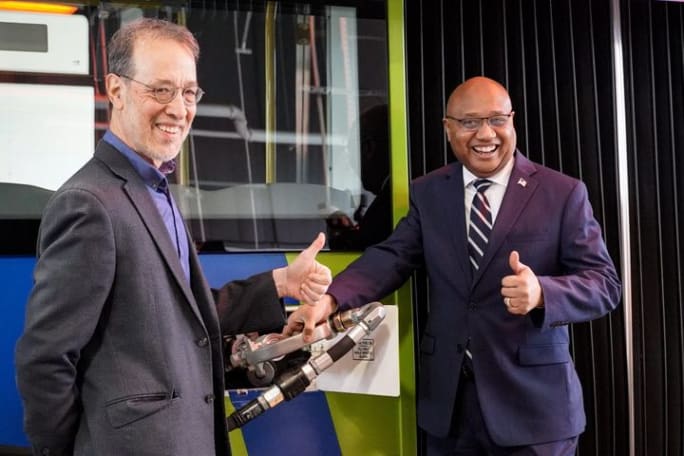
General Manager Sam Desue Jr. and Oregon State Sen. Michael Dembrow give a thumbs up after fueling a TriMet bus with renewable diesel.
Photo: TriMet
TriMet announced all of its buses running on routes throughout the tri-county Portland metro area will be powered by renewable diesel. TriMet is using a blend of 99% renewable diesel and 1% petroleum. The change in fuels will reduce the carbon dioxide equivalent emissions coming from an individual bus by nearly 99%.
When factoring in the upstream emissions of making and delivering the R99 to TriMet’s facilities, the move to R99 will lower the greenhouse gas emissions from TriMet’s fixed-route bus fleet by about 61% compared to the biodiesel blend we had been using.
“Whether riding on a TriMet bus, driving behind it or walking or biking nearby, you’ll notice a big difference with our buses now running on cleaner-burning renewable diesel,” said Sam Desue Jr., TriMet GM. “As Oregon’s largest consumer of diesel before today, we’re not only lowering TriMet’s greenhouse gas emissions, we’re leading the state’s transportation industry toward a cleaner air future right now.”
TriMet’s switch to a renewable diesel blend is combined with its switch to renewable electricity in June 2021. The combined efforts have reduced the company's carbon dioxide equivalent emissions by 63% in six months.
TriMet said it expects to avoid 149 million pounds of greenhouse gas emissions every year, which is the equivalent of taking 14,693 cars off the road.
“For Oregon to step up, be a model, and convince the rest of the nation to join the fight against climate change, we need to get serious about reducing our transportation emissions, the largest source of emissions in this state,” said Michael Dembrow, Oregon State Sen. “To do that, we need more people to be using transit, and we need to make sure that the energy used to run those buses and trains are coming from renewable sources. By switching to renewable electricity and renewable, green diesel, TriMet is making a huge difference in moving us forward. I’m so proud of this decision.”
The renewable diesel is chemically identical to petroleum, but it contains nearly no fossil carbon and performs better in cold air. It is made from 100% renewable and sustainable resources like natural fats, vegetable oils, and greases.
TriMet said it plans to add 24 more of these zero-emissions bus in our fiscal year 2024 that begins July 2023.
More Zero Emissions
Ohio’s METRO RTA Turns Electric Buses into Mobile Power Sources at PorchROKR
See how three Gillig battery-electric buses powered festival stages while the agency’s new Park & Ride service carried approximately 1,000 attendees, demonstrating another potential use for transit agencies’ electric fleets.
Read More →
CALSTART and Forth Combine to Form Catalyst Mobility
The new name represents a renewed vision for the nonprofit focused on advancing clean, equitable, and affordable transportation solutions that move people and goods.
Read More →
Building a Flexible Path to Transit Electrification
John Hroncich discusses BAE Systems’ modular and scalable approach, lessons learned from decades of real-world operations, and how agencies can identify electrification strategies that fit their fleets.
Read More →
California's VVTA Begins Phased Rollout of Hydrogen Fuel Cell Buses
The agency is introducing 13 zero-emission buses into revenue service while evaluating performance across its urban, rural, and long-distance routes.
Read More →
Inside Look: University at Buffalo Puts First 8 Electric Buses Into Stampede Service
UB, transportation solutions provider WeDriveU, and fleet electrification specialist Zenobē marked the deployment in the presence of students, university administrators, and local officials.
Read More →
Biz Briefs: OCTA Taps Clean Energy for Hydrogen Station, Stadler to Supply Via Rail Vehicles, and More
From manufacturers and suppliers to transit agencies and motorcoach operators, these updates offer a snapshot of the projects, partnerships and business moves driving the industry forward.
Read More →
AC Transit’s Cecil Blandon on Building the Next Generation of Transit Maintenance Leaders
The agency’s maintenance chief discusses leadership, workforce development, zero-emission technology, and preparing technicians for the future of public transportation.
Read More →
CTDOT Taps STV for Electric Bus Facility Design
The firm will work with CTDOT and RVT to define the facility layout, operational requirements, and long-term flexibility for RVT’s growing electric fleet.
Read More →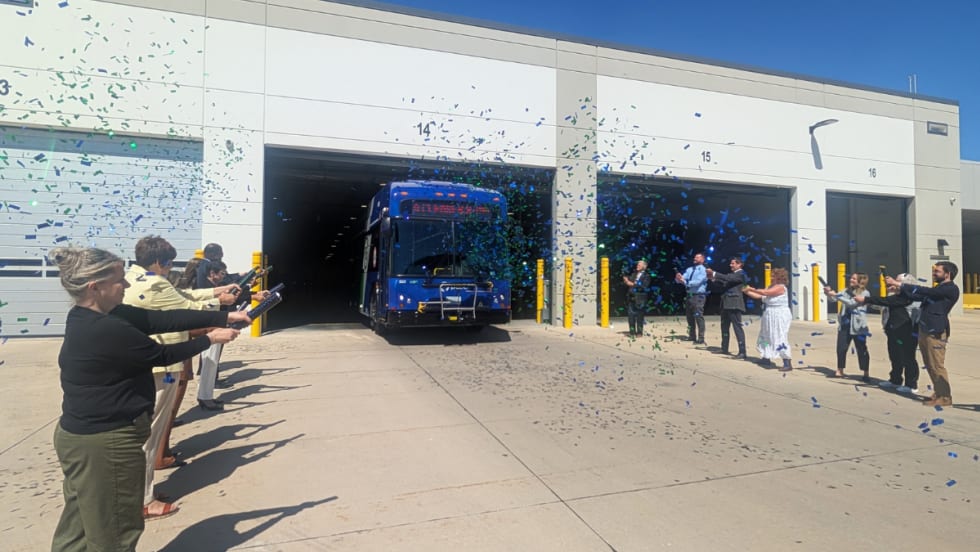
Chicago’s Pace Deploys 24 Hybrid-Electric Buses in Will County
The new buses reduce emissions and fuel consumption while advancing the agency's long-term goal of transitioning to a fully zero-emission fleet.
Read More →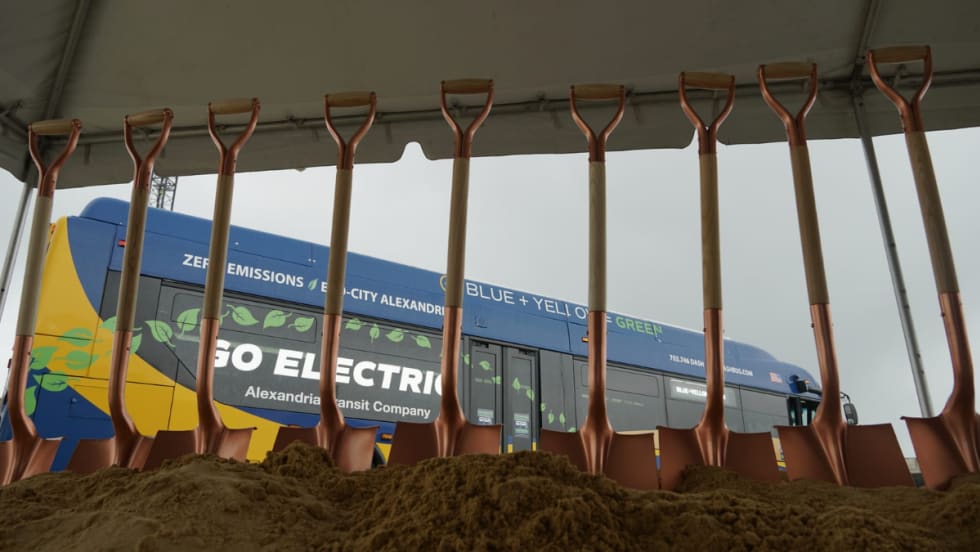
DASH Breaks Ground on First On-Route Electric Bus Chargers in D.C. Region
The fast-charging infrastructure will help extend electric bus range, improve fleet utilization, and support DASH's goal of transitioning to a fully zero-emission fleet.
Read More →