



U.S. DOT awards $65M in advanced technologies in transportation grants
Grants are being awarded through two U.S. Department of Transportation initiatives: the Advanced Transportation and Congestion Management Technologies Deployment program and the Mobility on Demand Sandbox program.

Steve Morgan
U.S. Transportation Secretary Anthony Foxx announced that local communities across the country will receive nearly $65 million in grants to support advanced technology transportation projects. Secretary Foxx will join President Obama at the White House Frontiers Conference on the future of innovation, where he will discuss how new transportation innovations are reshaping cities in the U.S.
“From automated vehicles to connected infrastructure to data analytics, technology is transforming how we move around our country, and some of the most exciting innovation is happening at the local level,” said U.S. Transportation Secretary Anthony Foxx. “These grants will enable cities and rural communities to harness new technologies to tackle hard problems like reducing congestion, connecting people to mass transit, and enhancing safety.”
The grants are being awarded through two U.S. Department of Transportation (U.S. DOT) initiatives aimed at promoting the use of advanced technologies in transportation: the Advanced Transportation and Congestion Management Technologies Deployment (ATCMTD) program run by the Federal Highway Administration (FHWA), and the Mobility on Demand (MOD) Sandbox program overseen by the Federal Transit Administration (FTA).
In total, the grants will be leveraged to bring close to $170 million in public and private investment to deploy smart city technologies in both large and small local communities across the nation. These grants build on U.S. DOT’s successful Smart City Challenge, which inspired cities, federal agencies, universities, and the private sector to work together to harness new technologies.
The $56.6 million ATCMTD program’s grants are designed to help communities use technology to enhance mobility and expand access to opportunity. Projects funded by these grants will improve the efficiency of the highway system and make the most use of existing capacity for commuters, businesses, and freight shippers. These issues were highlighted in the Beyond Traffic report, which addresses the challenges facing America's transportation infrastructure over the next three decades, such as a rapidly growing population and increasing traffic.
Communities receiving ATCMTD grants include:
Pittsburgh will receive nearly $11 million to execute elements of the vision it developed in its Smart City Challenge application, including deployment of smart traffic signal technology – proven to reduce congestion at street lights by up to forty percent – along major travel corridors.
Denver will also receive approximately $6 million to help to alleviate the congestion caused by a daily influx of 200,000 commuters each workday through connected vehicles.
A full list can be found here.
Steve Morgan
The $8 million MOD Sandbox Program is part of a larger research effort at U.S. DOT that supports transit agencies and communities as they integrate new mobility tools like smart phone apps, bike- and car-sharing, and demand-responsive bus and van services. MOD projects help make transportation systems more efficient and accessible, particularly for people who lack access to a car.
Through creative business models, the MOD Sandbox Program explores the potential of integrating public and private transportation choices. FTA sought projects with partnerships between transit providers, local governments, technology companies, and others that demonstrate solutions in real-world settings.
Examples of MOD Sandbox grants include:
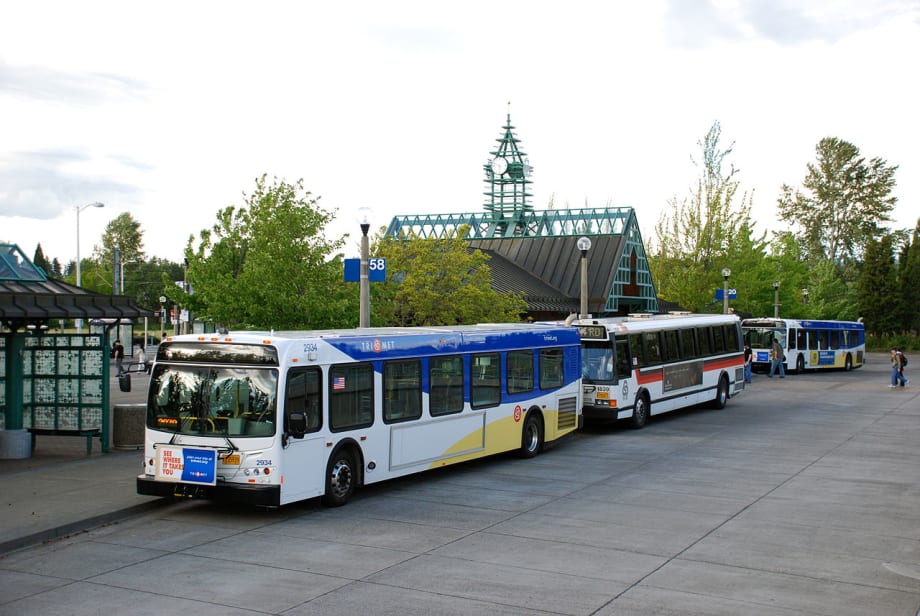
TriMet, which serves Portland, Ore., will receive funds to integrate shared-use mobility options into its existing trip planning app, allowing users to plan efficient trips even without nearby transit access.
The Vermont Agency of Transportation will receive $480,000 for a statewide transit trip planner that will incorporate flexible-route, hail-a-ride, and other services in mobility apps. The online trip planner particularly benefits non-traditional rural transit users and people with disabilities, allowing universal access to transit information.
In Dallas, the Dallas Area Rapid Transit (DART) will receive $1.2 million to integrate ride-sharing services into its GoPass ticketing app. The project will create an integrated, multimodal application that leverages ride-sharing services, improving access to DART stations, particularly in non-walkable areas not well served by transit.
A full list can be found here.
More New Mobility

From Hardware to Digital Partner: Luminator Charts Its Next Chapter
CEO Magnus Friberg discusses Luminator’s shift toward becoming a digital partner, the growing importance of software and interoperability, and how AI can help agencies improve operations and passenger experience.
Read More →
Biz Briefs: Alstom Lands Canadian Contract, LYT to Supply California TSP, and More
In METRO's latest installment, we take a look at recent news from Complete Coach Works, Beep, FlixBus, and more partnerships making headlines across the transportation sector.
Read More →
CharterUP’s Armir Harris on Technology, AI, and the Future of Group Mobility
In a recent episode of METROspectives, CharterUP Founder/CEO Armir Harris discussed the company’s evolution from an online charter bus marketplace into a technology platform supporting public- and private-sector mobility and much more.
Read More →
Jacksonville’s NAVI Project Charts a New Course for Autonomous Public Transportation
Through its NAVI program, JTA is showing how autonomous vehicles, intelligent infrastructure, and coordinated operations can work together to deliver everyday public transportation.
Read More →
Biz Briefs: Luminator Marks Milestone and More
From manufacturers and suppliers to transit agencies and motorcoach operators, these updates offer a snapshot of the projects, partnerships and business moves driving the industry forward.
Read More →
New Tricks for Old Bureaucracies: Joshua Schank on Making Transit Innovation Stick
Former LA Metro Chief Innovation Officer Joshua Schank discusses why good ideas aren't enough, how transit agencies can overcome resistance to change, and why today's challenges demand more innovation.
Read More →
How DART's GoPass Is Redefining Regional Mobility
Serving 14 transit agencies, GoPass simplifies multimodal travel by allowing riders to plan, pay for, and manage an entire trip through one app.
Read More →
Biz Briefs: OCTA Taps Clean Energy for Hydrogen Station, Stadler to Supply Via Rail Vehicles, and More
From manufacturers and suppliers to transit agencies and motorcoach operators, these updates offer a snapshot of the projects, partnerships and business moves driving the industry forward.
Read More →CharterUP Expands Into New Mobility and Autonomous Transportation
Vice President of New Mobility Stephen Joos discusses how CharterUP is leveraging its nationwide transportation network, technology platform, and autonomous vehicle partnerships to expand into workforce mobility, campus shuttles, and transit solutions.
Read More →
METRO Magazine Announces 2026 Innovative Solutions Awards Winners
Projects Recognized for Advancing Mobility Through Technology, Accessibility, Workforce Innovation, and Operational Excellence
Read More →