



U.S. DOT, HUD offers $75M for sustainable community planning
Together, departments will award up to $75 million in funding — $35 million in TIGER II Planning Grants and $40 million in Sustainable Community Challenge Grants — for localized planning activities that ultimately lead to projects that integrate transportation, housing and economic development.

On Monday, U.S. Transportation Secretary Ray LaHood and U.S. Housing and Urban Development Secretary Shaun Donovan announced a collaborative effort designed to help foster planning for more livable, sustainable communities — places where transportation, housing and commercial development investments are coordinated to better serve the people living in those communities.
Together for the first time ever, the U.S. Departments of Transportation (DOT) and Housing and Urban Development (HUD) will join forces to award up to $75 million in funding — $35 million in TIGER (Transportation Investment Generating Economic Recovery) II Planning Grants and $40 million in Sustainable Community Challenge Grants for localized planning activities that ultimately lead to projects that integrate transportation, housing and economic development.
The new program builds on the Partnership for Sustainable Communities, an innovative new interagency collaboration, launched by President Obama in June 2009, between the DOT, HUD and the Environmental Protection Agency (EPA). Guided by six Livability Principles, the Partnership is designed to remove the traditional federal government silos that exist between departments and strategically target the agencies' transportation, land use, environmental, housing and community development resources to provide communities the resources they need to build more livable, sustainable communities.
TIGER II Planning Grants may be used to plan, prepare or design surface transportation projects that would be eligible for funding under the TIGER II Discretionary Grant program. These projects include highways, bridges, transit, railways, ports, or bicycle and pedestrian facilities.
HUD's Sustainable Communities funding will target urban and community planning projects that foster reform and reduce barriers to achieving affordable, economically vital and sustainable communities. Such efforts may include amending or replacing local master plans, zoning codes, and building codes either on a jurisdiction-wide basis or in a specific neighborhood or sector to promote mixed-use development, affordable housing and the re-use of older buildings for new purposes with the goal of promoting sustainability at the local level.
These activities, when done in conjunction with transportation projects, can greatly increase the efficiency and effectiveness local transportation, and access to it, while encouraging mixed-use or transit-oriented development. The program will encourage and reward areas that are planning more innovative projects that coordinate housing, economic development and transportation investments.
There are a variety of projects that may include component parts that fall under both the DOT TIGER II Planning Grants and the HUD Sustainable Community Challenge Grants. Rather than have applicants proceed through two separate grant application procedures that might be on different timelines and with different requirements, this joint notice of funding availability (NOFA) is intended to create one point of entry to federal resources.
Under this innovative program, DOT and HUD will make joint awards, where appropriate, as well as individual TIGER II planning grants and HUD Sustainable Community Challenge Grants.
The $35 million for TIGER II planning grants announced comes from the $600 million in TIGER II grants announced by Secretary LaHood on May 28. The $40 million in HUD Sustainable Community Challenge Grant funding is part of $200 million in funding approved by congress in HUD's FY2010 budget to launch the first ever Office of Sustainable Housing and Communities.
Pre-applications are due 30 days from the publication of the Notice of Funding Availability in the Federal Register. Full applications are due on August 23. State and local governments, including U.S. territories, tribal governments, transit agencies, port authorities and others, are eligible to apply for funding. For more information on how to apply, review the notice of funding availability (NOFA)
More Bus

Finding the ‘Happy Medium’: Optimizing Maintenance Without Sacrificing Reliability
The key to maintenance optimization isn’t doing less work—it’s doing the right work at the right time on the right assets.
Read More →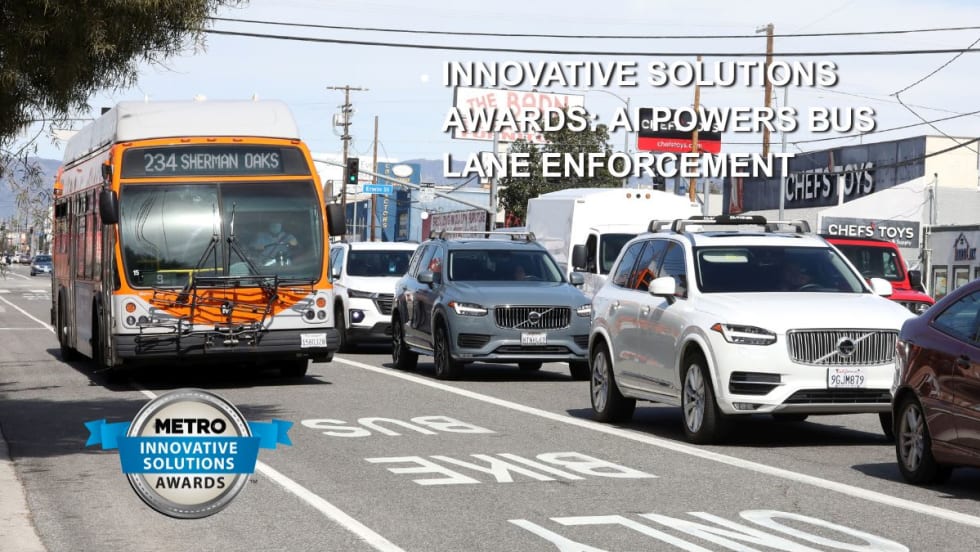
LA Metro, City of West Hollywood, and Partners Advance Smarter Bus Lane Enforcement
The award-winning partnership combines AI-powered detection with human oversight to improve bus reliability, accessibility, and enforcement efficiency.
Read More →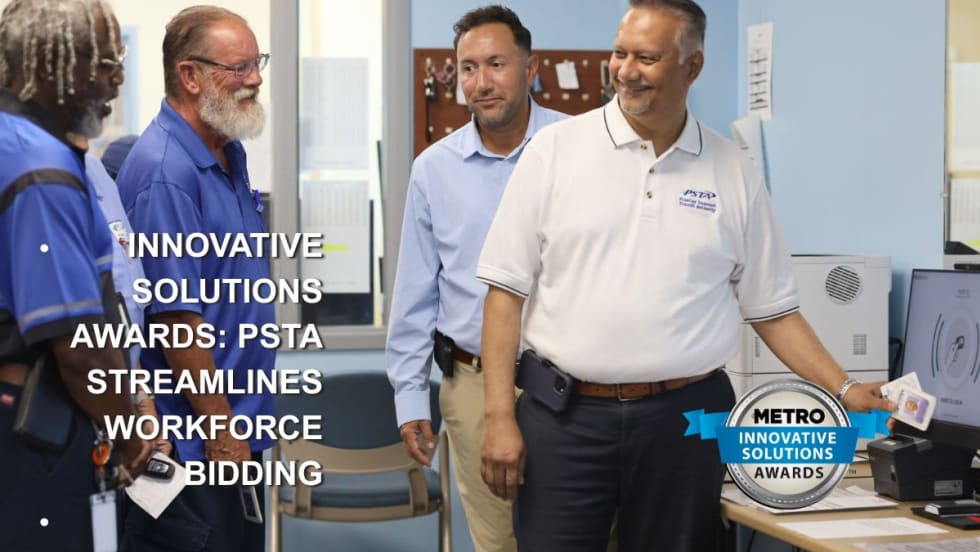
PSTA Modernizes Workforce Management with Digital Bidding System
The award-winning Workforce Transit Modernization project replaced paper bidding with a transparent digital platform, cutting administrative effort while improving access for operators.
Read More →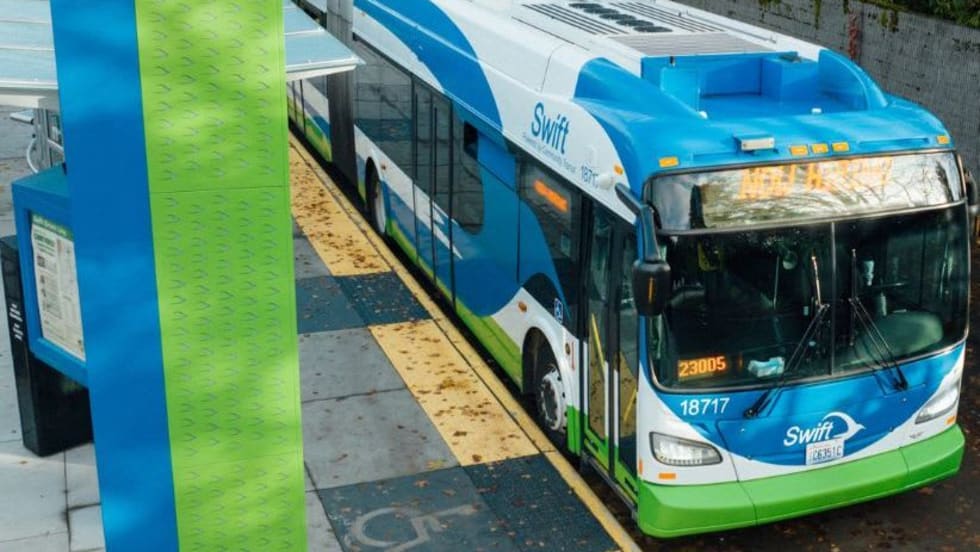
Washington's Community Transit Sets Six-Year Roadmap for Growth, Expansion
Approved TDP targets more bus service, new mobility options, Swift BRT expansion, and a potential Everett Transit annexation.
Read More →
DART Customer Satisfaction Reaches Six-Year High
Overall satisfaction rose to 74.9%, while the agency’s Net Promoter Score reached a record 33.7.
Read More →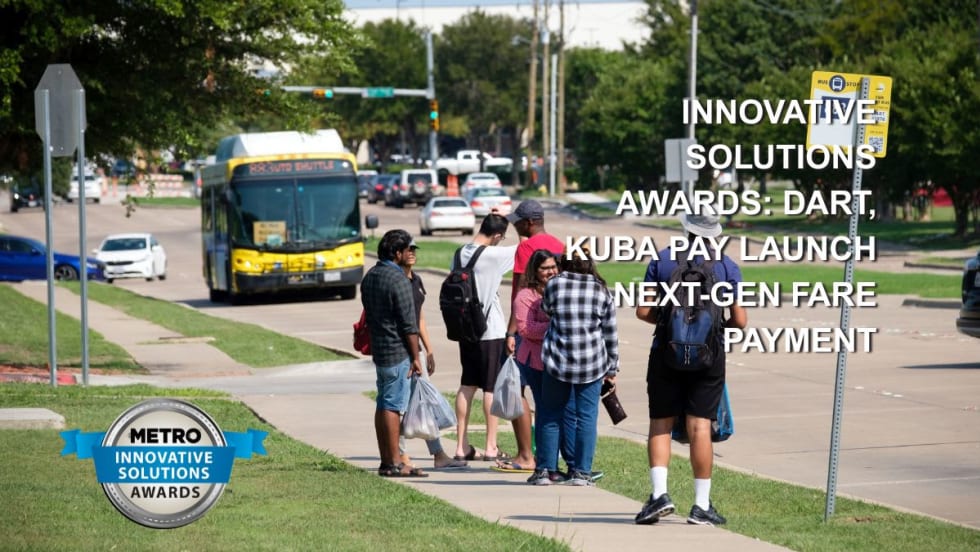
How DART's GoPass Is Redefining Regional Mobility
Serving 14 transit agencies, GoPass simplifies multimodal travel by allowing riders to plan, pay for, and manage an entire trip through one app.
Read More →
Biz Briefs: OCTA Taps Clean Energy for Hydrogen Station, Stadler to Supply Via Rail Vehicles, and More
From manufacturers and suppliers to transit agencies and motorcoach operators, these updates offer a snapshot of the projects, partnerships and business moves driving the industry forward.
Read More →
METRO Magazine Announces 2026 Innovative Solutions Awards Winners
Projects Recognized for Advancing Mobility Through Technology, Accessibility, Workforce Innovation, and Operational Excellence
Read More →
Biz Briefs: STV teams with Amtrak, Motorcoach Operators Boost Fleet and Land Contracts, and More
From manufacturers and suppliers to transit agencies and motorcoach operators, these updates offer a snapshot of the projects, partnerships and business moves driving the industry forward.
Read More →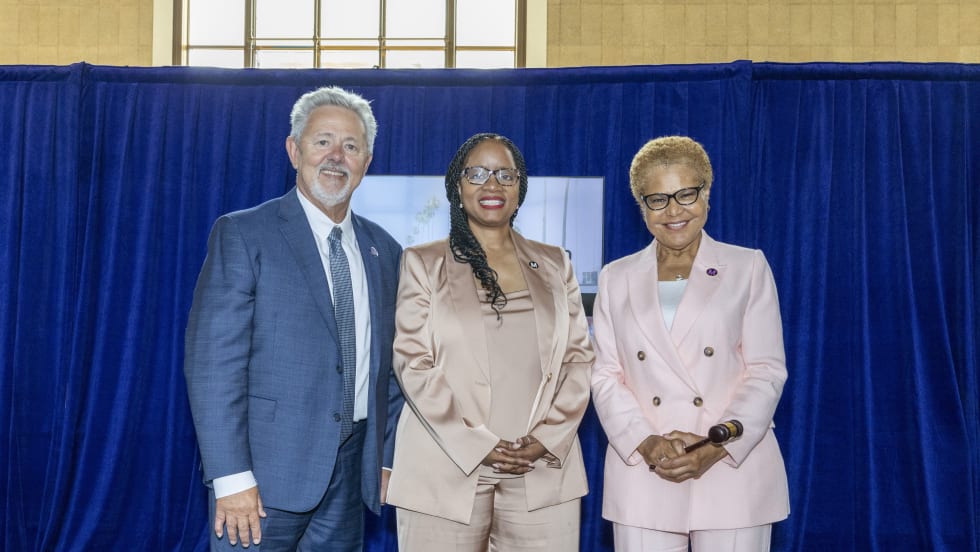
LA Metro Marks Banner Year, Sets Ambitious Goals for New Fiscal Year
Incoming LA Metro Board Chair and Los Angeles Mayor Karen Bass joined outgoing Board Chair Fernando Dutra and LA Metro CEO Stephanie Wiggins to review accomplishments from fiscal year 2026, which included the opening of new rail extensions, advancement of major transit projects, expanded safety programs, and new rider amenities.
Read More →