



VertX Advertising launches cleaner transit initiative
In studies, the most important factors cited by transit riders were service frequency, crowding reliability, safety, and cleanliness.

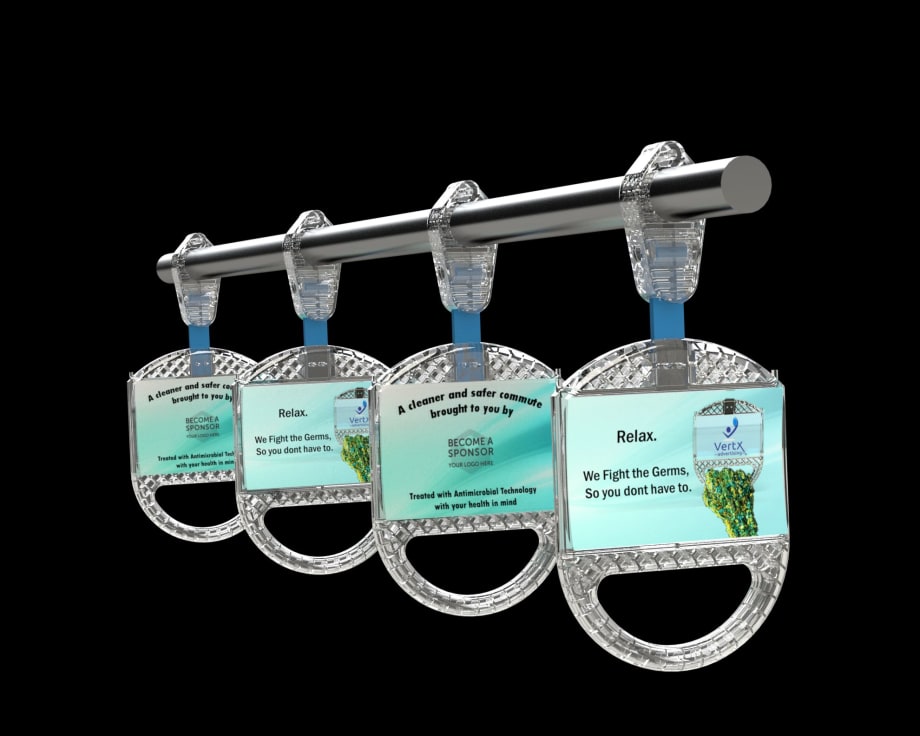
All VertX products are EPA-exempt and FDA-approved for safety, avoiding the use of any chemicals and sanitizing agents that could be harmful to transit riders.
VertX
All VertX products are EPA-exempt and FDA-approved for safety, avoiding the use of any chemicals and sanitizing agents that could be harmful to transit riders.
VertX
Davis, Calif.’s VertX Advertising Inc. launched its exclusive Cleaner Transit Initiative in California. Transit systems in this program are able to provide cleaner conditions for their passengers and have a new source of revenue to help combat declining ridership.
In studies, the most important factors cited by transit riders were service frequency, crowding reliability, safety, and cleanliness. Testing transit fleets for pathogens has shown many surfaces to be covered in germs such as Staphylococcus aureus, E. coli, Rothia, and other bacteria and viruses, all of which are known to potentially cause disease and can be effectively treated by VertX’s antimicrobial products.
The Cleaner Transit Initiative collaborates with public transit agencies to install pathogen-reducing standing passenger handles, along with protective vinyls for seats and stanchion bars, at no cost to the transit agency. VertX accomplishes this by managing an interactive, built-in space on the handles for a supporting advertiser and combining it with a revenue-sharing program with the transit agencies so they can further improve their facilities. VertX handles are easily installed as a replacement to current strap handles, or as an addition to standard bus/subway handrails to seamlessly retrofit into all transit system fleets as a long term, low maintenance solution.
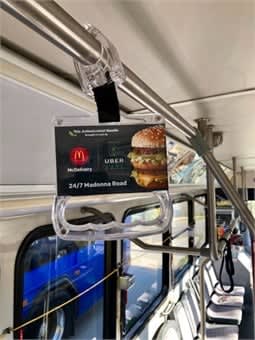
VertX's pathogen-reducing standing passenger handles feature space for a supporting advertiser (shown).
VertX
Additionally, all VertX products are also EPA-exempt and FDA-approved for safety, avoiding the use of any chemicals and sanitizing agents that could be harmful to transit riders. Programs performed in the ASUCD Unitrans and Sacramento Regional Transit bus fleets, showed the products reduced bacterial presence by up to five times of that compared to normal standing passenger handles after a six-month time period. Furthermore, their launch in the San Luis Obispo Transit fleet further expanded their cleaner transit services and features its first advertising campaign with a local McDonald’s franchise.
More Technology
Almaviva Looks to Open Architecture to Advance Transit Technology
Eric Reese discusses how interoperability, open architecture, and modular design can help transit agencies control costs, reduce vendor lock-in, and upgrade technology without starting over.
Read More →
Driving Smarter Paratransit
John Hanlon shares how AlphaRoute is leveraging AI-powered technology to help paratransit providers optimize operations, support frontline staff, and enhance the rider experience.
Read More →
From Hardware to Digital Partner: Luminator Charts Its Next Chapter
CEO Magnus Friberg discusses Luminator’s shift toward becoming a digital partner, the growing importance of software and interoperability, and how AI can help agencies improve operations and passenger experience.
Read More →

Beyond the Checklist: A Structured Approach to Transit Maintenance
Reliability-Centered Maintenance helps transit agencies move beyond routine checklists to focus limited resources on the assets and failures that have the greatest impact on safety, reliability, and service.
Read More →
NJ TRANSIT Advances Bus Technology Upgrades Across Statewide Fleet
More than 1,500 buses now feature upgraded technology designed to improve arrival predictions and provide free Wi-Fi, with deployment expected to reach nearly 2,000 buses by the end of 2026.
Read More →
Building a Flexible Path to Transit Electrification
John Hroncich discusses BAE Systems’ modular and scalable approach, lessons learned from decades of real-world operations, and how agencies can identify electrification strategies that fit their fleets.
Read More →
Biz Briefs: Alstom Lands Canadian Contract, LYT to Supply California TSP, and More
In METRO's latest installment, we take a look at recent news from Complete Coach Works, Beep, FlixBus, and more partnerships making headlines across the transportation sector.
Read More →
From Legacy Silos to Conversational Intelligence
What if transit leaders could ask any operational question and get a trusted answer in seconds? Conversational AI is transforming how agencies use their data.
Read More →
USDOT Announces Rail Vehicle Replacement Grants, Chattanooga AV Shuttle Funding
More than $191 million in federal funding will help three transit agencies replace aging rail vehicles and support a new autonomous shuttle service in Chattanooga.
Read More →
Bus Tech Talk: Keeping Transit Technicians Ahead of the Technology Curve
LA Metro’s Obed Mejia discusses technician training, evolving maintenance technology, fleet replacement, and strategies for getting the most out of today’s transit fleets.
Read More →