



Via Unveils First-Ever Vertical AI Platform for Public Transit
The platform transforms dense, highly complex transit data into strategic recommendations, enhancing the efficiency, reliability, and performance of transit networks.

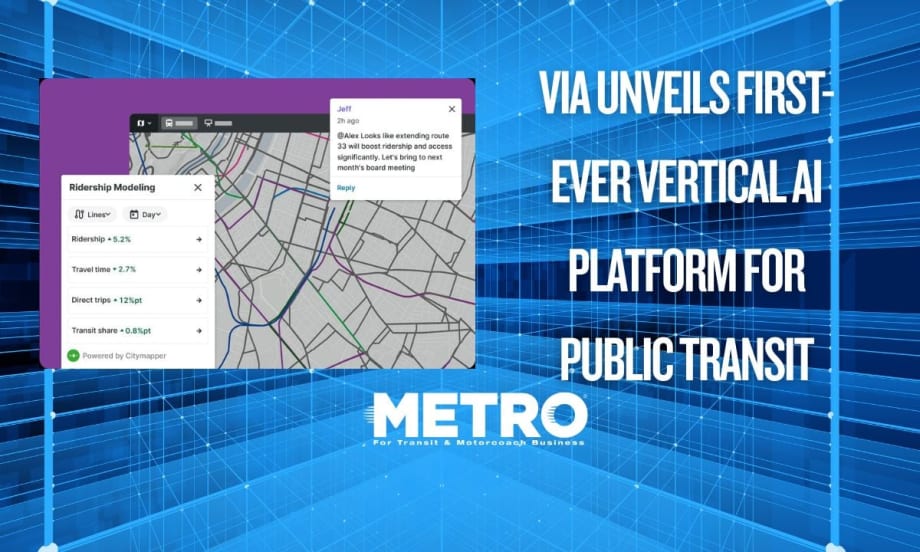
While Via’s algorithms have been powered by AI for more than a decade, Via Intelligence now offers a suite of AI-powered tools.
Photo: METRO/Via
Via launched Via Intelligence, the first vertical AI platform engineered exclusively for public transportation.
As government entities face mounting operational costs and growing pressure to serve more people with existing budgets, Via Intelligence delivers cutting-edge artificial intelligence tools as a solution to tackle transit’s toughest challenges, company officials said.
The platform transforms dense, highly complex transit data into strategic recommendations, enhancing the efficiency, reliability, and performance of transit networks.
Leveraging AI
While Via’s algorithms have been powered by AI for more than a decade, Via Intelligence now offers a suite of AI-powered tools.
Unlike generic horizontal AI applications, Via’s offering merges transit data sets with specialized expertise in transit operations, according to the company.
The result is a single platform that helps governments seamlessly and confidently analyze, plan, and take action to build transit networks that match how people really move. With Via Intelligence, agencies deliver better returns on every dollar invested in the network.
“We designed Via Intelligence to bring the power of AI to every city and transit agency and to every rider of public transit,” said Nithya Sowrirajan, chief product officer at Via. “We're empowering our customers to make faster and more informed decisions by modeling all possible outcomes — so whether they're looking to put in a new bus line or seeking to improve efficiency of their transportation service, they can understand the implications of their decisions before they become a reality.”
Via Intelligence
Via Intelligence isn’t theoretical, it’s already part of Via’s products, delivering measurable impact, the company said.
A few examples shared by Via include:
Scheduling Engine allows agile operations: A single traffic jam can render a static transit schedule obsolete, causing a domino effect of delays and frustrated riders. The platform’s scheduling engine acts as an intelligent, digital dispatcher adjusting to real-time conditions and automatically optimizing routes to solve problems before they affect passengers. The impact is dramatic: In Fort Worth, Texas, Trinity Metro was able to serve 13% more ADA paratransit rides per service hour, and reduce trips longer than 90 minutes by 86%.
Predictive Runtimes help plan with confidence: Planning new bus routes requires transit planners to estimate travel times: a process that's time-consuming, costly, and often inaccurate. As a result, schedules are unreliable and budgets often overrun. Via Predictive Runtimes accurately predicts how long a bus trip will take on any road — even if a bus has never driven there before. BC Transit in British Columbia calls it a “crystal ball” that helps the agency save time and have confidence in schedules, cost estimates, and service quality forecasts.
Ridership Modeling builds the future of transit: Redesigning a transit network is a high-stakes exercise where a mismatched plan can waste millions in taxpayer money. Via’s Ridership Modeling removes that risk by creating a virtual “digital twin” of a city, allowing planners to simulate proposed changes and accurately forecast how the public will respond. One of the largest transit agencies in the U.S. used the tool to refine its post-COVID fixed-route redesign in line with how people actually move, proposing changes to tackle long wait times and increase ridership in specific areas.
More Technology

From Hardware to Digital Partner: Luminator Charts Its Next Chapter
CEO Magnus Friberg discusses Luminator’s shift toward becoming a digital partner, the growing importance of software and interoperability, and how AI can help agencies improve operations and passenger experience.
Read More →
Beyond the Checklist: A Structured Approach to Transit Maintenance
Reliability-Centered Maintenance helps transit agencies move beyond routine checklists to focus limited resources on the assets and failures that have the greatest impact on safety, reliability, and service.
Read More →
NJ TRANSIT Advances Bus Technology Upgrades Across Statewide Fleet
More than 1,500 buses now feature upgraded technology designed to improve arrival predictions and provide free Wi-Fi, with deployment expected to reach nearly 2,000 buses by the end of 2026.
Read More →

Building a Flexible Path to Transit Electrification
John Hroncich discusses BAE Systems’ modular and scalable approach, lessons learned from decades of real-world operations, and how agencies can identify electrification strategies that fit their fleets.
Read More →
Biz Briefs: Alstom Lands Canadian Contract, LYT to Supply California TSP, and More
In METRO's latest installment, we take a look at recent news from Complete Coach Works, Beep, FlixBus, and more partnerships making headlines across the transportation sector.
Read More →
From Legacy Silos to Conversational Intelligence
What if transit leaders could ask any operational question and get a trusted answer in seconds? Conversational AI is transforming how agencies use their data.
Read More →
USDOT Announces Rail Vehicle Replacement Grants, Chattanooga AV Shuttle Funding
More than $191 million in federal funding will help three transit agencies replace aging rail vehicles and support a new autonomous shuttle service in Chattanooga.
Read More →
Bus Tech Talk: Keeping Transit Technicians Ahead of the Technology Curve
LA Metro’s Obed Mejia discusses technician training, evolving maintenance technology, fleet replacement, and strategies for getting the most out of today’s transit fleets.
Read More →
Biz Briefs: RIPTA Unveils New Frontrunners, Clevland RTA Adds New Siemens, and More
In METRO's latest installment, we take a look at recent news from Siemens, Prevost, Dodge, and more partnerships making headlines across the transportation sector.
Read More →
Why Simulating Pedestrian Movement Has Become Essential for Modern Rail Stations
Pedestrian microsimulation is helping rail planners identify bottlenecks, test station designs, and prepare complex transit hubs for growing passenger volumes.
Read More →