



Virgin Hyperloop One names Branson chairman, closes $50M in financing
The company has also completed its third phase of testing achieving historic test speeds of approximately 240 miles per hour.


Virgin Hyperloop One has also set a historic test speed record of nearly 240 miles per hour during its third phase of testing at DevLoop, the world's first full-scale hyperloop test site.
Virgin Hyperloop
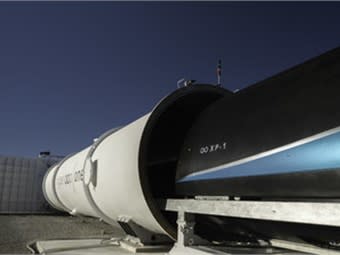
Virgin Hyperloop One has also set a historic test speed record of nearly 240 miles per hour during its third phase of testing at DevLoop, the world's first full-scale hyperloop test site.
Virgin Hyperloop
Virgin Hyperloop One named Richard Branson chairman (non-executive) and has raised an additional $50 million ahead of its Series C round of funding with investments from Caspian Venture Capital and DP World. The company has also completed its third phase of testing achieving historic test speeds of approximately 240 miles per hour.
As the founder of Virgin Group, Branson brings an unparalleled proven track record in delivering technology breakthroughs and transformative experiences in air, rail, and space transportation. Branson joined the Virgin Hyperloop One board of directors in October 2017 after Virgin Group invested in the company and formed a global strategic partnership. The company is in the process of rebranding itself Virgin Hyperloop One.
"I am excited by the latest developments at Virgin Hyperloop One and delighted to be its new Chairman," said Branson. "The recent investment by our partners Caspian Venture Capital and DP World sets up the company to pursue opportunities in key markets in the Middle East, Europe, and Russia as it develops game-changing and innovative passenger and cargo ground transport systems."
The $50 million investment was made by existing Virgin Hyperloop One investors Caspian Venture Capital and DP World who have been consistently supportive investors and have backed the company in each of its funding rounds. This investment brings the total financing raised by Virgin Hyperloop One to $295 million since its founding in 2014.
"This investment provides Virgin Hyperloop One with a very robust financial platform for 2018 ahead of our Series C round of fundraising. We are so proud to have investors who consistently step-up to support our company and our vision," said Virgin Hyperloop One's CEO Rob Lloyd. "We continue to see extremely strong interest from world leaders globally looking to embrace hyperloop to address critical infrastructure challenges. Our focus in 2018 will be on accelerating commercial agreements for both passenger and cargo projects."
Virgin Hyperloop One has also set a historic test speed record of nearly 240 miles per hour during its third phase of testing at DevLoop, the world's first full-scale hyperloop test site. The company achieved faster speeds and tested a new airlock, which helps transition test pods between atmospheric and vacuum conditions during its latest test campaign completed on Dec. 15. All components of the system were successfully tested including the airlock, highly efficient electric motor, advanced controls and power electronics, custom magnetic levitation and guidance, pod suspension, and the vacuum. The tests were conducted in a tube depressurized down to the equivalent air pressure experienced at 200,000 feet above sea level. A Virgin Hyperloop One pod quickly lifts above the track using magnetic levitation and glides at airline speeds for long distances due to ultra-low aerodynamic drag.
More Technology

Transit Expands Agency Partnerships, Reaching 200 Official App Partners
COO Jake Sion discusses Transit’s growth, the success of its Transit Royale program, and how technology is helping agencies improve the rider experience.
Read More →
Biz Briefs: Ballard, Solaris Partner, New Flyer Receives Florida Order, and More
In METRO's latest installment, we also take a look at recent news from New Flyer, STV, Spare, and more partnerships making headlines across the transportation sector.
Read More →
Hampton Jitney Microgrid Offers a Roadmap for Fleet Electrification
Sprocket Power’s on-site energy system is designed to manage charging costs, reduce pressure on the electric grid, and prepare the Long Island transportation provider for expanded electric fleet operations.
Read More →
ETA CEO John Maglio on Transit Technology, Innovation, and Building Agency Trust
ETA founder and CEO John Maglio explores the evolution of transit technology, the importance of reliable systems, and how stronger partnerships can help agencies improve operations and the passenger experience.
Read More →
Lextran, Via Team for On Demand, HDR to Work on Twin Cities BRT, and More
In METRO's latest installment, we also take a look at recent news from Keolis, Complete Coach Works, Anchor Transportation, and more partnerships making headlines across the transportation sector.
Read More →
Caltrain’s Electrification Drives a New Era of Ridership Growth
The railroad’s shift to electric service has brought more frequent trains, stronger customer satisfaction, and increased ridership, earning it APTA’s Outstanding Public Transportation System award.
Read More →
Video Surveillance in Public Transit: What Riders Really Think
As video surveillance gains public acceptance, new research from Axis Communications reveals what transit riders expect from agencies when it comes to safety, privacy, and AI.
Read More →
New York MTA Launches Historic $1.9B Signal, Track Modernization Project
Funded in part by congestion pricing revenue, the project will replace nearly century-old signals along the A and C lines in Brooklyn and Queens.
Read More →
Biz Briefs: New Electric Offering from Alexander Dennis/Volvo, Transdev in Boston, and More
In METRO's latest installment, we also take a look at recent news from STV, WSP, Prevost, and more partnerships making headlines across the transportation sector.
Read More →
Roman Cornell on ABC Companies’ Evolution and the Future of Passenger Transportation
The company’s CEO discusses carrying forward a third-generation family legacy, ABC’s continued evolution in passenger transportation, support for increasingly complex fleets, and how technology and continued investment could help operators improve uptime.
Read More →