



Visa introduces global contactless transit payment program
A company study found that transit agencies spend an average of 14.5 cents of every physical dollar collected, compared to only 4.2 cents for every digital dollar.


A Visa study found that transit agencies spend an average of 14.5 cents of every physical dollar collected, compared to only 4.2 cents for every digital dollar.
A Visa study found that transit agencies spend an average of 14.5 cents of every physical dollar collected, compared to only 4.2 cents for every digital dollar.
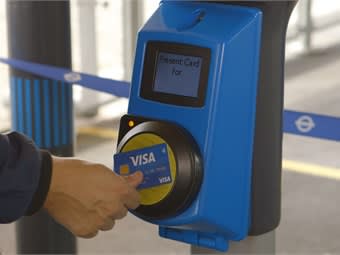
Visa today launched a new program designed to accelerate the use of debit, credit and pre-paid accounts at the fare gate or on a bus reader, speeding up and creating a more convenient experience for mass transit commuters worldwide.
The new Visa transit program, Visa Global Transit Solutions, helps mass transit operators and technology providers of any size add contactless as a fare option at the gate. The global program consists of:
Consulting: The Visa Global Transit Solutions team is comprised of a central group in London and dedicated regional specialists around the world who will support contactless payments implementations, providing guidance and hands-on assistance. Together, the team has more than 50 years of experience working directly with, and for, mass transit operators and related industries.
Frameworks: Visa has created the Mass Transit Transaction model, a back-office framework to manage contactless payments regardless of transit operators’ size or fare structure. The Visa model enables operators to offer a range of flexible fares, including fixed fares, distance- and time-based fares, and multi-modal fares, as well as features like fare capping, concessions, and delay refunds.
Tools and Standards: An important part of Visa Global Transit Solutions is the expansion of the Visa Ready program to include payment technologies available to mass transit operators. Visa Ready for Transit enables technology companies to become Visa Ready certified, giving mass transit operators the peace of mind that the technology solution they choose meets Visa’s high standards for security. As the initial Visa Ready for Transit program participants, Worldline and Vix Technology will help to offer new, open loop contactless solutions to transit operators globally.
Future of Transportation: Visa is looking at the complete end-to-end consumer experience, making the Innovation Center in London the natural epicentre for future of transportation commerce options, including automobiles, air travel, and mass transit. The Visa team will engage with transit operators, technology enablers, fintech companies and others to examine all aspects of the consumer journey and engage in the co-creation of new travel experiences.
Visa’s recent Cashless Cities report notes that digital payments have the potential to significantly decrease costs associated with transit and toll systems maintained by municipal governments. The study found that transit agencies spend an average of 14.5 cents of every physical dollar collected, compared to only 4.2 cents for every digital dollar.
Visa recently launched a series of events for transit operators and technology companies to learn more about the various initiatives being developed by the Transit program. The first event was held in London with future events to be held in Dubai, New York, and Singapore.
Over the coming months, the Visa Global Transit Solutions program will further expand to include new offerings ranging from fraud management and back-office capabilities to loyalty and marketing programs aimed at optimising the customer experience.
The Visa Global Transit Solutions team has implemented a dozen transit solutions to-date in Europe and currently has new projects underway in Asia, North America and Europe – all focused on customer propositions that reduce the hassle of using public transport. Acceptance of contactless payments across the globe has increased significantly in recent years – particularly in Europe, where today over 40 percent of Visa’s face-to-face transactions are contactless
More Management

METRO Opens Submissions for 2026 Motorcoach Awards
Nominations are now being accepted for METRO Magazine’s Operator of the Year and Innovative Operator of the Year awards.
Read More →
New York MTA Advances Final Contract for Second Avenue Subway Expansion
Contract Four is the largest in the Second Avenue Subway Phase 2 project and includes construction of station infrastructure, tracks, and signals for the subway expansion, MTA officials said. Work on Contract Four will begin in 2027.
Read More →
Transit Agencies Highlight Safety Gains at National Summit
Leaders from 15 major transit systems shared crime-reduction results and safety initiatives while discussing the role of continued federal support.
Read More →

NITA Names New Leadership, Expands Reduced-Fare Program at First Board Meeting
The new regional transit authority appointed its first board chair and interim executive director while extending reduced fares across CTA, Metra, and Pace for eligible riders.
Read More →
Beyond the Checklist: A Structured Approach to Transit Maintenance
Reliability-Centered Maintenance helps transit agencies move beyond routine checklists to focus limited resources on the assets and failures that have the greatest impact on safety, reliability, and service.
Read More →
APTA 2026 Nominating Committee Selects Leadership Slate, Names Chair and Vice Chair Nominees
Leadership changes will help shape the association’s priorities and its representation of the transportation industry during the 2026–2027 term.
Read More →
DART Launches Major Security, Fare Enforcement Initiative
The 90-day demonstration will deploy coordinated security teams at five light rail stations while testing controlled access and gathering data to guide future investments.
Read More →
Advancing Fare Collection Through Technology and Innovation
Learn about delivering 1300 gates at 91 stations while managing fare evasion. Explore the large scale deployment, solution customization and real-world results that affect the region. Prepare for deployment in your region now.
Read More →
Game Day in Motion: Moving Millions During the 2026 World Cup
Between packed transit stations and team motorcoaches, see how agencies and operators across North America tackled the transportation demands of the 2026 FIFA World Cup.
Read More →
Surface Transportation Extension Averts Shutdown, Leaves Transit Funding Gap
The stopgap keeps federal transportation programs moving, but missing advance funding could complicate the transit and rail projects agencies are planning next.
Read More →