



WMATA Delivers $120M in Savings, Record Ridership in FY2025
The agency reported that customers took 264 million trips, a 9% increase over FY24 and 16% above budget projections, generating $462 million in passenger revenue.

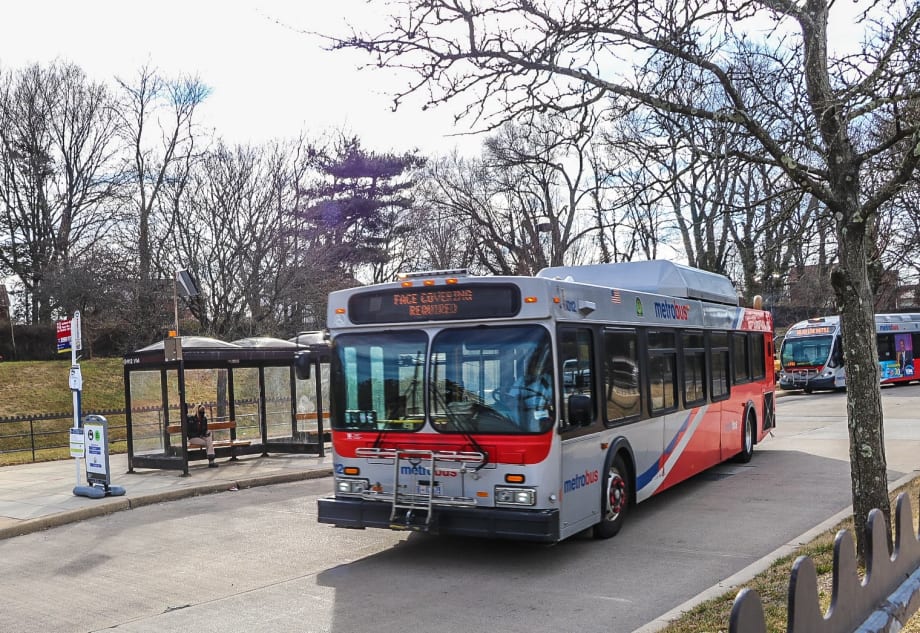
WMATA ended FY25 with $120 million in total savings, including $28 million in one-time operating reductions and $92 million reinvested in the Six-Year Capital Program.
Photo: WMATA/Larry Levine
The Washington Metropolitan Area Transit Authority (WMATA) announced a strong close to fiscal year 2025, achieving $120 million in savings while delivering record ridership growth and national recognition for service excellence.
The agency reported that customers took 264 million trips, a 9% increase over FY24 and 16% above budget projections, generating $462 million in passenger revenue.
Meanwhile, rail ridership rose to 139 million trips, and Bus reached 124 million, both well above projections.
“Metro continues to prove that we can deliver safe, frequent, and reliable service while managing costs responsibly,” said WMATA GM/CEO Randy Clarke. “This year we moved more people, saved more money, and reinvested in the system our region depends on. These results show what’s possible when efficiency and the customer experience go hand in hand.”
Finding Savings, Marking Improvements
WMATA ended FY25 with $120 million in total savings, including $28 million in one-time operating reductions and $92 million reinvested in the Six-Year Capital Program.
The agency reported that it closely managed operating expenses through a cost efficiency task force, which implemented recurring savings of $50 million, including wage freezes for non-represented employees. Additionally, two of WMATA’s largest unions saved $38 million, and service optimization resulted in $20 million in savings.
FY25 also marked significant system improvements and industry honors.
WMATA was named Outstanding Public Transportation Agency by the American Public Transportation Association and received the International Sanitary Supply Association’s inaugural Spotless Space of the Year award.
Key accomplishments included:
Launch of the Better Bus Network and Tap. Ride. Go. contactless fare payment.
Reintroduction of Automatic Train Operation for the first time in 15 years.
Modernization of faregates at all 98 Metrorail stations and installation of new fareboxes on 1,500 buses.
Deployment of 185 new MetroAccess minivans and 49 next-generation vehicles.
Major rail fleet maintenance, including scheduled work and wheelset replacement on 358 7000-series railcars.
“Prudent stewardship of resources and a spirit of innovation have contributed significantly to Metro’s success this past year,” said WMATA Board Chair Valerie Santos. “We are proving that smart, accountable management leads to better service and real results. The path ahead requires stable, dedicated funding — so we can build on this progress and deliver a world-class system for our communities.”
Looking Ahead
In FY26, WMATA is building on last year’s strong performance by adding peak Metrorail capacity to address ridership growth, opening earlier on weekend mornings and closing later on weekend late nights, and extending half of the Yellow Line trains to Greenbelt in December.
Also, in FY26, the agency will be extending Tap. Ride. Go., and continue to modernize and improve efficiency with Metrobus.
At the same time, WMATA emphasized the urgent need to address the capital funding cliff in FY26, warning that a long-term funding solution is essential to sustain modernization and system reliability.
More Management

METRO Opens Submissions for 2026 Motorcoach Awards
Nominations are now being accepted for METRO Magazine’s Operator of the Year and Innovative Operator of the Year awards.
Read More →
New York MTA Advances Final Contract for Second Avenue Subway Expansion
Contract Four is the largest in the Second Avenue Subway Phase 2 project and includes construction of station infrastructure, tracks, and signals for the subway expansion, MTA officials said. Work on Contract Four will begin in 2027.
Read More →
Transit Agencies Highlight Safety Gains at National Summit
Leaders from 15 major transit systems shared crime-reduction results and safety initiatives while discussing the role of continued federal support.
Read More →

NITA Names New Leadership, Expands Reduced-Fare Program at First Board Meeting
The new regional transit authority appointed its first board chair and interim executive director while extending reduced fares across CTA, Metra, and Pace for eligible riders.
Read More →
Beyond the Checklist: A Structured Approach to Transit Maintenance
Reliability-Centered Maintenance helps transit agencies move beyond routine checklists to focus limited resources on the assets and failures that have the greatest impact on safety, reliability, and service.
Read More →
APTA 2026 Nominating Committee Selects Leadership Slate, Names Chair and Vice Chair Nominees
Leadership changes will help shape the association’s priorities and its representation of the transportation industry during the 2026–2027 term.
Read More →
DART Launches Major Security, Fare Enforcement Initiative
The 90-day demonstration will deploy coordinated security teams at five light rail stations while testing controlled access and gathering data to guide future investments.
Read More →
Advancing Fare Collection Through Technology and Innovation
Learn about delivering 1300 gates at 91 stations while managing fare evasion. Explore the large scale deployment, solution customization and real-world results that affect the region. Prepare for deployment in your region now.
Read More →
Game Day in Motion: Moving Millions During the 2026 World Cup
Between packed transit stations and team motorcoaches, see how agencies and operators across North America tackled the transportation demands of the 2026 FIFA World Cup.
Read More →
Surface Transportation Extension Averts Shutdown, Leaves Transit Funding Gap
The stopgap keeps federal transportation programs moving, but missing advance funding could complicate the transit and rail projects agencies are planning next.
Read More →