



WMATA's rail ridership up 20K trips on weekdays in 2019
The agency reports that customer-focused improvements implemented last year contributed to the increase in rail ridership.

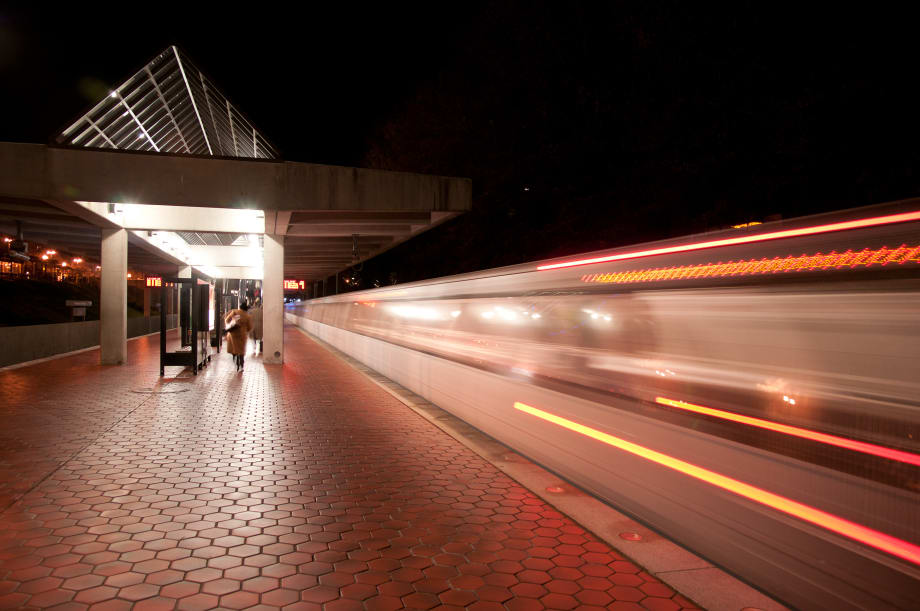
WMATA's total rail ridership was 182 million trips, compared to 175 million in 2018, a net increase of seven million trips.
Larry Levine
WMATA's total rail ridership was 182 million trips, compared to 175 million in 2018, a net increase of seven million trips.
Larry Levine
Ridership on the Washington Metropolitan Area Transit Authority’s (WMATA) Metrorail system posted a 4% increase in passenger trips for the 2019 calendar year, ending a downward trend that lasted most of the prior decade. Total rail ridership was 182 million trips, compared to 175 million in 2018, a net increase of seven million trips, reflecting increasing customer confidence in WMATA’s reliability and on-time performance.
Ridership increased across all days of the week, including a 3.3% increase in weekday travel — the equivalent of 20,000 additional trips per commuting day. Metrorail’s average weekday ridership now stands at 626,000.
Notably, weekends accounted for a quarter of overall rail ridership growth, with average Saturday ridership increasing 9.4% to 264,000 trips, and average Sunday ridership increasing 6.5% to 168,000 trips.
Meanwhile, customer on-time performance improved to its highest level in a decade, with 89.8% of riders arriving on time on weekdays. The region’s capital investment in WMATA is yielding dividends, allowing for the replacement of half of the agency’s entire fleet — more than 500 of the system’s oldest and least reliable railcars — with an entirely new generation of state-of-the-art 7000-series trains, according the agency. As a result, the average age of WMATA’s rail fleet has been cut in half in just five years, from roughly 25 years in 2015 to under 13 years today. Railcars have an expected service life of about 40 years.
The agency reports that customer-focused improvements implemented last year contributed to the increase in rail ridership. The changes included extending Yellow Line service to Greenbelt, extending all Red Line trips to the ends of the line, offering new money-saving pass options, and doubling down on Rush Hour Promise, WMATA’s first-of-its-kind service guarantee that automatically gives customers back their fare if their rush-hour trip on Metrorail is delayed more than 10 minutes.
Last year’s rail ridership gains came amid planned improvement projects that, while essential, temporarily reduced ridership, including the summer-long closure of six stations south of National Airport for platform reconstruction. The federal government shutdown that extended through most of January also had a negative impact, reducing ridership by an estimated 100,000 trips per weekday.
Metrobus ridership declined 3.5% as traffic congestion resulted in longer travel times and a drop in service reliability. WMATA is focused on finding regional solutions to make bus service more competitive with other travel options and is working to implement recommendations of the Bus Transformation Project with our jurisdictional partners.
More Rail

New York MTA Advances Final Contract for Second Avenue Subway Expansion
Contract Four is the largest in the Second Avenue Subway Phase 2 project and includes construction of station infrastructure, tracks, and signals for the subway expansion, MTA officials said. Work on Contract Four will begin in 2027.
Read More →
San Diego MTS Breaks Monthly Trolley Ridership Record
Agency officials said July’s ridership indicates MTS’s continued recovery from the pandemic.
Read More →
Report Examines NJ TRANSIT Reliability, Funding Challenges
The Garden State Initiative analysis examines the roles of Amtrak infrastructure, fleet management, and agency operations while recommending a more performance-based approach to improving reliability.
Read More →
Stadler, CapMetro Sign Long-Term Rail Fleet Support Agreement
Beginning in 2027, Stadler will provide on-site technical expertise, spare parts support, training, and obsolescence management to help extend the reliability and longevity of CapMetro’s GTW fleet.
Read More →
Biz Briefs: Alstom Lands Canadian Contract, LYT to Supply California TSP, and More
In METRO's latest installment, we take a look at recent news from Complete Coach Works, Beep, FlixBus, and more partnerships making headlines across the transportation sector.
Read More →
CATS Gold Line Marks 5 Years of Service, 2.8M Passenger Trips
With a six-mile expansion planned, the Charlotte streetcar is positioned to connect more neighborhoods and major transit hubs across the region.
Read More →
Why Simulating Pedestrian Movement Has Become Essential for Modern Rail Stations
Pedestrian microsimulation is helping rail planners identify bottlenecks, test station designs, and prepare complex transit hubs for growing passenger volumes.
Read More →
Amtrak Begins Major Construction at New York’s Sunnyside Yard
The new maintenance facility will support Amtrak’s Airo trainsets while improving maintenance efficiency and turnaround times in New York.
Read More →
Chicago Leaders Unveil Plans for O’Hare Airport Express Train
The privately developed project would offer a 15-minute trip between downtown and O’Hare’s Terminal 2, with trains operating every 15 minutes on a dedicated track. The service would use battery-electric trains and three existing freight rail rights-of-way.
Read More →
OCTA Maps Out 30-Year Strategy to Protect Coastal Rail Corridor
The draft feasibility report identifies strategies to protect the coastal rail line for decades as the agency continues near-term stabilization and sand placement efforts.
Read More →