




RELATED: Cleveland RTA's bus system receives APTA's Gold Safety Award
MARTA, Caltrain, SamTrans receive APTA sustainability awards
The agencies were recognized for water conservation practices, renewable electricity usage, and emissions reduction.
April 17, 2018
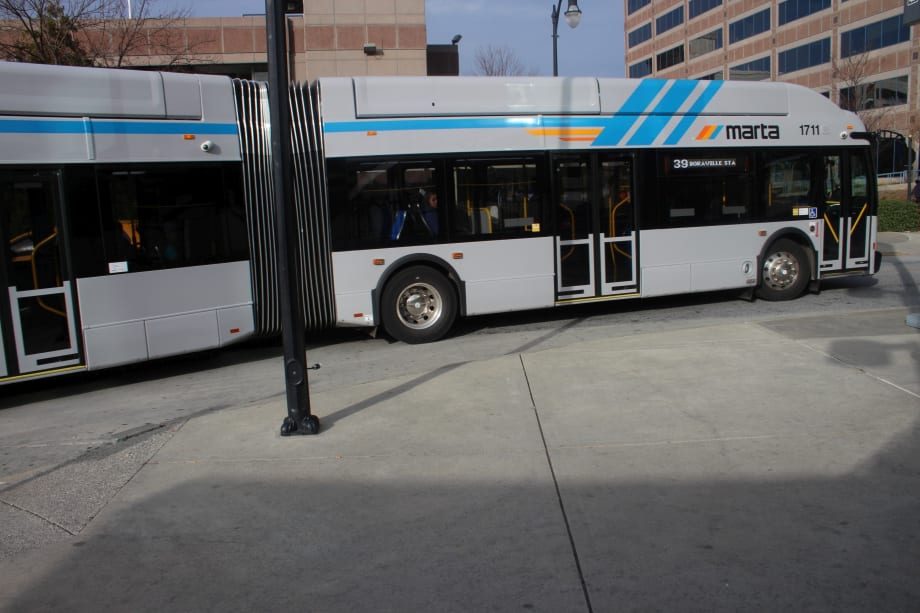
MARTA's installation of bus wash water reclamation systems was part of its award-winning sustainability initiatives. Photo: MARTA
3 min to read
MARTA's installation of bus wash water reclamation systems was part of its award-winning sustainability initiatives. Photo: MARTA
In honor of Earth Week, the American Public Transportation Association (APTA) recognized three public transportation organizations for their achievements in sustainability. Bronze, Silver, and Gold Level recognitions are granted based on each organization's measurable achievements
The Metropolitan Atlanta Rapid Transit Authority (MARTA), Caltrain, and SamTrans, each received a Silver Level recognition. They are participants in APTA's Sustainability Commitment program, a voluntary program for public transit agencies and businesses to commit to environmental, social, and economic sustainability actions.
Silver Level – MARTA – Atlanta, Ga.
MARTA reduced water usage by 27% when it made three changes: implementing storm water management plans at each of its facilities; improving train wash requirements and water treatment plant operations; and installing bus wash water reclamation systems. MARTA has also developed community programs at Five Points, including public gardens for local high schoolers to tend as part of their curriculum and soccer fields for community members. Additionally, MARTA promotes multimodal transit around Atlanta beyond MARTA services by partnering with the city in the Bike Share program. Bike fix-it stations and bike racks have been installed at all rail stations and ensure that MARTA rail and buses allow easy bike transport with bike racks and stabilizing areas.
Silver Level – Caltrain – San Carlos, Calif.
In 2017, Caltrain expanded its use of renewable electricity by partnering with three Community Choice Energy Programs and two municipal utilities, which will supply 100% renewable power from sources such as solar, wind, and small hydroelectric. Through this effort, Caltrain will reduce its carbon footprint from electricity use by approximately 20%. The agency was also able to realize a 48% reduction per passenger miles traveled in water usage. This was accomplished by introducing train wash systems that recycle 80% of water used; using water conserving faucet aerators in administrative offices; and installing smart irrigation controllers for landscaping, along with other water efficiency measures.
Silver Level – SamTrans – San Mateo County, Calif.
SamTrans has worked to improve the overall sustainability of the agency through a variety of initiatives over the past seven years. The organization reduced its criteria air pollutant emissions by 31% per passenger miles traveled by adding 25 diesel-electric hybrid buses to its fleet in 2013 and 2014, which save fuel and produce less nitrogen oxide emissions, inhalable particulates, and greenhouse gas emissions. In early 2018, SamTrans retrofitted 131 diesel buses with SensoTop software that increases mileage per gallon and reduces fuel consumption through optimal gear shifting. SamTrans estimates the software will save approximately 18,750 gallons of diesel annually.
In 2015, SamTrans received the BizSMART@Work Award from Recology and RethinkWaste for achievements in waste management. In recent years, SamTrans partnered with local entities to create the Connect, Redwood City! program that aims to expands the use of car share, short-distance vanpools, and a revamped telecommute program for San Mateo County employees. The goal of the program is to provide residents, visitors, and local employees with easy and convenient options to travel around Redwood City through sustainable modes of transportation.
More Rail

New York MTA Advances Final Contract for Second Avenue Subway Expansion
Contract Four is the largest in the Second Avenue Subway Phase 2 project and includes construction of station infrastructure, tracks, and signals for the subway expansion, MTA officials said. Work on Contract Four will begin in 2027.
Read More →
San Diego MTS Breaks Monthly Trolley Ridership Record
Agency officials said July’s ridership indicates MTS’s continued recovery from the pandemic.
Read More →
Report Examines NJ TRANSIT Reliability, Funding Challenges
The Garden State Initiative analysis examines the roles of Amtrak infrastructure, fleet management, and agency operations while recommending a more performance-based approach to improving reliability.
Read More →
Stadler, CapMetro Sign Long-Term Rail Fleet Support Agreement
Beginning in 2027, Stadler will provide on-site technical expertise, spare parts support, training, and obsolescence management to help extend the reliability and longevity of CapMetro’s GTW fleet.
Read More →
Biz Briefs: Alstom Lands Canadian Contract, LYT to Supply California TSP, and More
In METRO's latest installment, we take a look at recent news from Complete Coach Works, Beep, FlixBus, and more partnerships making headlines across the transportation sector.
Read More →
CATS Gold Line Marks 5 Years of Service, 2.8M Passenger Trips
With a six-mile expansion planned, the Charlotte streetcar is positioned to connect more neighborhoods and major transit hubs across the region.
Read More →
Why Simulating Pedestrian Movement Has Become Essential for Modern Rail Stations
Pedestrian microsimulation is helping rail planners identify bottlenecks, test station designs, and prepare complex transit hubs for growing passenger volumes.
Read More →
Amtrak Begins Major Construction at New York’s Sunnyside Yard
The new maintenance facility will support Amtrak’s Airo trainsets while improving maintenance efficiency and turnaround times in New York.
Read More →
Chicago Leaders Unveil Plans for O’Hare Airport Express Train
The privately developed project would offer a 15-minute trip between downtown and O’Hare’s Terminal 2, with trains operating every 15 minutes on a dedicated track. The service would use battery-electric trains and three existing freight rail rights-of-way.
Read More →
OCTA Maps Out 30-Year Strategy to Protect Coastal Rail Corridor
The draft feasibility report identifies strategies to protect the coastal rail line for decades as the agency continues near-term stabilization and sand placement efforts.
Read More →