



Sun Tran Adds Hybrids, Taps Biodiesel
Currently three-quarters of Sun Tran’s fleet exclusively utilizes biodiesel fuel, which is a domestically produced, renewable fuel that can be manufactured from vegetable oils, animal fats or recycled restaurant greases.
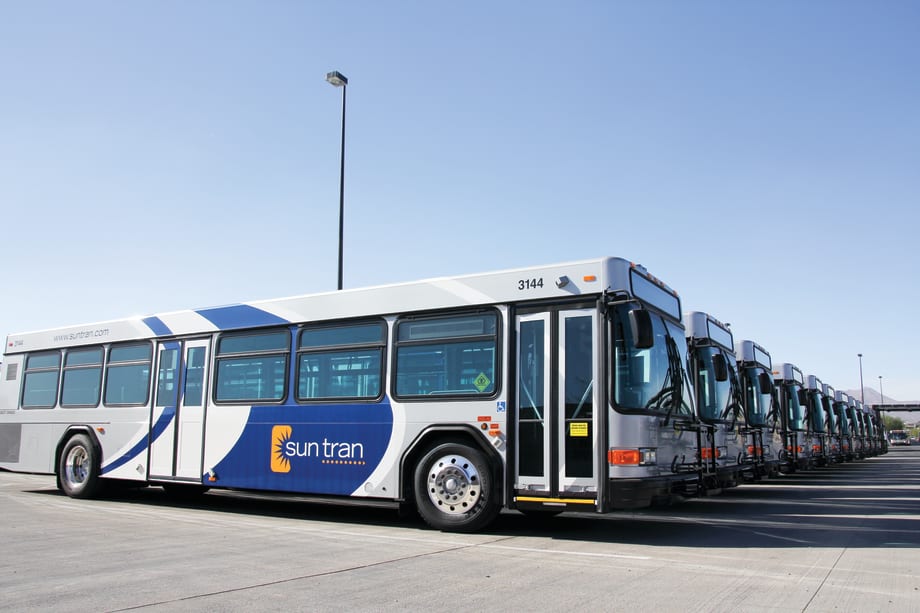
Tucson, Ariz.-based Sun Tran recently placed 47 new alternatively-fueled buses — 10 using hybrid-electric technology and 37 utilizing B5 biodiesel — over a six-month period. The new buses replace almost 19% of the fleet and will be used throughout the system on regular fixed routes.
“In the late 1980s, there were growing concerns about Tucson’s air quality, which led to Sun Tran and the City of Tucson to begin experimenting with alternative fuels,” Sun Tran GM Kate Riley explains. “In 1987, Sun Tran converted a 35-foot GMC bus to use both compressed natural gas (CNG) and diesel fuel. This was one of the first such buses in the country, and the start of the transition to utilize alternative fuels.”
By 1997, nearly half of Sun Tran’s fleet used CNG technology, and by the spring of 2006, 100% of Sun Tran’s fleet ran on cleaner-burning fuels — specifically, CNG and biodiesel at that time.
Currently three-quarters of Sun Tran’s fleet exclusively utilizes biodiesel fuel, which is a domestically produced, renewable fuel that can be manufactured from vegetable oils, animal fats or recycled restaurant greases. Biodiesel-fueled buses also emit significantly fewer particulates than traditional diesel-fueled vehicles.
The 57 buses purchased since 2010 are equipped with selective catalytic reduction technology that utilizes a urea solution injected into the exhaust gases to meet tighter U.S. Environmental Protection Agency emissions standards for nitrogen oxides.
The buses, built by Gillig, have replaced 15-year-old vehicles in Sun Tran’s fleet, decreasing the average age from 6.8 to 4.6 years.
In addition to the 197 B5 biodiesel buses, SunTran’s fleet includes 45 CNG and 11 hybrid-electric/biodiesel vehicles. Riley explains that SunTran plans on keeping flexibility in their future alternative-fueled vehicle choices.
“There is no plan to completely run any one fuel type. Sun Tran prides itself on the use of alternative fuels, but wants to ensure we continue to be flexible as additional vehicles are purchased,” she says. “As fuel technologies improve, we will continue to procure the best fuel options available at that time.”
More Technology

From Legacy Silos to Conversational Intelligence
What if transit leaders could ask any operational question and get a trusted answer in seconds? Conversational AI is transforming how agencies use their data.
Read More →
USDOT Announces Rail Vehicle Replacement Grants, Chattanooga AV Shuttle Funding
More than $191 million in federal funding will help three transit agencies replace aging rail vehicles and support a new autonomous shuttle service in Chattanooga.
Read More →
Bus Tech Talk: Keeping Transit Technicians Ahead of the Technology Curve
LA Metro’s Obed Mejia discusses technician training, evolving maintenance technology, fleet replacement, and strategies for getting the most out of today’s transit fleets.
Read More →

Biz Briefs: RIPTA Unveils New Frontrunners, Clevland RTA Adds New Siemens, and More
In METRO's latest installment, we take a look at recent news from Siemens, Prevost, Dodge, and more partnerships making headlines across the transportation sector.
Read More →
Why Simulating Pedestrian Movement Has Become Essential for Modern Rail Stations
Pedestrian microsimulation is helping rail planners identify bottlenecks, test station designs, and prepare complex transit hubs for growing passenger volumes.
Read More →
APTA Transform Conference & EXPO Exhibitor Spotlight
METRO’s Exhibitor Spotlight provides a quick look at some of the companies exhibiting at this year’s event, including where to find them on the show floor.
Read More →
CharterUP’s Armir Harris on Technology, AI, and the Future of Group Mobility
In a recent episode of METROspectives, CharterUP Founder/CEO Armir Harris discussed the company’s evolution from an online charter bus marketplace into a technology platform supporting public- and private-sector mobility and much more.
Read More →
Biz Briefs: ChargePoint, Eaton Power Santa Monica’s Electric Bus Fleet Transition and More
From manufacturers and suppliers to transit agencies and motorcoach operators, these updates offer a snapshot of the projects, partnerships and business moves driving the industry forward.
Read More →
Stay Connected With METRO Magazine Across Social Media
Are you following us on Facebook, LinkedIn, and YouTube? Join the METRO community now!
Read More →
RTD Launches NextRide App to Consolidate Trip Planning, Fares, Security Reporting
The app expands on RTD’s existing NextRide web application and allows customers to view real-time vehicle locations and service alerts, purchase and store digital fares, and access customer support.
Read More →