




RELATED: BART police taking steps to combat cellphone thefts
BART upgrades digital signage at stations
The features include a Fleet of the Future tracker and details about cancelled trains.
September 4, 2019
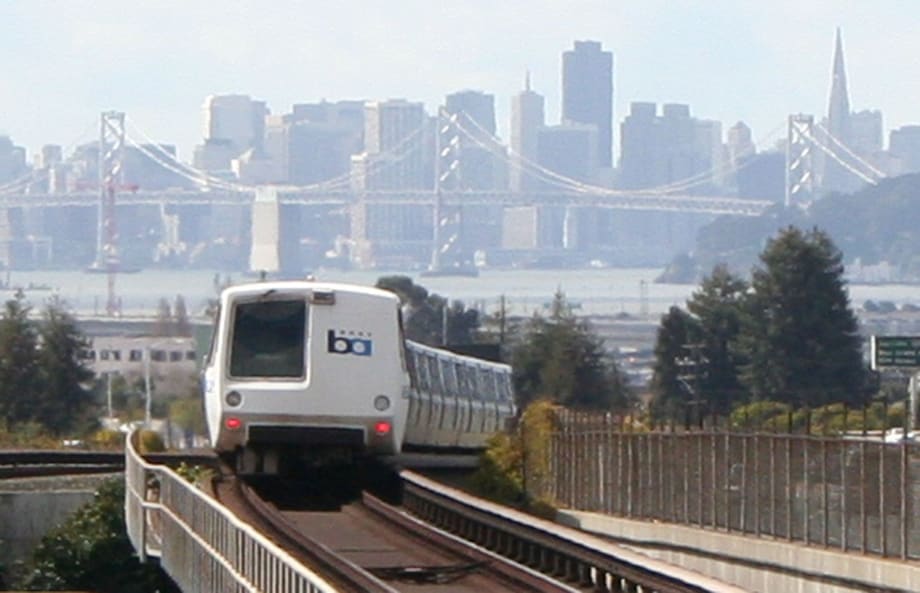
BART’s current platform signs are no longer manufactured, making repairs difficult as parts need to be replicated.
BART
2 min to read
BART’s current platform signs are no longer manufactured, making repairs difficult as parts need to be replicated.
BART
As part of BART’s new GM Bob Powers’ plan to improve the customer experience through increased communication, the agency unveiled two significant additions to its digital platform signs.
The features include a "Fleet of the Future" tracker and details about cancelled trains.
“These improvements will increase transparency with our riders and will show we are working on ways to make taking BART easier and more enjoyable,” said Powers.
Riders at the platform level will now know if one of the approaching trains is a Fleet of the Future train with three doors or a legacy train with two doors. The display will specifically note if the approaching car has two or three doors. The information is very important for people who use wheelchairs as the wheelchair area on the new cars is located near the middle door. Floor decals marking where the third door lines up on the platform have already been installed at a few stations and will continue to be placed systemwide.
The Fleet of the Future train tracker in being rolled out in phases and will be added to the Real Time Departures feature on bart.gov and the BART Official app before the end of the year. The agency also plans to offer the new train data feed for third-party developers at a later date.
The platform signs will now also make clear when a scheduled train has been cancelled or removed from service. The sign will specifically note when a train has been cancelled, giving riders advance warning. BART’s new Trip Planner shows cancelled trips, but until now the platform signs didn’t. The train would simply disappear from the sign and PA announcements would be made at the station.
The Computer Systems Engineering team is currently exploring the next generation of platform signs and plans to pilot modern signs at three yet-to-be-determined stations in the next 12 months. BART’s current platform signs are no longer manufactured, making repairs difficult as parts need to be replicated. Staff want new signs that use full color to incorporate the color of each line as the new Fleet of the Future trains do and the ability to post side-by-side messages.
More Technology

ETA CEO John Maglio on Transit Technology, Innovation, and Building Agency Trust
ETA founder and CEO John Maglio explores the evolution of transit technology, the importance of reliable systems, and how stronger partnerships can help agencies improve operations and the passenger experience.
Read More →
Lextran, Via Team for On Demand, HDR to Work on Twin Cities BRT, and More
In METRO's latest installment, we also take a look at recent news from Keolis, Complete Coach Works, Anchor Transportation, and more partnerships making headlines across the transportation sector.
Read More →
Caltrain’s Electrification Drives a New Era of Ridership Growth
The railroad’s shift to electric service has brought more frequent trains, stronger customer satisfaction, and increased ridership, earning it APTA’s Outstanding Public Transportation System award.
Read More →
Video Surveillance in Public Transit: What Riders Really Think
As video surveillance gains public acceptance, new research from Axis Communications reveals what transit riders expect from agencies when it comes to safety, privacy, and AI.
Read More →
New York MTA Launches Historic $1.9B Signal, Track Modernization Project
Funded in part by congestion pricing revenue, the project will replace nearly century-old signals along the A and C lines in Brooklyn and Queens.
Read More →
Biz Briefs: New Electric Offering from Alexander Dennis/Volvo, Transdev in Boston, and More
In METRO's latest installment, we also take a look at recent news from STV, WSP, Prevost, and more partnerships making headlines across the transportation sector.
Read More →
Roman Cornell on ABC Companies’ Evolution and the Future of Passenger Transportation
The company’s CEO discusses carrying forward a third-generation family legacy, ABC’s continued evolution in passenger transportation, support for increasingly complex fleets, and how technology and continued investment could help operators improve uptime.
Read More →
ETA CEO John Maglio on Transit Technology, Innovation, and Building Agency Trust
ETA founder and CEO John Maglio explores the evolution of transit technology, the importance of reliable systems, and how stronger partnerships can help agencies improve operations and the passenger experience.
Read More →
Frontrunner Bus Group Introduces XF Low-Floor Bus with Enhanced Accessibility
The new mid-sized bus features a full flat-floor design, eight-inch curbside step-in height, and zero-entry rear ramp to improve passenger access and operational flexibility.
Read More →
Building a Flexible Path to Transit Electrification with BAE's John Hroncich
John Hroncich discusses BAE Systems’ modular and scalable approach, lessons learned from decades of real-world operations, and how agencies can identify electrification strategies that fit their fleets.
Read More →