Sound Transit receives first of 152 new Siemens LRVs
The new vehicles are expected to more than triple Sound Transit’s current fleet size of 62 LRVs in service
by Alex Roman, Managing Editor
June 19, 2019
Sound Transit ordered 122 LRVs from Siemens in September 2016, adding another order for 30 more LRVs in April 2017.
Sound Transit
2 min to read
Sound Transit ordered 122 LRVs from Siemens in September 2016, adding another order for 30 more LRVs in April 2017.
Sound Transit
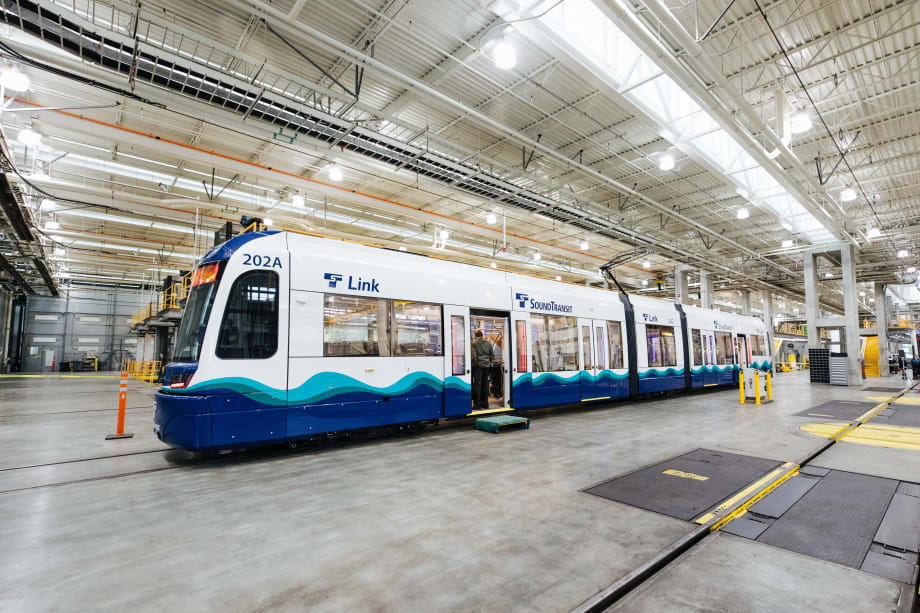
Sound Transit introduced the first of its 152 new Siemens light rail vehicles during an event at its Operations and Maintenance facility in Seattle.
The new vehicles are expected to more than triple Sound Transit’s current fleet size of 62 LRVs in service. The new vehicles will also feature several improvements in on-board systems and passenger experience over the current Kinkisharyo-built fleet.
The new vehicles will also feature several improvements in on-board systems and passenger experience over the current Kinkisharyo-built fleet.
Sound Transit
Each of the new vehicles will provide 74 seats, with larger windows, a wider center-car aisle, more seats with space to stow luggage, and four bicycle hooks. Each car will also come equipped with dynamic passenger information displays and LED lighting improvements.
“The new vehicles are critical to meet ridership demand as we move forward aggressively in building our light rail network,” said Sound Transit CEO Peter Rogoff. “These new cars will become backbone of the fleet serving Northgate, Lynnwood, Federal Way, Bellevue, and Redmond in the next five years.”
Sound Transit ordered 122 LRVs from Siemens in September 2016, adding another order for 30 more LRVs in April 2017. The contract for the two orders totaled $642.5 million.
The arrival of the first Siemens vehicle marks the start of regular delivery of between one and three vehicles per month through 2024. The new cars will undergo extensive testing and commissioning before entering revenue service. The first of the new cars is expected to enter service early next year.
The Denmark Station $2.3 million construction investment project includes a new 280-foot concrete boarding platform, built eight inches above the top of rail, for improved accessibility for passengers with disabilities and families with small children and much more.
Caltrain and its partners have implemented safety improvements at specific locations in response to known risk conditions, operational needs, and available funding since the agency’s founding.
On a recent episode of METROspectives, METRO Magazine’s Executive Editor Alex Roman sat down with Ana-Maria Tomlinson, Director of Strategic & Cross-Sector Programs at the CSA Group, to explore a bold initiative aimed at addressing those challenges: the development of a National Code for Transit and Passenger Rail Systems in Canada.
Competitive FTA grants will support accessibility upgrades, family-friendly improvements, and cost-efficient capital projects at some of the nation’s oldest and busiest transit hubs.
The 3.92-mile addition will soon take riders west beyond its current Wilshire and Western station in Koreatown, continuing under Wilshire Boulevard through neighborhoods and communities including Hancock Park, Windsor Square, the Fairfax District, and Carthay Circle into Beverly Hills.
Under the plan, all long-distance routes will transition to a universal single-level fleet, replacing today’s mix of bi-level and single-level equipment.
The milestone is a significant step toward modernizing the MAX Blue Line’s power infrastructure, one of the oldest components of the region’s light rail system.