



ARBOC's Spirit of Equess passes Altoona Testing
Currently available in diesel or compressed natural gas propulsions, the vehicle offers many of the capabilities of a heavy-duty bus, but retains all the benefits of a mid-level vehicle.


The Equess underwent seven months of testing, simulating a 10-year, 350,000-mile service life.
ARBOC
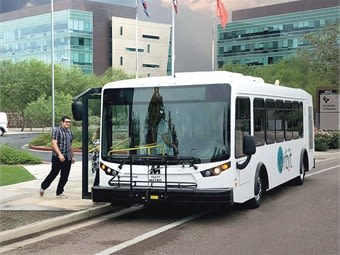
The Equess underwent seven months of testing, simulating a 10-year, 350,000-mile service life.
ARBOC
ARBOC Specialty Vehicles LLC, a U.S. subsidiary of NFI Group Inc., announced its Spirit of Equess® passed the Federal Transit Administration (FTA) Model Bus Testing Program at Altoona, Pennsylvania.
With its successful completion, the Spirit of Equess becomes the first and only medium-duty transit bus to complete Altoona Testing, which thoroughly assesses the dependability of all new bus models for use in federally-funded public transit systems procurement. This follows recent NFI subsidiary breakthroughs, where Motor Coach Industries (MCI) announced its all-new, fully-accessible MCI D45 CRT LE completed Altoona Testing; and where the New Flyer of America Inc.’s 60-foot articulated heavy-duty transit bus became the first and only bus of its kind to complete FTA’s Altoona Testing.
The Equess underwent seven months of testing, simulating a 10-year, 350,000-mile service life. According to Barry Hines, VP, engineering, the test was set for slightly under the model’s full gross vehicle weight rating (GVWR) of 26,000 lbs. to equal a real-life load of seated and standing passengers.
The Spirit of Equess is ARBOC’s medium-duty, low-floor transit and shuttle bus constructed on a purpose-built ARBOC chassis. While the bus is a new concept, it was constructed using industry-proven methods.
Today, ARBOC manufactures five different products with numerous variants, all either having successfully completed Altoona Testing or having received an official waiver from the FTA.
The Altoona test on the Equess began in January of 2018 and concluded in August. ARBOC plans to return to the test track with both a 35-foot and electric alternatives of the new design.
The ADA- and Buy America-compliant ARBOC Spirit of Equess, currently available in diesel or compressed natural gas propulsions, offers many of the capabilities of a heavy-duty bus, but retains all the benefits of a mid-level vehicle. The air-suspension system allows the bus to “kneel” 3.5 inches, creating a 1:8 ramp slope that can easily be maneuvered by passengers using mobility aids, such as wheelchairs or power scooters.
More Bus

People Movement: Dan Dipert Coaches Adds Third-Generation Leader, Keolis Names New Valley Metro VP/GM, and More
In this edition, we also cover recent appointments and announcements at the Wabtec, SilverRide, HNTB, and more, showcasing the individuals helping to shape the future of transportation.
Read More →
New York MTA Plans Largest Bus Fleet Upgrade in More Than a Decade
The agency is seeking manufacturers for 650 new CNG buses to replace aging vehicles, improve reliability, and advance its broader fleet modernization strategy.
Read More →
Building a Flexible Path to Transit Electrification
John Hroncich discusses BAE Systems’ modular and scalable approach, lessons learned from decades of real-world operations, and how agencies can identify electrification strategies that fit their fleets.
Read More →
Bus Tech Talk: Keeping Transit Technicians Ahead of the Technology Curve
LA Metro’s Obed Mejia discusses technician training, evolving maintenance technology, fleet replacement, and strategies for getting the most out of today’s transit fleets.
Read More →
Biz Briefs: RIPTA Unveils New Frontrunners, Clevland RTA Adds New Siemens, and More
In METRO's latest installment, we take a look at recent news from Siemens, Prevost, Dodge, and more partnerships making headlines across the transportation sector.
Read More →
People Movement: Holly Arnold Joins Transdev and More
In this edition, we also cover recent appointments and announcements at Pace, CamTran, MCI, and more, showcasing the individuals helping to shape the future of transportation.
Read More →
The High Cost of Transit Buses: Industry Leaders Look to Procurement Reform
Transit leaders and policymakers examine how standardized bus designs, streamlined procurement, and predictable funding could help agencies stretch budgets and deliver better service.
Read More →
The Business Voice Behind Public Transportation
As chair of APTA’s Business Members Board of Governors, Ray Melleady explains how more than 850 business members are partnering with transit agencies to advance funding, innovation, and industry-wide collaboration.
Read More →
From Surviving to Thriving: Building Stronger Transportation Organizations
Bus Business Consultants founder Brian Dickson shares lessons on leadership, organizational health, and creating options for long-term success in a changing transportation industry.
Read More →
Finding the ‘Happy Medium’: Optimizing Maintenance Without Sacrificing Reliability
The key to maintenance optimization isn’t doing less work—it’s doing the right work at the right time on the right assets.
Read More →