




RELATED: San Francisco introduces interactive, online performance dashboards
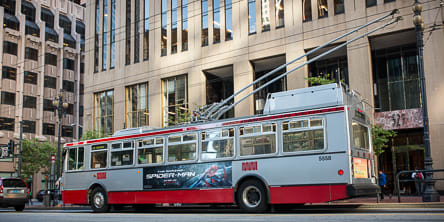
San Francisco MTA to add 185 40-foot trolley buses
The new vehicles will replace buses currently in service that are over 17 years old and account for 40% of system-wide delays, due to mechanical issues.
June 15, 2017
SFMTA
2 min to read
SFMTA
The San Francisco Municipal Transportation Agency (SFMTA), which manages the transportation network, announced that the Board of Supervisors voted to authorize the acquisition of 185 40-foot trolley buses to replace Muni’s aging fleet. The new vehicles will replace buses currently in service that are over 17 years old and account for 40% of system-wide delays, due to mechanical issues.
This is the most recent milestone for this procurement, which has received unwavering support from Mayor Ed Lee, the SFMTA Board of Directors, and the Board of Supervisors to improve the reliability of Muni by replacing and renewing the rubber tire fleet.
“Replacing aging vehicles is vital to Muni’s reliability and performance,” said SFMTA Chair Cheryl Brinkman. “This city deserves a safe and affordable 21st Century transit system, and these sustainable upgrades will improve service for our City’s working families and workforce for many years to come.”
Electric trolley buses are rubber-tired vehicles with motors powered by electricity from overhead wires. Although their operations can be less flexible than that of motor buses, trolley buses are more energy efficient, much quieter, and much less polluting. They are better on hills, require less maintenance, and are longer lasting than motor buses.
“The people of San Francisco deserve modern, reliable transportation services that support the quality of life and economic vitality of the city,” said SFMTA Director of Transportation Ed Reiskin. “By investing in new, high-performing, quiet and green electric trolley vehicles, we are able to provide better options for moving around the city.”
The approval by the Board of Supervisors culminates in the last of four bus procurements targeted to replace and expand our current fleet. The agency’s first new vehicles entered service in 2013 and the last trolley in this purchase will arrive in 2019. The contract approved concludes the largest zero-emission procurement in North America.
The SFMTA is aggressively pursuing replacement and rehabilitation programs on all its entire fleet of Muni buses, light rail vehicles, and historic street cars. With more people travelling throughout the city on a daily basis, more stress is being placed on the public transit system. By updating the bus fleet, the SFMTA is ensuring the city is preparing for economic growth while making sure the transportation system is accessible, equitable, and sustainable.
More Management

Surface Transportation Extension Averts Shutdown, Leaves Transit Funding Gap
The stopgap keeps federal transportation programs moving, but missing advance funding could complicate the transit and rail projects agencies are planning next.
Read More →
Bus Tech Talk: Keeping Transit Technicians Ahead of the Technology Curve
LA Metro’s Obed Mejia discusses technician training, evolving maintenance technology, fleet replacement, and strategies for getting the most out of today’s transit fleets.
Read More →
Why Simulating Pedestrian Movement Has Become Essential for Modern Rail Stations
Pedestrian microsimulation is helping rail planners identify bottlenecks, test station designs, and prepare complex transit hubs for growing passenger volumes.
Read More →

People Movement: Holly Arnold Joins Transdev and More
In this edition, we also cover recent appointments and announcements at Pace, CamTran, MCI, and more, showcasing the individuals helping to shape the future of transportation.
Read More →
NITA Launches New Era of Regional Transit in Chicago
The new authority replaces the RTA and brings CTA, Metra, and Pace under a strengthened regional framework for funding, planning, fares, safety, and service coordination.
Read More →
How World Cup Mobility Put Transit and Motorcoaches to the Test
Behind the seamless trips were months of planning, multimodal partnerships, and lessons agencies and operators can carry into the next mega-event.
Read More →
DART Introduces Dashboard to Track Ridership Data
The initial release represents the first phase of DART’s efforts to expand access to ridership information. Additional dashboard features, data, and functionality will be introduced in future phases.
Read More →
SEPTA Breaks Ground on $44M Accessibility Upgrade at 11th Street Station
The project will add elevators and other upgrades to make the busy L station fully ADA accessible, with a yearlong closure expected to accelerate construction and save up to $3 million.
Read More →
Sponsored•August 28, 2026
FTA Opens $610M for Transit Fleet Modernization
Propane autogas gives transit agencies a reliable, funding-eligible option for fleet upgrades.
Read More →
NJ TRANSIT Explores Unified Real-Time Customer Communications Platform
The agency is gathering industry input on AI, real-time data, and integrated communications technology as it prepares to procure a system that delivers faster, more consistent transit updates across every customer channel.
Read More →