




RELATED: JTA Works to Provide Quality Service, While Delivering Diverse Project Portfolio
Fla.'s JTA launches First Coast Flyer Blue Line BRT service
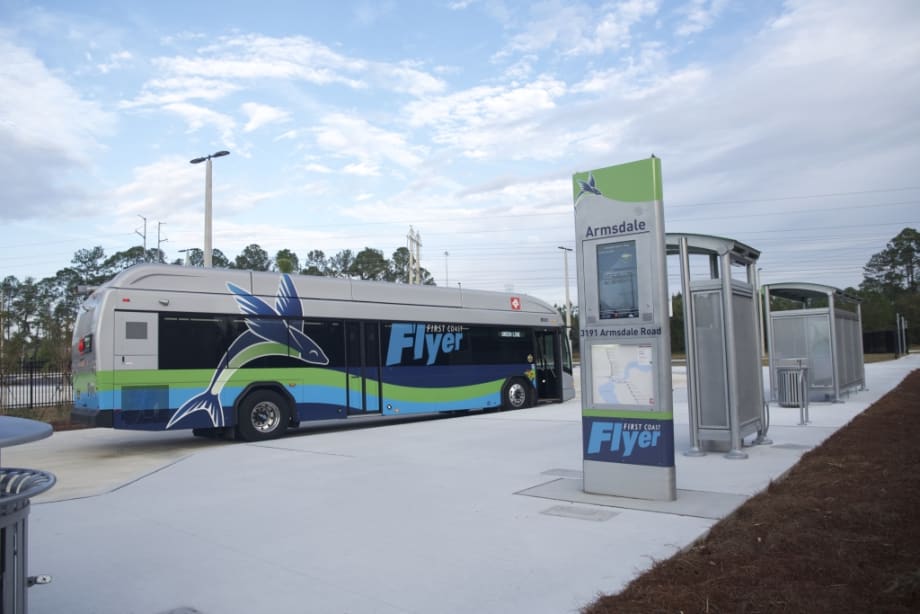
The 11.1 mile Blue Line on the Southeast Corridor features direct, high-frequency service; seven branded stations; transit signal priority at 18 intersections; and off-board fare collection.
December 6, 2016
2 min to read
Carolyn Flowers, Acting Administrator of the Federal Transit Administration spoke at a special ceremony to celebrate the launch of the Jacksonville Transportation Authority’s (JTA) First Coast Flyer™ BRT Blue Line. Additional guests at the ceremony included JTA Chair Scott L. McCaleb, JTA CEO Nathaniel P. Ford Sr., and City Councilman Daniel Becton.
The First Coast Flyer offers customers a frequent, limited-stop, easy, and reliable way to get across town. With the addition of the Blue Line, the Flyer now connects customers from the new Armsdale Park-n-Ride lot, which opened on Monday. The Armsdale facility features parking for 189 vehicles, bike racks, a ticket vending machine, safety and security offices, and a breakroom for staff and operators.
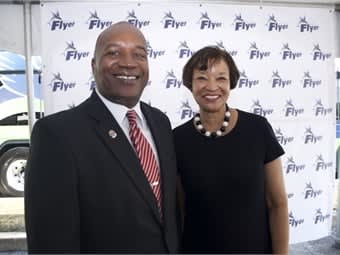
JTA's Nathaniel Ford Sr. with FTA Acting Administrator Carolyn Flowers.
The First Coast Flyer Blue Line departs Rosa Parks Transit Station and runs along Philips Highway with stops at major destinations to include MOSH, Baptist Health, the Park-n-Ride lot at JTB/Philips, and the Avenues Mall.
“The Flyer’s direct routes quickly connect people to greater employment opportunities, healthcare, education and entertainment,” said JTA CEO Nathaniel P. Ford Sr. “The Flyer continues to build on the foundation for a regional transportation network that will contribute to the success of the economy and enhance quality of life.”
The 11.1 mile Blue Line on the Southeast Corridor features direct, high-frequency service; seven branded stations; transit signal priority at 18 intersections (holds green lights, allowing buses to move through intersections without stopping); off-board fare collection; complimentary Wi-Fi; a Park-n-Ride lot; and real-time bus arrival information. The Flyer makes fewer stops and offers 10-minute frequency during weekday peak hours and 15-minute frequency in weekday off peak hours. The $23.8 million project is funded by the FTA, Florida Department of Transportation, and the JTA.
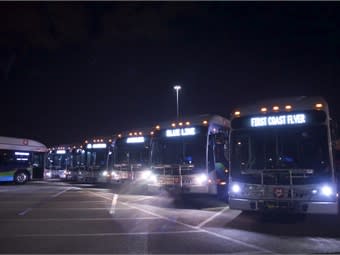
The final two phases of the First Coast Flyer are the East and Southwest corridors and they are in the project development phase. When completed in 2019, the Flyer system will cover 57 miles of destination travel, and will give the JTA the distinction of having the largest BRT system in the Southeast.
More Bus

New York MTA Plans Largest Bus Fleet Upgrade in More Than a Decade
The agency is seeking manufacturers for 650 new CNG buses to replace aging vehicles, improve reliability, and advance its broader fleet modernization strategy.
Read More →
Building a Flexible Path to Transit Electrification
John Hroncich discusses BAE Systems’ modular and scalable approach, lessons learned from decades of real-world operations, and how agencies can identify electrification strategies that fit their fleets.
Read More →
Bus Tech Talk: Keeping Transit Technicians Ahead of the Technology Curve
LA Metro’s Obed Mejia discusses technician training, evolving maintenance technology, fleet replacement, and strategies for getting the most out of today’s transit fleets.
Read More →
Biz Briefs: RIPTA Unveils New Frontrunners, Clevland RTA Adds New Siemens, and More
In METRO's latest installment, we take a look at recent news from Siemens, Prevost, Dodge, and more partnerships making headlines across the transportation sector.
Read More →
People Movement: Holly Arnold Joins Transdev and More
In this edition, we also cover recent appointments and announcements at Pace, CamTran, MCI, and more, showcasing the individuals helping to shape the future of transportation.
Read More →
The High Cost of Transit Buses: Industry Leaders Look to Procurement Reform
Transit leaders and policymakers examine how standardized bus designs, streamlined procurement, and predictable funding could help agencies stretch budgets and deliver better service.
Read More →
The Business Voice Behind Public Transportation
As chair of APTA’s Business Members Board of Governors, Ray Melleady explains how more than 850 business members are partnering with transit agencies to advance funding, innovation, and industry-wide collaboration.
Read More →
From Surviving to Thriving: Building Stronger Transportation Organizations
Bus Business Consultants founder Brian Dickson shares lessons on leadership, organizational health, and creating options for long-term success in a changing transportation industry.
Read More →
Finding the ‘Happy Medium’: Optimizing Maintenance Without Sacrificing Reliability
The key to maintenance optimization isn’t doing less work—it’s doing the right work at the right time on the right assets.
Read More →
LA Metro, City of West Hollywood, and Partners Advance Smarter Bus Lane Enforcement
The award-winning partnership combines AI-powered detection with human oversight to improve bus reliability, accessibility, and enforcement efficiency.
Read More →