UWM campus installs 2 electric vehicle fast-charge stations
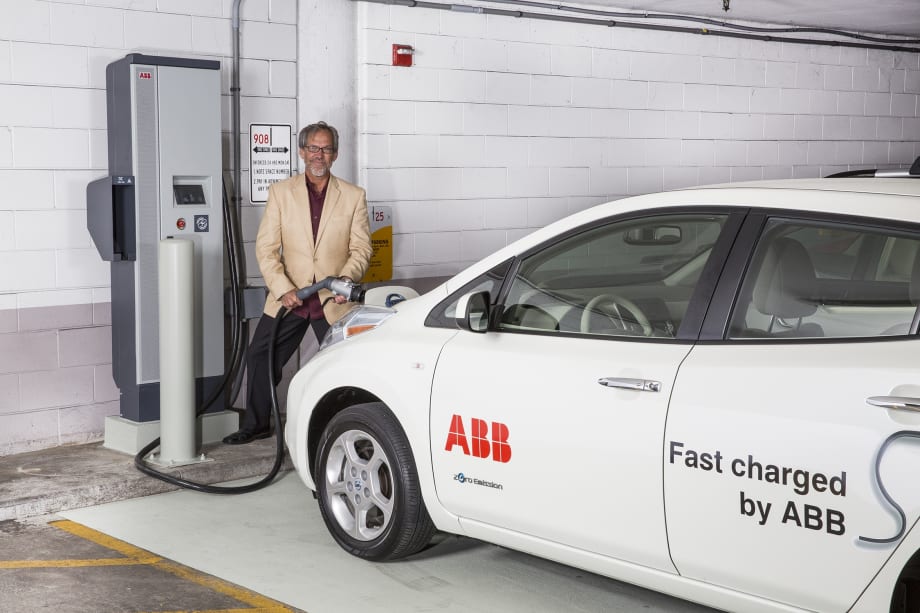
The two new DC stations, provided by ABB Inc., will charge electric vehicles in 30 to 90 minutes. These plug-in charge stations will work for the Nissan LEAF and Mitsubishi i-MiEV.
With the rise in the numbers of electric vehicles (EVs), the proliferation of local charge stations is becoming important in enhancing range confidence to maximize the benefits of all-electric driving.
With support from Nissan and ABB Inc., the University of Wisconsin-Milwaukee (UWM) has installed two EV fast chargers on their campus for public use.
Ad Loading...
The two new UWM stations are the first EV fast-charge stations in Milwaukee County. They bring the number of fast-charge stations in Wisconsin to four: ABB offers one to the general public at its New Berlin facility and another is available in Madison.
The two new DC stations, which will charge EVs in 30 to 90 minutes, are the latest addition to UWM’s other two AC charge stations. The AC stations take between four and eight hours to charge a vehicle, says Mike Priem, a senior facilities planning specialist in UWM’s Parking & Transportation division.
These plug-in charge stations will work for the Nissan LEAF and Mitsubishi i-MiEV. They will charge a Nissan LEAF to 80% in about 30 minutes.
“Nissan’s is the EV sales leader with more than 50,000 LEAFs on American roads today,” says Brendan Jones, director, EV Sales and Infrastructure Strategy. “Nissan is also making substantial investments in EV infrastructure such as these new fast chargers at the University of Wisconsin-Milwaukee to support EV drivers in markets across the United States.”
Wisconsin-based ABB produces automation products, such as the charging station equipment.
Ad Loading...
ABB also manufactures higher kilowatt chargers that can do the job in only 15 to 20 minutes, but the units installed at UWM are suitable for students, staff and faculty who are going into the Klotsche Center & Pavilion for a workout or running to a class, says Heather Flanagan, ABB’s marketing communications manager for electric vehicle charging infrastructure.
“It’s all about what makes most sense in each particular use case,” says Flanagan. “For example you wouldn’t require a high-voltage quick charge unit at home. But they become much more necessary around town to enable greater driving range.”
Located on the first levels of both the parking structure under the Engineering Math Sciences (EMS) building and the Klotsche Center & Pavilion structure, the fast-charge stations are available for use by anyone. There is no cost, except for the cost to park.
The existing longer-term charge stations on campus include one in the Northwest Quad lot and another in the EMS parking structure, which are also available to the general public.
The board authorized a five-year contract, with two one-year options, to Tolar Manufacturing Company Inc., for the fabrication and installation of upgraded passenger amenities at bus stops across the DART Service Area.
As motorcoaches navigate increasingly congested urban corridors filled with pedestrians, cyclists, scooters, and distracted drivers, safety leaders across the industry are confronting a growing challenge: visibility.
In this edition of Biz Briefs, we highlight the latest developments shaping the future of mobility — from manufacturers and technology providers to transit agencies and motorcoach service operators.
In this product roundup, METRO highlights transit software platforms designed to optimize scheduling; harness actionable data; and support flexible, on-demand operations.
A major goal of the pilot, which begins in April, is to test the speed, functionality, and durability of new handheld devices to scan Ventra and paper tickets.
Traditionally, bus lane enforcement has relied on manual processes carried out by transit police or parking enforcement officers. While it may be effective in certain municipalities, this approach is resource-intensive and very difficult to sustain.
A phased approach to technology, in-house capabilities, and workforce investment is helping transportation leaders break the reactive cycle and build more resilient, revenue-focused operations.