



AC Transit launches Tempo BRT system
The history-making Tempo system is a $232 million investment in the East Bay communities and seamlessly integrates the frequency of light-rail train service, but instead delivers unparalleled bus frequency through a nearly 10-mile network of dedicated and painted bus-only lanes.
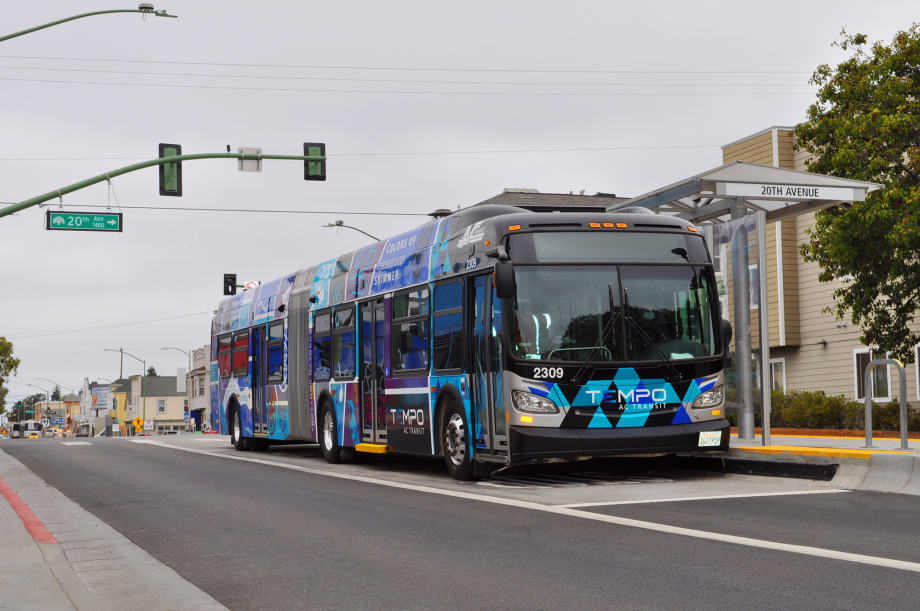
Tempo offers seating capacity for 58 riders and standing capacity for 38.
AC Transit
The Alameda-Contra Costa Transit District (AC Transit) is set to launch its new BRT service — Tempo.
The history-making Tempo system is a $232 million investment in the East Bay communities and seamlessly integrates the frequency of light-rail train service, but instead delivers unparalleled bus frequency through a nearly 10-mile network of dedicated and painted bus-only lanes.
Tempo will operate 27 all-new 60-foot coaches. Manufactured by New Flyer, Tempo coaches are powered by hybrid technology designed to reduce both particulate and Nitric oxide (NOx) emissions. The Tempo coach is also constructed with lighter weight components for improved fuel savings. Embedded technology allows the Tempo coach to kneel to variable heights and minimizes the slope difference between the platform and bus floor.
Each Tempo coach is equipped with five wider doors. Its middle doors feature bridge plates, to ease access for riders with mobility devices, and bright yellow gap fillers or Carey Fingers bridge even the smallest distance between the platform and coach. Cyclists are welcome on board as Tempo has moved bike racks to the interior of the coach. Tempo offers seating capacity for 58 riders and standing capacity for 38.
County ordered physical distancing mandates currently limit onboard rider capacity. Decals on coach doors highlight the occupant limits. Face coverings are required on onboard Tempo and all AC Transit bus lines.
Tempo’s 46 curbside and center median stations are the juncture of form, function, and modern art. Station handrails and some windscreens artistically depict generations of culture, heritage, and industry, along Tempo’s corridor. Also woven into the station’s architecture is a miles-long poem, crafted by Bay Area artists in the haiku tradition of unrhymed poetry.
Each station also features either a 16-, 32-, or 48-foot original designed canopy. Overhead variable message signs provide up-to-the-minute bus arrivals. Vision impaired riders receive bus arrival playback via the Real-Time Audio push button. Platform-mounted ticket vending machines and Clipper card readers quicken boarding by transferring fare payment to the platform. Tempo stations are also awash in LED lighting and speakers permitting Tempo’s Line Management staff to communicate system disruptions or emergency updates. Stations are also bordered with all-new high-visibility crosswalks, push-to-walk signal controls, and ADA curb ramps and sidewalks.
More Bus

New York MTA Plans Largest Bus Fleet Upgrade in More Than a Decade
The agency is seeking manufacturers for 650 new CNG buses to replace aging vehicles, improve reliability, and advance its broader fleet modernization strategy.
Read More →
Building a Flexible Path to Transit Electrification
John Hroncich discusses BAE Systems’ modular and scalable approach, lessons learned from decades of real-world operations, and how agencies can identify electrification strategies that fit their fleets.
Read More →
Bus Tech Talk: Keeping Transit Technicians Ahead of the Technology Curve
LA Metro’s Obed Mejia discusses technician training, evolving maintenance technology, fleet replacement, and strategies for getting the most out of today’s transit fleets.
Read More →
Biz Briefs: RIPTA Unveils New Frontrunners, Clevland RTA Adds New Siemens, and More
In METRO's latest installment, we take a look at recent news from Siemens, Prevost, Dodge, and more partnerships making headlines across the transportation sector.
Read More →
People Movement: Holly Arnold Joins Transdev and More
In this edition, we also cover recent appointments and announcements at Pace, CamTran, MCI, and more, showcasing the individuals helping to shape the future of transportation.
Read More →
The High Cost of Transit Buses: Industry Leaders Look to Procurement Reform
Transit leaders and policymakers examine how standardized bus designs, streamlined procurement, and predictable funding could help agencies stretch budgets and deliver better service.
Read More →
The Business Voice Behind Public Transportation
As chair of APTA’s Business Members Board of Governors, Ray Melleady explains how more than 850 business members are partnering with transit agencies to advance funding, innovation, and industry-wide collaboration.
Read More →
From Surviving to Thriving: Building Stronger Transportation Organizations
Bus Business Consultants founder Brian Dickson shares lessons on leadership, organizational health, and creating options for long-term success in a changing transportation industry.
Read More →
Finding the ‘Happy Medium’: Optimizing Maintenance Without Sacrificing Reliability
The key to maintenance optimization isn’t doing less work—it’s doing the right work at the right time on the right assets.
Read More →
LA Metro, City of West Hollywood, and Partners Advance Smarter Bus Lane Enforcement
The award-winning partnership combines AI-powered detection with human oversight to improve bus reliability, accessibility, and enforcement efficiency.
Read More →