



UTA, Community Transit Among 4 Agencies to Land BRT Funds
The four BRT projects receiving allocations are nearing completion of the statutory and regulatory requirements to receive a grant agreement.
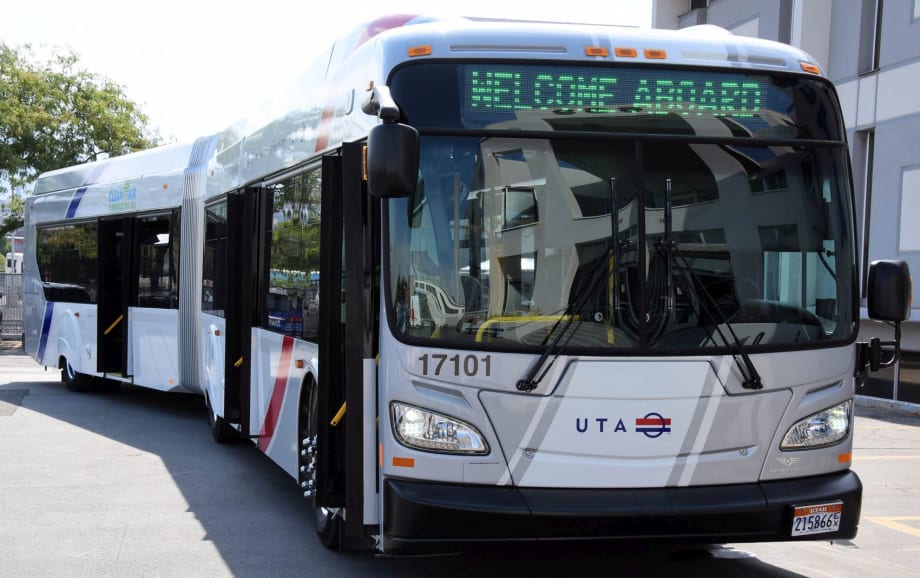
Utah Transit Authority will receive a $3.2 million allocation for the Ogden/Weber State University BRT Project.
UTA
The Federal Transit Administration (FTA) announced a total of $187 million in federal funding will be allocated to four bus rapid transit (BRT) infrastructure projects in California, Utah, and Washington State. Funding is provided through FTA’s Capital Investment Grants (CIG) Small Starts Program.
U.S. Transportation Secretary Pete Buttigieg said, “Millions of Americans rely on public transit to get to work, services, and family — and communities need support to create more public transit options. The Biden-Harris Administration is committed to modernizing and expanding our public transit systems, and that includes support for these great projects.”
The four BRT projects receiving allocations are nearing completion of the statutory and regulatory requirements to receive a grant agreement. The projects must meet these additional requirements before a grant can be awarded.
“The local communities will greatly benefit from improved access and mobility to transit service, helping people reach vaccination sites, jobs, schools and other important destinations,” said FTA Acting Administrator Nuria Fernandez.
The CIG Program provides funding for major transit infrastructure capital investments nationwide. Projects accepted into the program must go through a multi-year, multi-step process according to requirements in law to be eligible for consideration to receive program funds.
CIG Small Starts Projects Receiving Allocations
San Bernardino, Calif.:West Valley Connector BRT Project - San Bernardino County Transportation Authority will receive an $86.75 million allocation for the West Valley Connector BRT project. The 19-mile, zero-emission BRT line will connect Pomona to Rancho Cucamonga and will operate as part of Omnitrans’ sbX BRT service. The project includes the purchase of 40-foot, zero-emission buses, and construction of 21 new bus stations. The BRT will improve transit connections to Ontario International Airport (ONT), two Metrolink lines (San Bernardino and Riverside) and multiple major activity centers along Route 61 including Ontario Mills and Victoria Gardens.
Ogden, Utah:Ogden/Weber State University BRT Project -Utah Transit Authority will receive a $3.2 million allocation for the Ogden/Weber State University BRT Project. The 5.3-mile BRT will run electric buses from the Ogden FrontRunner Station, through downtown, along dedicated bus lanes in the center of the road on Harrison Boulevard and through the Weber State University campus, and to McKay-Dee Hospital. The project will benefit the community by reducing vehicle trips, supporting the economy, and providing more transportation options.
Everett, Wash.: Swift Orange Line BRT Project - Community Transit will receive a $37 million allocation for the Swift Orange Line BRT project, an 11.3-mile BRT corridor with 13 stations between Edmonds Community College in Lynnwood and the McCollum Park and Ride in Mill Creek. The project connects with two other Swift BRT lines, as well as Sound Transit’s Lynnwood Link Extension light rail project. Swift Orange Line service will improve connectivity in the region, better meet the needs of riders, and is scheduled to begin operating by March 2024.
Seattle: Madison Street BRT Project - The City of Seattle Department of Transportation will receive a $59.9 million allocation for the Madison Street BRT project, a 2.3-mile east-west BRT line operating diesel-electric buses along Madison Street spanning from downtown Seattle in the west to the Madison Valley neighborhood in the east, with connections in First Hill, Capitol Hill, and the Central Area. It will connect people to hospitals, schools, businesses, and other destinations as well as to dozens of bus routes, the First Hill Streetcar, and ferry service at the Colman Dock Ferry Terminal.
More Bus

New York MTA Plans Largest Bus Fleet Upgrade in More Than a Decade
The agency is seeking manufacturers for 650 new CNG buses to replace aging vehicles, improve reliability, and advance its broader fleet modernization strategy.
Read More →
Building a Flexible Path to Transit Electrification
John Hroncich discusses BAE Systems’ modular and scalable approach, lessons learned from decades of real-world operations, and how agencies can identify electrification strategies that fit their fleets.
Read More →
Bus Tech Talk: Keeping Transit Technicians Ahead of the Technology Curve
LA Metro’s Obed Mejia discusses technician training, evolving maintenance technology, fleet replacement, and strategies for getting the most out of today’s transit fleets.
Read More →
Biz Briefs: RIPTA Unveils New Frontrunners, Clevland RTA Adds New Siemens, and More
In METRO's latest installment, we take a look at recent news from Siemens, Prevost, Dodge, and more partnerships making headlines across the transportation sector.
Read More →
People Movement: Holly Arnold Joins Transdev and More
In this edition, we also cover recent appointments and announcements at Pace, CamTran, MCI, and more, showcasing the individuals helping to shape the future of transportation.
Read More →
The High Cost of Transit Buses: Industry Leaders Look to Procurement Reform
Transit leaders and policymakers examine how standardized bus designs, streamlined procurement, and predictable funding could help agencies stretch budgets and deliver better service.
Read More →
The Business Voice Behind Public Transportation
As chair of APTA’s Business Members Board of Governors, Ray Melleady explains how more than 850 business members are partnering with transit agencies to advance funding, innovation, and industry-wide collaboration.
Read More →
From Surviving to Thriving: Building Stronger Transportation Organizations
Bus Business Consultants founder Brian Dickson shares lessons on leadership, organizational health, and creating options for long-term success in a changing transportation industry.
Read More →
Finding the ‘Happy Medium’: Optimizing Maintenance Without Sacrificing Reliability
The key to maintenance optimization isn’t doing less work—it’s doing the right work at the right time on the right assets.
Read More →
LA Metro, City of West Hollywood, and Partners Advance Smarter Bus Lane Enforcement
The award-winning partnership combines AI-powered detection with human oversight to improve bus reliability, accessibility, and enforcement efficiency.
Read More →