



NJ TRANSIT WRTC Improvement Project Continues to Advance
The second phase of this project, which aims to finalize the concept plan and bring the project up to 30% design, was approved during the NJ TRANSIT Board of Directors meeting held on Sept. 14.

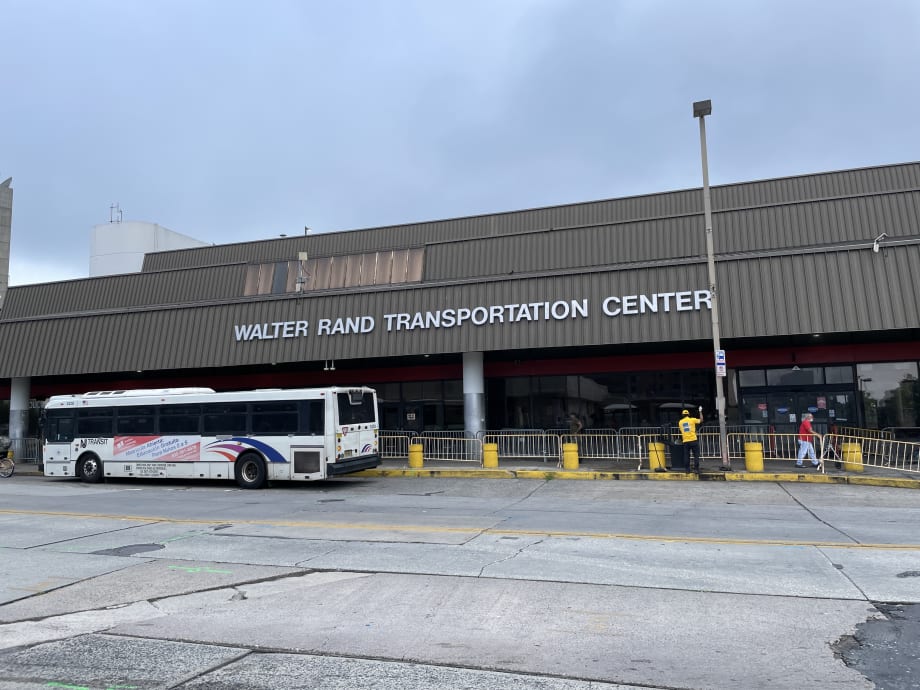
The WRTC Improvement Project will ultimately replace the existing facility with an expanded multi-purpose transit center that will provide an improved link for transportation in South Jersey.
Photo: Dough4872/Wikimedia Commons (CC BY-SA 4.0)
NJ TRANSIT announced it has taken another step towards contributing to the City of Camden’s revitalization and development by initiating Phase 2 of the Walter Rand Transportation Center (WRTC) Improvement Project.
The second phase of this project, which aims to finalize the concept plan and bring the project up to 30% design, was approved during the NJ TRANSIT Board of Directors meeting held on Sept. 14.
“NJ TRANSIT is committed to investing in our facilities and their surrounding communities,” said Diane Gutierrez-Scaccetti, New Jersey Department of Transportation commissioner. “The improvements to the Walter Rand Transportation Center will enhance our services and improve the customer experience while revitalizing the City of Camden and advancing its economic renaissance.”
History of the WRTC Improvement Project
At the October 2021 Board meeting, the NJ TRANSIT Board of Directors approved a contract with HNTB Corporation of New York for Conceptual, Preliminary, and Final Engineering Services, with funding authorization for Phase 1 of the project, which consisted of conceptual development services.
Phase 1 was completed by HNTB in May 2023.
With the latest Board approval, HNTB is authorized to begin Phase 2 of the project at a cost not to exceed $6,997,708 plus 5% for contingencies.
Phase 2 includes finalizing the concept plan, bringing the design up to 30% as well as other engineering and environmental permitting tasks.
“The Board’s approval for Phase 2 of the WRTC Improvement Project marks a significant milestone in our ongoing efforts to revitalize South Jersey’s transportation network,” said NJ TRANSIT President/CEO Kevin S. Corbett. “This phase will bring us closer to providing a more efficient and integrated transit hub for the region, contributing at the same time to the broader development goals of the City of Camden.”
What the WRTC Improvement Project Provides
The WRTC Improvement Project will ultimately replace the existing facility with an expanded multi-purpose transit center that will provide an improved link for transportation in South Jersey.
The new center will better accommodate the 26 bus lines that serve the facility; provide improved intermodal connectivity with the PATCO Speedline subway and the River LINE light rail; support intercity independent bus services and provide an opportunity for integration with zero-emission buses.
Additionally, the new WRTC will provide additional parking, potential administrative offices, and value-capture retail opportunities to the adjacent growing educational and healthcare corridor in downtown Camden.
Other aspects of the Camden development renaissance include a proposed multi-million-dollar redevelopment of the nearby waterfront to the west of downtown and the valued presence of the headquarters for both the Campbell Soup Company and Subaru of America located to the east.
More Management

METRO Opens Submissions for 2026 Motorcoach Awards
Nominations are now being accepted for METRO Magazine’s Operator of the Year and Innovative Operator of the Year awards.
Read More →
New York MTA Advances Final Contract for Second Avenue Subway Expansion
Contract Four is the largest in the Second Avenue Subway Phase 2 project and includes construction of station infrastructure, tracks, and signals for the subway expansion, MTA officials said. Work on Contract Four will begin in 2027.
Read More →
Transit Agencies Highlight Safety Gains at National Summit
Leaders from 15 major transit systems shared crime-reduction results and safety initiatives while discussing the role of continued federal support.
Read More →

NITA Names New Leadership, Expands Reduced-Fare Program at First Board Meeting
The new regional transit authority appointed its first board chair and interim executive director while extending reduced fares across CTA, Metra, and Pace for eligible riders.
Read More →
Beyond the Checklist: A Structured Approach to Transit Maintenance
Reliability-Centered Maintenance helps transit agencies move beyond routine checklists to focus limited resources on the assets and failures that have the greatest impact on safety, reliability, and service.
Read More →
APTA 2026 Nominating Committee Selects Leadership Slate, Names Chair and Vice Chair Nominees
Leadership changes will help shape the association’s priorities and its representation of the transportation industry during the 2026–2027 term.
Read More →
DART Launches Major Security, Fare Enforcement Initiative
The 90-day demonstration will deploy coordinated security teams at five light rail stations while testing controlled access and gathering data to guide future investments.
Read More →
Advancing Fare Collection Through Technology and Innovation
Learn about delivering 1300 gates at 91 stations while managing fare evasion. Explore the large scale deployment, solution customization and real-world results that affect the region. Prepare for deployment in your region now.
Read More →
Game Day in Motion: Moving Millions During the 2026 World Cup
Between packed transit stations and team motorcoaches, see how agencies and operators across North America tackled the transportation demands of the 2026 FIFA World Cup.
Read More →
Surface Transportation Extension Averts Shutdown, Leaves Transit Funding Gap
The stopgap keeps federal transportation programs moving, but missing advance funding could complicate the transit and rail projects agencies are planning next.
Read More →