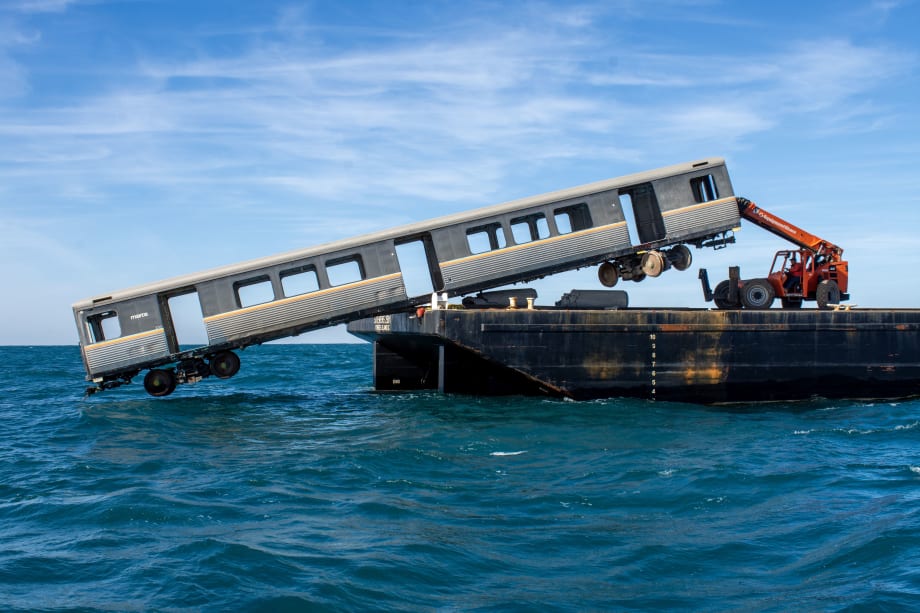
Railcars Deployed into Atlantic Ocean as Part of Reef Project
Earlier this year, the dismantled older-model railcars were stripped of hazardous materials and contaminants and inspected and approved by the U.S. Coast Guard for deployment as artificial reef material.
Over time, the railcars will provide essential marine habitat for sea creatures, including popular sport fish and endangered sea turtles.
Photo: MARTA
2 min to read
The Metropolitan Atlanta Rapid Transit Authority (MARTA) and Georgia Department of Natural Resources partnered to deploy two decommissioned railcars into the Atlantic Ocean off the coast of Savannah where over time they will develop into reef habitats for marine wildlife.
Earlier this year, the dismantled older-model railcars were stripped of hazardous materials and contaminants and inspected and approved by the U.S. Coast Guard for deployment as artificial reef material.
Ad Loading...
Last week, the railcars were transported by barge to Artificial Reef L, an established reef about two square miles in size, located approximately 23 nautical miles east of Ossabaw Island and deployed in about 55 to 65 feet of water.
“It was thrilling to be part of repurposing two of our original railcars in this environmentally responsible way,” said MARTA Board of Directors Chair Thomas Worthy. “We hope to provide more retired railcars for reef deployment, as well as find other inventive ways to reuse decommissioned railcars as we make room for the new CQ400 trains, the first of which arrives in Atlanta for testing next year.”
Last week, the railcars were transported by barge to Artificial Reef L, an established reef about two square miles in size, located approximately 23 nautical miles east of Ossabaw Island and deployed in about 55 to 65 feet of waterOver time, the railcars will provide essential marine habitat for sea creatures, including popular sport fish and endangered sea turtles.
Photo: MARTA
Providing A Marine Habitat
Over time, the railcars will provide essential marine habitat for sea creatures, including popular sport fish and endangered sea turtles.
While the substrate for the reef is manmade, the organisms that will grow on it are entirely natural and beneficial for the environment. Fish and other marine life such as sea turtles are likely to investigate the new habitat almost immediately.
Corals, sponges, and other encrusting organisms will begin to take hold on the railcars in about one year and will continue to grow and improve the longer they are in the ocean. SCUBA divers and anglers can begin using the reef immediately.
Ad Loading...
MARTA’s railcars join previously deployed materials, including U.S. Army M-60 battle tanks, barges, tugboats, New York City subway cars, and other manmade structures.
Artificial Reef L was first created in 1976 as part of a network of 32 offshore reefs that the Coastal Resources Division has been building and improving for more than 40 years.
Contract Four is the largest in the Second Avenue Subway Phase 2 project and includes construction of station infrastructure, tracks, and signals for the subway expansion, MTA officials said. Work on Contract Four will begin in 2027.
The Garden State Initiative analysis examines the roles of Amtrak infrastructure, fleet management, and agency operations while recommending a more performance-based approach to improving reliability.
Beginning in 2027, Stadler will provide on-site technical expertise, spare parts support, training, and obsolescence management to help extend the reliability and longevity of CapMetro’s GTW fleet.
In METRO's latest installment, we take a look at recent news from Complete Coach Works, Beep, FlixBus, and more partnerships making headlines across the transportation sector.
Pedestrian microsimulation is helping rail planners identify bottlenecks, test station designs, and prepare complex transit hubs for growing passenger volumes.
The privately developed project would offer a 15-minute trip between downtown and O’Hare’s Terminal 2, with trains operating every 15 minutes on a dedicated track. The service would use battery-electric trains and three existing freight rail rights-of-way.
The draft feasibility report identifies strategies to protect the coastal rail line for decades as the agency continues near-term stabilization and sand placement efforts.