



Chicago Adding New Bus Priority Lanes
The work builds upon previous transit projects on Chicago Avenue, creating a nearly continuous 3.9-mile bus lane from Grand to Ashland and from Milwaukee to Michigan Avenue.

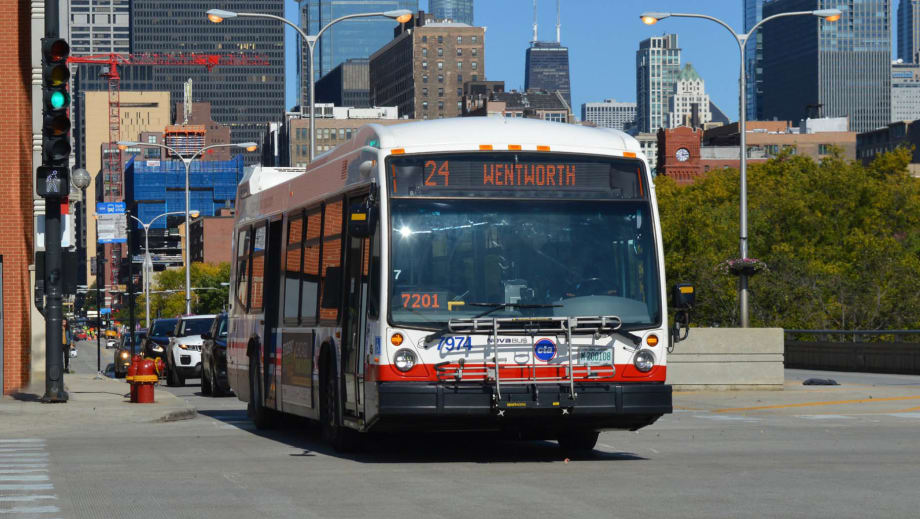
The new bus-only lane between Sangamon and Larrabee will complement CDOT’s upcoming project to replace the existing temporary Chicago Avenue Bridge over the river and the Chicago-Halsted viaduct.
Photo: CTA/Nova Bus
The Chicago Department of Transportation (CDOT) and the Chicago Transit Authority (CTA) announced new investments on Chicago Avenue to further improve bus reliability for the for #66 Chicago Avenue route and reduce travel times on one of the city’s busiest corridors.
CDOT will begin installing red bus-only lanes on Chicago Avenue between Sangamon Street and Larrabee Street and is completing the installation of new bus priority lanes between Grand Avenue and Campbell Avenue.
The work builds upon previous transit projects on Chicago Avenue, creating a nearly continuous 3.9-mile bus lane from Grand to Ashland and from Milwaukee to Michigan Avenue.
Nearly 40% of the #66 Chicago Avenue route will include a bus lane with the completion of this latest project.
Chicago’s New Bus Only Lane
The new bus-only lane between Sangamon and Larrabee will complement CDOT’s upcoming project to replace the existing temporary Chicago Avenue Bridge over the river and the Chicago-Halsted viaduct.
CDOT is finalizing design work, which includes upgrades to the Chicago-Halsted intersection to make it safer for all road users and enhance bus efficiency on Chicago Avenue.
Roughly half a mile of eastbound and westbound Chicago Avenue will soon feature a newly designated bus-only lane marked with red paint and text that will remain in effect 24 hours a day, seven days a week.
Benefits of Bus Only Lanes
By providing a designated space for buses, the new lanes will help buses avoid getting stuck in traffic congestion and help keep other vehicles clear of areas where buses need priority, like bus stops. This helps buses travel faster and stay on schedule and allows for easier boarding — making riding the bus a more reliable and attractive travel option.
“The 66 Chicago Avenue route is one of our most frequent and most heavily utilized, providing roughly 17,000 rides on an average weekday, and our ability to efficiently move riders along that corridor is critical to connecting communities on the east and west sides of the city,” said CTA President Dorval R. Carter Jr. “This latest addition builds on years of improvements made to this route, cumulatively speeding up average travel times by several minutes.”
Chicago Avenue is part of a network of corridors identified in the Better Streets for Buses Plan released by CDOT and CTA last fall, which provides a framework for implementing bus priority infrastructure. The improved bus-only lanes are part of a variety of transit investments, including bus lanes and bus stop improvements throughout the City.
More Bus

New York MTA Plans Largest Bus Fleet Upgrade in More Than a Decade
The agency is seeking manufacturers for 650 new CNG buses to replace aging vehicles, improve reliability, and advance its broader fleet modernization strategy.
Read More →
Building a Flexible Path to Transit Electrification
John Hroncich discusses BAE Systems’ modular and scalable approach, lessons learned from decades of real-world operations, and how agencies can identify electrification strategies that fit their fleets.
Read More →
Bus Tech Talk: Keeping Transit Technicians Ahead of the Technology Curve
LA Metro’s Obed Mejia discusses technician training, evolving maintenance technology, fleet replacement, and strategies for getting the most out of today’s transit fleets.
Read More →
Biz Briefs: RIPTA Unveils New Frontrunners, Clevland RTA Adds New Siemens, and More
In METRO's latest installment, we take a look at recent news from Siemens, Prevost, Dodge, and more partnerships making headlines across the transportation sector.
Read More →
People Movement: Holly Arnold Joins Transdev and More
In this edition, we also cover recent appointments and announcements at Pace, CamTran, MCI, and more, showcasing the individuals helping to shape the future of transportation.
Read More →
The High Cost of Transit Buses: Industry Leaders Look to Procurement Reform
Transit leaders and policymakers examine how standardized bus designs, streamlined procurement, and predictable funding could help agencies stretch budgets and deliver better service.
Read More →
The Business Voice Behind Public Transportation
As chair of APTA’s Business Members Board of Governors, Ray Melleady explains how more than 850 business members are partnering with transit agencies to advance funding, innovation, and industry-wide collaboration.
Read More →
From Surviving to Thriving: Building Stronger Transportation Organizations
Bus Business Consultants founder Brian Dickson shares lessons on leadership, organizational health, and creating options for long-term success in a changing transportation industry.
Read More →
Finding the ‘Happy Medium’: Optimizing Maintenance Without Sacrificing Reliability
The key to maintenance optimization isn’t doing less work—it’s doing the right work at the right time on the right assets.
Read More →
LA Metro, City of West Hollywood, and Partners Advance Smarter Bus Lane Enforcement
The award-winning partnership combines AI-powered detection with human oversight to improve bus reliability, accessibility, and enforcement efficiency.
Read More →