



CTA, CDOT Releases 'Better Streets for Buses Plan'
The plan supports key transportation goals of Mayor Brandon Johnson’s administration, including improving bus reliability and coordination of infrastructure investments to improve transit.

During the public outreach process held in 2022, CTA and CDOT received feedback from more than 1,300 individuals throughout the city via the project website, a series of virtual public and community meetings, email, phone, text, and written comment cards.
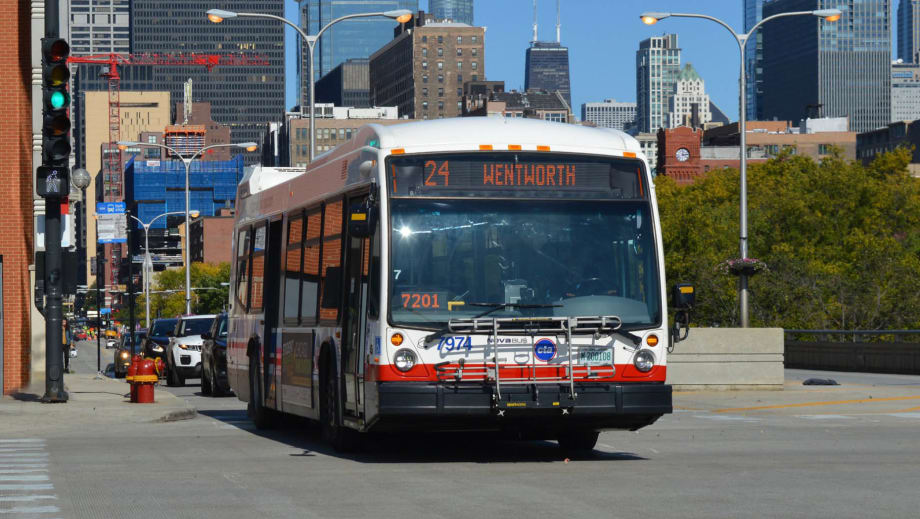
Nova Bus/CTA
The Chicago Transit Authority (CTA) and Chicago Department of Transportation (CDOT) launched the city’s first-ever Better Streets for Buses Plan, which lays the groundwork for improved bus services citywide through ongoing investments in street, signal, and sidewalk infrastructure — all designed to achieve faster and more reliable bus service, improved access to bus stops, and better bus stops.
The plan supports key transportation goals of Mayor Brandon Johnson’s administration, including improving bus reliability and coordination of infrastructure investments to improve transit.
“The City of Chicago now has a framework to develop an organized program of projects — both small and large scale — that will improve the bus riding experience now and for generations to come,” said CTA President Dorval R. Carter Jr. “Getting to the bus, the wait at the bus stop, and the ride on the bus are all impacted by various aspects of streetscape design and signal systems and this plan will help us better plan and redesign these elements to meet today’s transit needs and ensure that public transit bus services remain the most equitable, affordable and accessible means of transit in all neighborhoods throughout the city.”
Chicago’s Better Streets for Buses Plan
The Better Streets for Buses (BSB) Plan, which was created with input solicited through a public planning process, includes a network of 17 corridors across the city where improvements would be focused, and a “toolbox” of 19 potential street treatment options for enhancing the public way.
Proposed plans for each corridor are intended to facilitate a better bus riding experience through measures, such as enhanced bus stops, bus priority traffic signals, and dedicated bus lanes.
“Better Streets for Buses lays the groundwork for making strategic investments in our streets, sidewalks, signals, and other public infrastructure to improve every step of the rider’s experience,” said Acting Commissioner of CDOT Tom Carney. “CDOT and CTA will continue to closely collaborate on implementing this plan, which will help lead to a more equitable transportation system and improve bus reliability, accessibility, and comfort.”
During the public outreach process held in 2022, CTA and CDOT received feedback from more than 1,300 individuals throughout the city via the project website, a series of virtual public and community meetings, email, phone, text, and written comment cards. Feedback provided via the public meetings was a key element in helping guide key transit advocates, community stakeholders, and other agencies in selecting the network of bus service corridors for the BSB Plan.
Other factors taken into consideration in developing the Plan include data relating to equity, bus ridership, and mode share; whether or not a bus corridor serves areas not served by rail; and overall geographic completeness and connectivity.
Advancing the Plan
The BSB Plan does not assign specific “tools” to each corridor, rather it offers a menu of improvements that can be applied depending on the needs of a specific corridor.
As a major next step toward implementation of robust bus priority projects, CTA and CDOT have secured a competitive grant from Cook County’s Invest in Cook program, which will allow the agencies to conduct additional public outreach, develop specific concepts, and advance design for at least three corridors identified in the BSB Plan.
Implementation of additional and complementary bus service improvement projects will be ongoing through existing CTA-CDOT programs, like the Bus Priority Zones (BPZ) program.
The BPZ Program consists of smaller scale street treatment projects that prioritize buses in heavily traveled corridors to improve bus service reliability across the entire route. In the past, these types of projects have been funded by a variety of local, state, and federal funds; CTA and CDOT will continue to seek funding from these sources.
The development of the Better Streets for Buses Plan was supported by a $300,000 Unified Work Plan grant administered by the Chicago Metropolitan Agency for Planning.
More Bus

New York MTA Plans Largest Bus Fleet Upgrade in More Than a Decade
The agency is seeking manufacturers for 650 new CNG buses to replace aging vehicles, improve reliability, and advance its broader fleet modernization strategy.
Read More →
Building a Flexible Path to Transit Electrification
John Hroncich discusses BAE Systems’ modular and scalable approach, lessons learned from decades of real-world operations, and how agencies can identify electrification strategies that fit their fleets.
Read More →
Bus Tech Talk: Keeping Transit Technicians Ahead of the Technology Curve
LA Metro’s Obed Mejia discusses technician training, evolving maintenance technology, fleet replacement, and strategies for getting the most out of today’s transit fleets.
Read More →
Biz Briefs: RIPTA Unveils New Frontrunners, Clevland RTA Adds New Siemens, and More
In METRO's latest installment, we take a look at recent news from Siemens, Prevost, Dodge, and more partnerships making headlines across the transportation sector.
Read More →
People Movement: Holly Arnold Joins Transdev and More
In this edition, we also cover recent appointments and announcements at Pace, CamTran, MCI, and more, showcasing the individuals helping to shape the future of transportation.
Read More →
The High Cost of Transit Buses: Industry Leaders Look to Procurement Reform
Transit leaders and policymakers examine how standardized bus designs, streamlined procurement, and predictable funding could help agencies stretch budgets and deliver better service.
Read More →
The Business Voice Behind Public Transportation
As chair of APTA’s Business Members Board of Governors, Ray Melleady explains how more than 850 business members are partnering with transit agencies to advance funding, innovation, and industry-wide collaboration.
Read More →
From Surviving to Thriving: Building Stronger Transportation Organizations
Bus Business Consultants founder Brian Dickson shares lessons on leadership, organizational health, and creating options for long-term success in a changing transportation industry.
Read More →
Finding the ‘Happy Medium’: Optimizing Maintenance Without Sacrificing Reliability
The key to maintenance optimization isn’t doing less work—it’s doing the right work at the right time on the right assets.
Read More →
LA Metro, City of West Hollywood, and Partners Advance Smarter Bus Lane Enforcement
The award-winning partnership combines AI-powered detection with human oversight to improve bus reliability, accessibility, and enforcement efficiency.
Read More →