



WMATA Now Operating Auto Doors on All Rail Lines
Customers will notice faster entries and exits with doors opening within three to five seconds after the train stops on the station platform. The time saved per stop is up to 10 seconds.

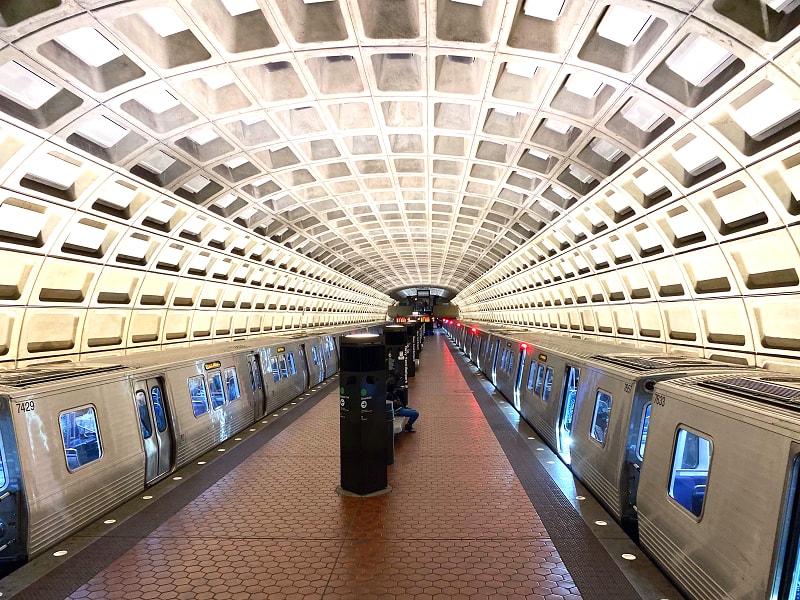
WMATA previously launched Auto Doors on the Red Line last December.
Photo: WMATA/Larry Levine
After weeks of certifying operators to use Automatic Door Operations on the Blue, Orange, Silver, Yellow, and Green lines, the Washington Metrorail Safety Commission gave its concurrence to allow the Washington Area Metropolitan Transit Authority (WMATA) to fully operate in Auto Door mode.
Customers will notice faster entries and exits with doors opening within three to five seconds after the train stops on the station platform. The time saved per stop is up to 10 seconds.
Auto Doors Coming to Fruition
WMATA previously launched Auto Doors on the Red Line last December.
“Auto Doors on the Red Line has been very successful with more than 1.3 million safe door openings since launching last year,” said WMATA GM/CEO Randy Clarke. “With Auto Doors, we’ve achieved better schedule consistency and now we’re excited to bring this safety and convenience improvement to all our customers.”
How Auto Doors Work
While train doors will open automatically upon arrival, operators will still close train doors manually for departure, allowing safe and ample time for customers to enter and exit.
Auto Doors are controlled by technology already onboard trains that ensures trains are safely stopped at the platform before the doors open.
Before departing, operators will close the doors manually after checking outside the driver’s side cab window to ensure all customers have cleared the platform.
Upgrading and restoring the technology for Auto Doors will enable WMATA to safely automate 20,000 daily door openings systemwide. This is a critical step in WMATA’s rail automation program that will improve the customer experience.
More Rail
Amtrak, CN Reach Agreements to Strengthen Passenger Rail Service, Safety
The agreement resolves a more than decade-long proceeding before the Surface Transportation Board concerning the terms and conditions for Amtrak services, such as the City of New Orleans, Illini/Saluki, and Wolverine.
Read More →
New York MTA Advances Final Contract for Second Avenue Subway Expansion
Contract Four is the largest in the Second Avenue Subway Phase 2 project and includes construction of station infrastructure, tracks, and signals for the subway expansion, MTA officials said. Work on Contract Four will begin in 2027.
Read More →
San Diego MTS Breaks Monthly Trolley Ridership Record
Agency officials said July’s ridership indicates MTS’s continued recovery from the pandemic.
Read More →
Report Examines NJ TRANSIT Reliability, Funding Challenges
The Garden State Initiative analysis examines the roles of Amtrak infrastructure, fleet management, and agency operations while recommending a more performance-based approach to improving reliability.
Read More →
Stadler, CapMetro Sign Long-Term Rail Fleet Support Agreement
Beginning in 2027, Stadler will provide on-site technical expertise, spare parts support, training, and obsolescence management to help extend the reliability and longevity of CapMetro’s GTW fleet.
Read More →
Biz Briefs: Alstom Lands Canadian Contract, LYT to Supply California TSP, and More
In METRO's latest installment, we take a look at recent news from Complete Coach Works, Beep, FlixBus, and more partnerships making headlines across the transportation sector.
Read More →
CATS Gold Line Marks 5 Years of Service, 2.8M Passenger Trips
With a six-mile expansion planned, the Charlotte streetcar is positioned to connect more neighborhoods and major transit hubs across the region.
Read More →
Why Simulating Pedestrian Movement Has Become Essential for Modern Rail Stations
Pedestrian microsimulation is helping rail planners identify bottlenecks, test station designs, and prepare complex transit hubs for growing passenger volumes.
Read More →
Amtrak Begins Major Construction at New York’s Sunnyside Yard
The new maintenance facility will support Amtrak’s Airo trainsets while improving maintenance efficiency and turnaround times in New York.
Read More →
Chicago Leaders Unveil Plans for O’Hare Airport Express Train
The privately developed project would offer a 15-minute trip between downtown and O’Hare’s Terminal 2, with trains operating every 15 minutes on a dedicated track. The service would use battery-electric trains and three existing freight rail rights-of-way.
Read More →