



L.A. Metro Ridership Continues Positive Trend
The agency saw 19,873,436 boardings on weekdays, reaching 78.8% of its pre-pandemic July 2019 level. On weekends in July there were 5,592,948 boardings, reaching 95.3% of pre-pandemic weekend ridership from July 2019.

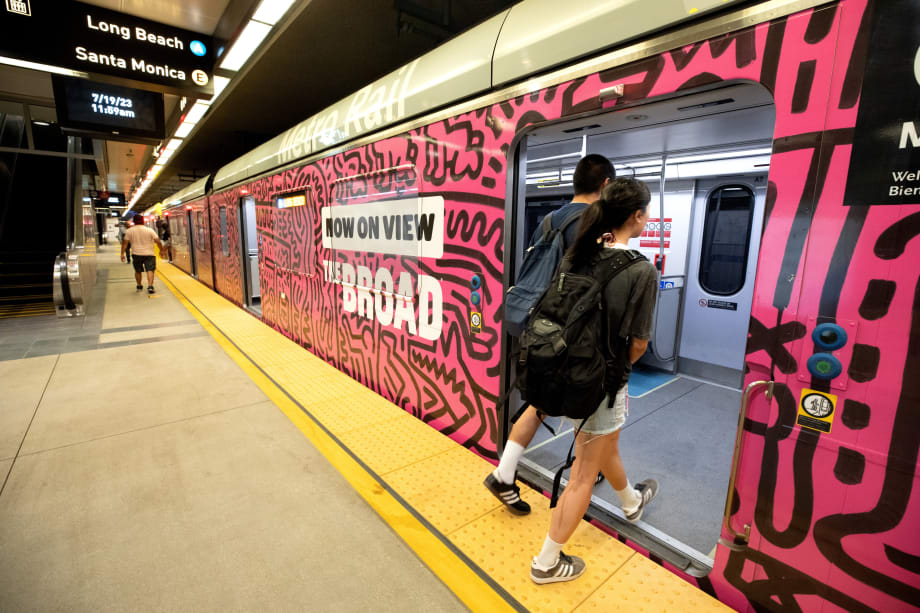
In July, rail boardings were 5,789,887, reflecting a gain of 3.23% over July 2023 ridership and a 78.4% recovery of July 2019 rail ridership.
Photo: LA Metro
L.A. Metro had 25,466,384 boardings in July on its bus and rail services, reaching 81.84% of its July 2019 pre-COVID ridership level and marking the 20th consecutive month of year-over-year ridership growth.
The agency saw 19,873,436 boardings on weekdays, reaching 78.8% of its pre-pandemic July 2019 level. On weekends in July there were 5,592,948 boardings, reaching 95.3% of pre-pandemic weekend ridership from July 2019.
Bus Ridership
Bus ridership in July saw 19,676,497 rides taken for a 9.84% year-over-year ridership increase compared to July 2023 ridership and reached 82.9% of its July 2019 level.
Metro recorded 15,455,726 bus boardings on weekdays in July. Saturdays saw 2,069,496 boardings and Sundays had 2,151,275 boardings in July. Weekend bus ridership is now at 93.16% of its pre-pandemic level.
Rail Ridership
In July, rail boardings were 5,789,887, reflecting a gain of 3.23% over July 2023 ridership and a 78.4% recovery of July 2019 rail ridership.
Weekday rail boardings were 4,417,710 trips taken, reflecting 73.4% of weekday rail boardings in July 2019.
July marks the first full month of year-over-year comparison on the A and E lines, and ridership grew 16.76% over July 2023.
Individually, the A Line grew 19.46% when compared to ridership in July 2023 and the E Line grew 13.17% year-over-year.
The busiest rail line in July was the B Line with 1,898,643 boardings. The A Line saw 1,871,941 trips taken.
Leisure Ridership
Leisure travelers rode Metro to concerts, festivals, and sporting events.
July 2024 had more weekday events, which were a driver of overall ridership growth during the month with weekday bus ridership up 7.37% and weekday rail ridership up 2.62%.
Events at venues with direct Metro rail access such as Expo Park off the E Line, LA Historic State Park off the A Line, and Dodgers Stadium serviced by the Dodger Stadium Express bus from LA Union Station all saw ridership increases.
July events that contributed to ridership increases include the July 4th firework event at Gloria Molina Grand Park and multi-day events Anime Expo, as well as sporting events with the L.A. Sparks, Dodgers, and LAFC and Angel City FC games at crypto.com Arena, Dodger Stadium, and BMO Stadium, respectively.
Fare Programs
Metro continues to provide programs that make riding more affordable for everyone.
The agency’s reduced-price transit pass programs, such as the student GoPass program, which offers free transit passes to K-12 and community college students, and its Low-Income Fare is Easy (LIFE) program, which provides free rides and reduced fares to low-income customers, are helping those who need it most.
In July, Metro’s GoPass Program had 479,309 boardings, a 19% year-over-year increase over July 2023, which saw 395,385 boardings.
GoPass also had 21,198 new registrations and renewals combined for a 78% year-over-year increase in July enrollment.
GoPass has now surpassed 40 million student boardings and more than 400,000 registered students using the free fare student GoPass for unlimited travel to school, work, and leisure activities.
LIFE Program enrollment is up 12% year-over-year in July 2024 with 1,729,227 boardings compared to 1,541,755 in July 2023.
During July, the LIFE team held more than 75 in-person enrollment events to sign eligible people up for the reduced fare program. In July, the Department of Public Social Services (DPSS), a LIFE partner had 1,289 enrollments into Metro’s LIFE program.
More Management
Bipartisan BUSES Act Seeks Changes to New York City's Bus Idling Enforcement Program
Backed by motorcoach operators, the legislation seeks to balance emissions goals with passenger safety by allowing limited idling for inspections, accessibility needs and extreme weather conditions.
Read More →
DOT: Brightline Corridor Incidents Fall 30% Following Federal Safety Upgrades
Safety improvements funded through a $25 million federal investment are credited with reducing trespassing and train-vehicle collisions along the Brightline Florida corridor.
Read More →
D Line Expansion Fuels Growth Across LA Metro's Rail System
Weekend rail ridership was especially strong, soaring 18% as riders embraced expanded access to jobs, entertainment, dining, and cultural destinations, said the agency. Total system ridership for May, including bus and rail, was 26,966,657.
Read More →
Q4 Travel Data Reveals Drop in Vehicle Traffic to Manhattan Congestion Zone
NYMTC’s quarterly Travel Patterns Report provides a snapshot of travel activity throughout New York City, Long Island, the Lower Hudson Valley, and northern New Jersey using data collected from the agencies operating the region’s bridges, tunnels, and public transit systems.
Read More →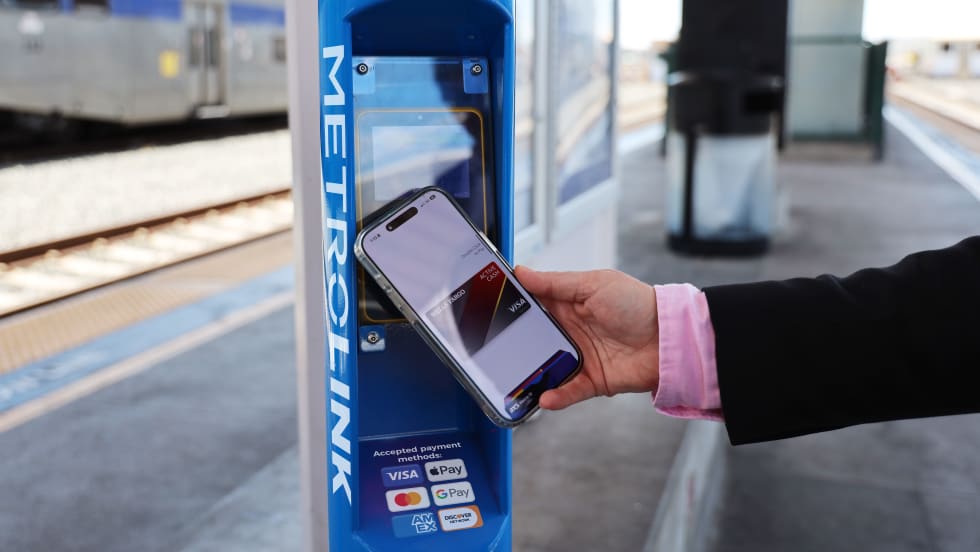
Southern California's Metrolink Debuts Contactless Fare Payment Pilot
Customers traveling between Redlands and Los Angeles can now tap their preferred payment method, including a credit or debit card, mobile wallet, or wearable device, at station validators before boarding and again while exiting.
Read More →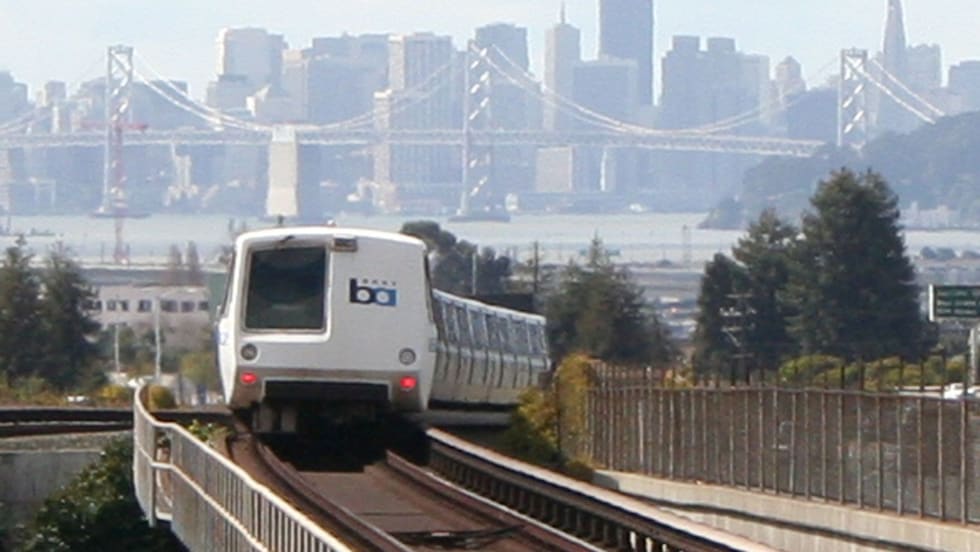
California's BART Approves FY27 Budget While Maintaining Service Levels
The budget covers July 1, 2026, through June 30, 2027, a period when pandemic emergency funds run out, the District faces a structural deficit of $375 million, and a regional transit funding measure may appear on the November ballot.
Read More →
STL Metro Transit To Launch Next-Generation Fare Collection and Security Gates
The St. Louis transit agency will begin the phased rollout of gated station access and integrated fare technology to improve security and the customer experience.
Read More →
CATS FY27 Budget Prioritizes Safety, Service
New investments in security, service expansion, and rail development aim to improve the rider experience while keeping fares flat.
Read More →
Transit Agencies Nationwide Gear Up to Move World Cup Crowds
As millions of fans prepare to descend on host cities, transit leaders are turning a month-long global event into a proving ground for the future of customer experience, mobility, and crowd management.
Read More →
OCTA Approves $2 Billion Budget for FY 2026-27, Prioritizing Transit Investments
More than half of the agency’s upcoming spending plan is dedicated to transit as OCTA balances infrastructure investment with fiscal stability.
Read More →