



Report Examines Other Sectors to Solve Transportation Construction Workforce Shortage
The Mineta Transportation Institute's findings in this project are from a literature review of current sources and informal interviews with stakeholders of the three economic sectors of interest (agriculture, tech, and healthcare).

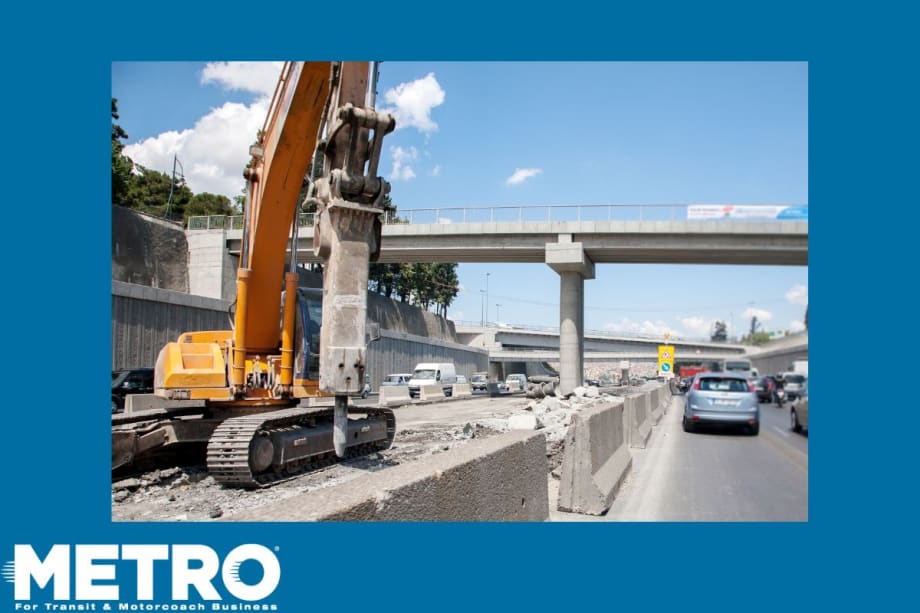
The transportation construction workforce shortage has become an even more acute problem in recent years because of pandemic-generated labor disruptions and the need for workers to implement projects funded by the IIJA.
Photo: Canva
New Mineta Transportation Institute (MTI) research, “Addressing Transportation Construction Workforce Needs Through Innovative Policies and Practices,” explores insights from methods to reduce labor shortages in the agricultural, technology, and healthcare economic sectors and how they can be applied to transportation construction.
The nation is facing a critical shortage of construction workers, and that shortage becomes increasingly apparent as more funding becomes available through the Infrastructure Investment and Jobs Act (IIJA).
The findings in this project are from a literature review of current sources and informal interviews with stakeholders of the three economic sectors of interest (agriculture, tech, and healthcare).
Report Points
The major finding from MTI’s report is there simply are not enough workers.
The research team investigated causes and solutions of labor shortages in each of the economic sectors, with a particular focus on the impact of changes in policies and processes to understand their potential for transportation.
Looking to comparative economic sectors that are facing or have faced similar labor shortages, the study found potential solutions that address issues related to three main categories:
Raising awareness of an increased demand for particular skills and positions.
Recruiting workers with the proper skills.
Retaining quality workers so that positions remain filled.
Solutions for Construction Sector
The solutions most applicable to highway construction come from healthcare. Major recommendations include:
Highway construction skills can be taught at trade schools and training programs led by experienced workers.
Subsidized incentives for instructors for trade schools and training programs can be implemented so that an instructor shortage does not develop as it has in healthcare.
Incentive programs for construction workers themselves could also help address labor shortages.
“Each industry has unique challenges and constraints. Healthcare is primarily focused on increasing recruitment because that would also help them solve their retention issues. Agriculture is focused on retention and recruitment since they cannot find a way to make farm work attractive to the public, and their incumbent workers are starting to retire. Technology is a large and diverse economic sector and has a broad set of issues, but because it requires the least manual labor amongst the three, many of the solutions are not as applicable to highway construction,” explained the study’s authors.
Implementing Strategies
Many construction firms are already implementing solutions, such as raising pay rates (86%), providing incentives and bonuses (45%), and enhancing benefits packages (24%).
Additional strategies may include offering reduced-cost training programs in exchange for a commitment to work in areas with shortages or at specific companies.
The transportation construction workforce shortage has become an even more acute problem in recent years because of pandemic-generated labor disruptions and the need for workers to implement projects funded by the IIJA.
The IIJA will invest $4.9 billion in the state for highway-related infrastructure projects, but these projects cannot happen without a capable, committed workforce.
More Management

7 Ways to Build a Better Transit Internship
Lessons from DRPA/PATCO’s approach to creating a meaningful internship experience—and developing the next generation of transportation professionals.
Read More →
Scenes from APTA TRANSform & EXPO 2026
Transit leaders, manufacturers, and industry professionals gathered in Chicago to explore new technologies, share ideas, and discuss the future of public transportation.
Read More →
Building Stronger Leaders, More Resilient Transit Teams
Dr. Carol Parker Walsh discusses leadership development, employee retention, workplace culture, and preparing transit’s workforce for AI and automation.
Read More →
APTA 2026 TRANSform & EXPO Kicks Off in Chicago
After 45 years, APTA returns to Chicago with a focus on next-generation fleets, AI, connected transit networks, and the funding strategies shaping public transportation’s future.
Read More →
New York MTA Warns Federal Tariffs Could Add $1 Billion to Rolling Stock Costs
The agency said tariffs on specialized imported components could reduce the purchasing power of its $23 billion investment in new subway cars, railcars, and buses.
Read More →
From the Show Floor: What Happened at APTA TRANSform & EXPO 2026
See the latest product launches, partnerships, technology updates, and transit industry announcements from APTA TRANSform & EXPO in Chicago.
Read More →
How Valley Metro Is Balancing Transit Growth With the Rider Experience
The APTA award-winning agency is pairing rapid system expansion with investments in workforce, safety, technology, and the fundamentals of transit service.
Read More →
Bus Tech Talk: Keeping Transit Technicians Ahead of the Technology Curve
In this episode of Bus Tech Talk, Complete Coach Works’ Business Development Manager Mark Hollenbeck and METRO’s Executive Editor Alex Roman sit down with Obed Mejia, Senior Technical Trainer for Bus Maintenance, at LA Metro to discuss how rapidly evolving bus technology is changing the maintenance shop — and the skills technicians need to keep pace.
Read More →
Michael Schneider Joins Paslay Group to Expand Transportation Practice
The longtime transportation executive will help Paslay Group grow its advisory and program management work across transit, highway, and other infrastructure sectors.
Read More →
People Movement: Connectpoint Expands Leadership Team, Stadler Names New Group CEO, and More
In this edition, we also spotlight recent personnel moves at Burns, UZURV, and more, highlighting the people taking on new roles across the transportation industry.
Read More →