




More News: Boston's MBTA Releases Strategic Plan Update
Gov. Hochul Unveils Plan to Reintroduce Congestion Pricing in NYC
A proposed 40% reduction in congestion pricing tolls will save drivers up to $1,500 annually. In addition, commuters will see improved subway service, and expanded bus services.
November 18, 2024
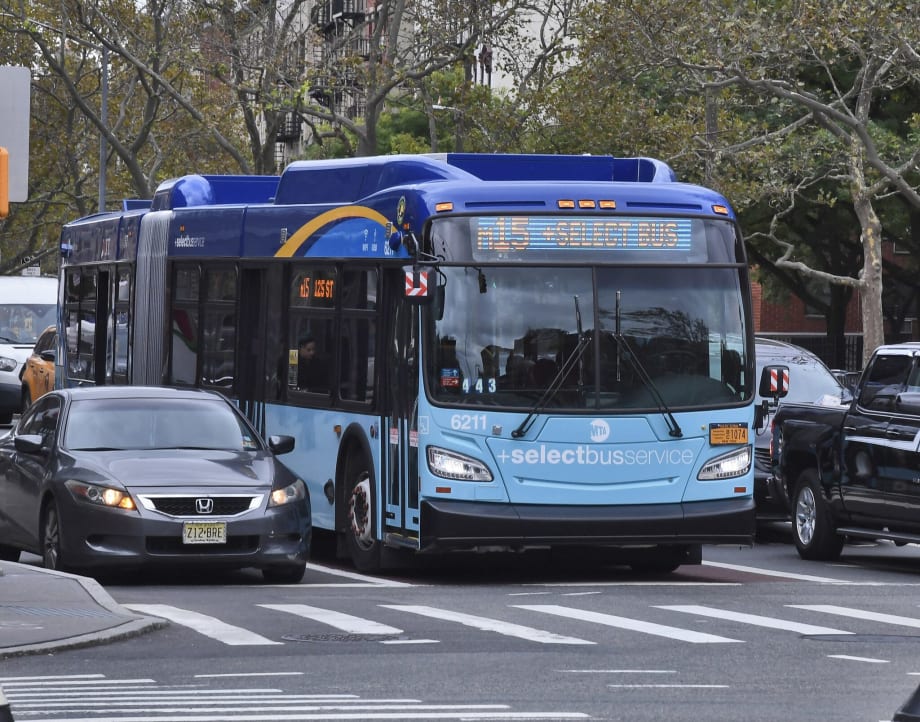
The Governor's proposed transit plans are looking to greatly expand New York City's bus service, especially in areas with no access to the subway system.
Photo: Marc A. Hermann
5 min to read
Governor Kathy Hochul announced a plan to begin implementing congestion pricing in New York City by early January. In keeping with her promise to lower the cost of tolls from $15, Hochul’s plan features a 40% reduction in all tolls for vehicles entering the City’s Central Business District (CBD), saving commuters up to $1,500 per year.
The plan also includes new tools to reduce congestion and air pollution in communities citywide, all of which will ensure that the plan achieves the goals of congestion pricing including $15 billion in mass transit funding to support the MTA’s current capital program. Hochul committed to funding the proposed 2025-2029 MTA capital plan that was approved by the MTA board in September.
“As I said from the start, a $15 toll was just too high in this economic climate. That’s why our plan cuts the daytime toll to $9 for cars,” Governor Hochul said. “By getting congestion pricing underway and fully supporting the MTA capital plan, we’ll unclog our streets, reduce pollution and deliver better public transit for millions of New Yorkers.”
Hochul’s new congestion pricing plan has already won support from a broad coalition of stakeholders including the Regional Plan Association (RPA), League of Conservation Voters (LCV), Natural Resources Defense Council (NRDC), Partnership for New York City and Real Estate Board of New York (REBNY) among others.
Under this plan, congestion pricing will be ready for implementation at midnight on Sunday, January 5.
Congestion Pricing Plan
Under the announced plan, the toll structure for entering New York City’s CBD would initially include Daytime E-ZPass tolls at $9 per day for passenger vehicles, $4.50 per day for Motorcycles, $14.40 for small trucks and non-commuter buses, and $21.60 for Large Trucks and sightseeing buses.
Tunnel crossing credits will be reduced by 40% of the original plan, and nighttime discounts will be set at 75% of daytime tolls.
Commuters who drive into the CBD fie days per week will save approximately $1,500 per year in tolls.
Some eligible drivers will be able to receive additional discounts, credits, and exemptions, such as a low-income volume discount or a qualified disability exemption.
While the toll structure under this plan is lower than the tolls initially proposed, it will still enable the MTA to leverage $15 billion in bonds for the MTA’s current capital program over time. This includes supporting current capital program initiatives including the Second Ave Subway Phase 2 extension to East Harlem, modern signal systems on segments of the A/C and B/D/F/M lines, accessibility improvements, and hundreds of new electric buses.
Additionally, the administration expects to achieve congestion reduction and air quality benefits set forth in the environmental review for the congestion pricing program, including a 5% reduction in vehicle miles traveled and a 10% reduction in the number of vehicles entering Manhattan’s CBD.
Pursuant to Governor Hochul’s plan, MTA will not raise the initial tolls beyond 60% from 2025 to 2027, and 80% FROM 2028 TO 2030.
The phase-in feature over time will help drivers adapt more easily to the program and give the MTA and other stakeholders the ability to monitor data regarding implementation and effects.
Improving Air Quality
Governor Hochul’s congestion pricing plan commits to funding the low-income discount and every place-based and regional mitigation that has already been committed to. These include:
$15 million to replace diesel-powered Transport Refrigeration Units at Hunts Point Produce Market in the Bronx
$20 million to establish an asthma center and case management program in the Bronx
$20 million to implement electric truck charging infrastructure
$10 million to install air filtration units in schools near highways
$10 million to install roadside vegetation
$25 million to renovate parks and greenspace
$20 million to expand the NYC Clean Trucks Program
$5 million to expand the NYCDOT Off-Hours Delivery Program
A 75 percent discounted overnight toll to reduce diversions and encourage off-hours truck deliveries
A 50 percent discount on the daytime E-ZPass toll rate after the first 10 trips in each calendar month for low-income drivers
The Governor is also proposing a package of new measures that will help reduce traffic and air pollution throughout New York City and beyond. These proposals will be included in her Executive Budget proposal in January and include the expansion of the joint MTA-NYW Automated Camera Enforcement program, expanded statutory authorization of the use of weigh-in-motion technology, and raising the threshold value for authorized removal of abandoned derelict vehicles.
Governor Hochul also believes it is necessary to expand MTA bus service in New York City to increase and improve alternatives to driving. The Governor is proposing that the MTA increase frequency, make running time adjustments, and deliver other enhancements on at least 23 bus routes citywide.
Funding the Proposed 2025-2029 MTA Capital Plan
The MTA Board approved a proposed 2025-2029 Capital Plan and sent it to the Capital Program Review Board for further approval as required under statute. The proposed plan would spend a total of $68.4 billion, including $47.8 billion for NYC Transit, Staten Island Railway, and MTA Bus Company, $6 billion each for Metro-North Railroad and Long Island Rial Road, $5.3 billion for major projects and expansion, and $3 billion for MTA Bridges and Tunnels. This is the largest MTA capital plan proposed in New York’s history.
Governor Hochul highlighted that potential contributions from federal, state, city, and MTA sources are expected to be sufficient to fund approximately half of the plan. She also gave full support for the MTA 2025-2029 Capital Plan and her intention to work during budget negotiations next year with federal, state legislative, and city partners to close the remaining gap.
Additionally, the governor stated her commitment to ensuring fiscal responsibility and greater efficiency at the MTA, including directing the MTA to find $100 million in annual savings building on recent cost saving initiatives.
“Excess congestion costs our metropolitan region more than $20 billion a year as movement of goods and people is slowed by traffic,” Partnership for New York City President & CEO Kathryn Wylde said. “The Governor’s decision to allow congestion pricing to proceed, even with a reduced toll, will benefit business and consumers across the region and is a critical component for financing a better, safer and more reliable transit system.”
More Management

ENC Lands MATA Contract and More in Biz Briefs
In this edition of Biz Briefs, we spotlight the latest developments shaping the future of mobility.
Read More →
From Surviving to Thriving: Building Stronger Transportation Organizations
Bus Business Consultants founder Brian Dickson shares lessons on leadership, organizational health, and creating options for long-term success in a changing transportation industry.
Read More →
Everett Transit, Community Transit Outline Consolidation Agreement
The proposed agreement calls for a 50% increase in bus service in Everett, a new microtransit zone, continued paratransit service, and the transfer of Everett Transit operations to Community Transit.
Read More →

Strada360’s Steve Lassey on Turning Transit Data Into Better Decisions
From breaking down data silos to preparing for AI, Strada360 CEO Steve Lassey discusses how transit agencies can use technology to improve operations, customer information, and long-term decision-making.
Read More →
People Movement: Phil Washington Joins HNTB, Denver RTD Launches CEO Search, and More
In this edition, we also spotlight recent personnel moves at STV, the Eno Center for Transportation, and more, highlighting the people taking on new roles across the transportation industry.
Read More →
SEPTA Details Accelerate Vision for Transit System
The plan outlines investments in trolley modernization, new Metro and Regional Rail vehicles, accessible stations, and more frequent bus and rail service.
Read More →
FTA Ends Direct Oversight of MBTA Safety Actions
The federal agency closed its remaining special directive to the Massachusetts Department of Public Utilities following a safety review that began in 2022.
Read More →
Report: Transit Bus Manufacturing Supports 34,100 Jobs, $5.1B in GDP
The “Buses Mean Business” report examines the transit bus manufacturing industry’s economic footprint, supply chain, and rising demand for vehicle replacements.
Read More →
LIT Marks 10-Year Milestone at Annual Summit
Hosted by the COTA from September 10 to 13, the Summit carried the theme “Celebrating 10 Years of Excellence, Leadership, and Impact,” with every part of the program honoring the people, agencies, and partners who built LIT over its first decade.
Read More →
People Movement: Dan Dipert Coaches Adds Third-Generation Leader, Keolis Names New Valley Metro VP/GM, and More
In this edition, we also cover recent appointments and announcements at the Wabtec, SilverRide, HNTB, and more, showcasing the individuals helping to shape the future of transportation.
Read More →