



WMATA Budget Proposal Includes Open Payment, Adopts Better Bus Plan
The agency is also calling for longer weekend hours; targeting service increases on the Red, Silver, and Yellow passenger rail hours and more.

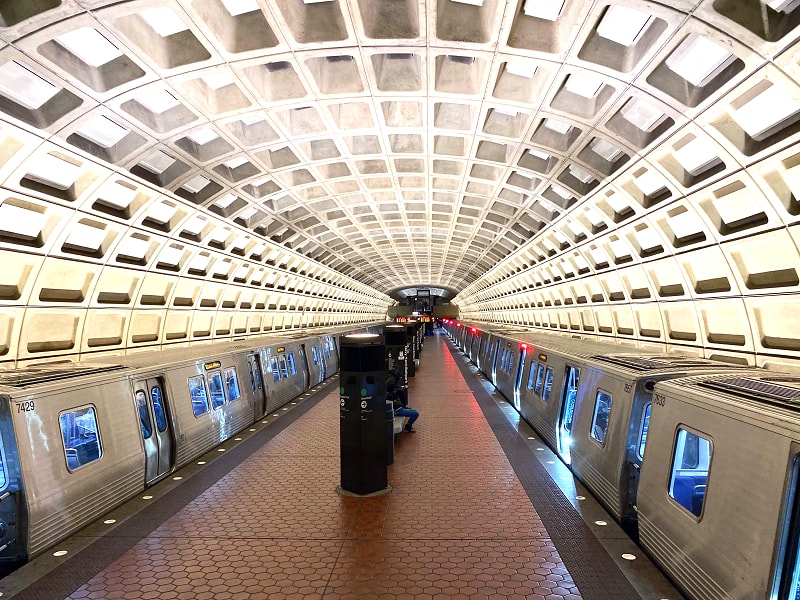
The FY2026 Proposed Budget includes proposed expansion of service hours on Metrorail and proposed revised Metrobus network as previously approved by the board.
Photo: Larry Levine
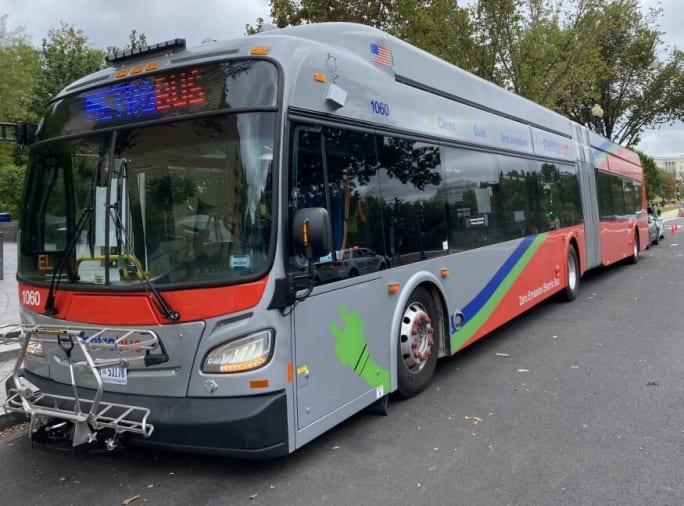
Metrobus service changes have already been approved by the board as part of the 2025 Better Bus Network Redesign process.
Photo: New Flyer
The Washington Metropolitan Area Transit Authority (WMATA) released its proposed budget for the next fiscal year that optimizes service to meet growing ridership demand without any major funding increases.
The agency is calling for longer weekend hours; targeting service increases on the Red, Silver, and Yellow lines; and implementing its revised Better Bus Network in summer 2025.
“This budget helps serve our customers where it is needed most,” WMATA GM/CEO Randy Clarke. “We are proposing several efficiencies that save us money to pay for this additional service. While we are able to fund the budget this year, Metro will to need a dedicated source of funding to keep the system viable in the decades to come.”
Service Changes
Metrobus service changes have already been approved by the board as part of the 2025 Better Bus Network Redesign process.
Expected Rail changes include:
Extend half of Yellow Line trains to Greenbelt: Operate the Yellow Line in two patterns at all times, with half of trains operating between Huntington and Greenbelt and half operating between Huntington and Mt Vernon Square.
Split Silver Line service between Downtown Largo and New Carrollton: Operate the Silver Line in two service patterns at all times, with half of trains operating between Ashburn and Downtown Largo, and half operating between Ashburn and New Carrollton.
Silver Line additional peak service: Operate two additional Silver Line trains to provide capacity in the weekday peak hour only. Trains would operate from Wiehle-Reston East to Stadium-Armory in the morning, and from Stadium-Armory to Wiehle-Reston East in the afternoon.
Red Line additional peak service: Operate Red Line trains up to every four minutes, from every five minutes, during the busiest portions of weekday rush periods to provide additional capacity in both directions of travel. Red Line trains would continue to operate every five minutes during the remainder of peak service.
Increase Weekend Hours of Operation: Open the rail system one hour earlier on weekend mornings, opening at 6 a.m. on Saturdays and Sundays. Close the rail system one hour later during weekend late nights, closing at 2 a.m. on Fridays and Saturdays.
The FY2026 Proposed Budget includes proposed expansion of service hours on Metrorail and proposed revised Metrobus network as previously approved by the board.
To the extent that these changes increase the service hours or service area, MetroAccess paratransit services will, as required by federal law, expand to meet those requirements.
Otherwise, the service area and service hours for WMATA’s paratransit services will remain fixed as per existing board policy.
Proposed Payment Changes
Fares prices will not change. However, the ways customers can pay are expanding.
WMATA is preparing to introduce an Open Payment fare system to Metrorail, Metrobus, and parking facilities during the next calendar year.
Open Payment will allow customers to have the option to use their contactless credit/debit card (e.g., Visa, Mastercard, American Express, Discover), mobile wallet, or linked smartwatch for fare payment without the need to use a SmarTrip card.
The agency is also planning to implement Open Payment to make the payment experience more seamless and incentivizing adoption.
As proposed, Metrorail will be first to receive Open Payment in May of 2025, followed by Metrobus by summer 2025 and Metro parking facilities in late fall 2025.
WMATA’s Capital Program
The proposed FY2026 capital budget of $2.4 billion and six-year capital improvement program of $12.5 billion —both including revenue loss and debt service — include investment in ongoing projects, prioritized system preservation and renewal needs, and investments to provide safe and efficient service delivery informed by asset management and reliability plans.
Major capital program investments to further improve service and customer experience include:
Railcars and Rail Facilities: Major vehicle investments include the 8000-series railcar acquisition program. Major facilities and systems investments include rail vehicle scheduled maintenance program (SMP) facility improvements and railyard state of good repair.
Rail Systems: Major investments include Train Control Room Rehabilitation, Track Circuit Cable Testing and Replacement, Switch Machine Replacement, Rail Power System Rehabilitation, Radio Infrastructure Replacement, and Fiber Installation.
Track and Structures Rehabilitation: Major investments include track rehabilitation and maintenance; tunnel ventilation demonstration and water leak mitigation demonstration on the red line; and bridge and aerial structural rehabilitation.
Station and Passenger Facilities: Major investments include standpipe systems and tunnel emergency egress; parking garage and surface lot rehabilitation, station entrance canopies, and elevator rehabilitations; digital signage and wayfinding, lighting, and fare payment modernization.
Bus, Bus Facilities, and Paratransit: Major vehicle investments include bus acquisition and rehabilitation and paratransit vehicle purchases, including zero emission bus acquisition. Major facilities investments include Northern and Bladensburg garage replacements and electrification — electrification of the Cinder Bed bus garage, bus shelter replacement, customer information electronic displays, and bus priority program.
Operations and Business Support: A modern training facility, computing infrastructure state of good repair; Enterprise Resource Planning (ERP) System Replacement; Asset Management System Upgrade; service vehicle replacement; and environmental compliance.
Public Input
Between now and February, WMATA staff and the board will finalize a budget proposal for the public’s input and comments.
The agency’s board will vote on the proposed budget in 2025 and service changes would go into effect in late June/early July.
More Management

METRO Opens Submissions for 2026 Motorcoach Awards
Nominations are now being accepted for METRO Magazine’s Operator of the Year and Innovative Operator of the Year awards.
Read More →
New York MTA Advances Final Contract for Second Avenue Subway Expansion
Contract Four is the largest in the Second Avenue Subway Phase 2 project and includes construction of station infrastructure, tracks, and signals for the subway expansion, MTA officials said. Work on Contract Four will begin in 2027.
Read More →
Transit Agencies Highlight Safety Gains at National Summit
Leaders from 15 major transit systems shared crime-reduction results and safety initiatives while discussing the role of continued federal support.
Read More →

NITA Names New Leadership, Expands Reduced-Fare Program at First Board Meeting
The new regional transit authority appointed its first board chair and interim executive director while extending reduced fares across CTA, Metra, and Pace for eligible riders.
Read More →
Beyond the Checklist: A Structured Approach to Transit Maintenance
Reliability-Centered Maintenance helps transit agencies move beyond routine checklists to focus limited resources on the assets and failures that have the greatest impact on safety, reliability, and service.
Read More →
APTA 2026 Nominating Committee Selects Leadership Slate, Names Chair and Vice Chair Nominees
Leadership changes will help shape the association’s priorities and its representation of the transportation industry during the 2026–2027 term.
Read More →
DART Launches Major Security, Fare Enforcement Initiative
The 90-day demonstration will deploy coordinated security teams at five light rail stations while testing controlled access and gathering data to guide future investments.
Read More →
Advancing Fare Collection Through Technology and Innovation
Learn about delivering 1300 gates at 91 stations while managing fare evasion. Explore the large scale deployment, solution customization and real-world results that affect the region. Prepare for deployment in your region now.
Read More →
Game Day in Motion: Moving Millions During the 2026 World Cup
Between packed transit stations and team motorcoaches, see how agencies and operators across North America tackled the transportation demands of the 2026 FIFA World Cup.
Read More →
Surface Transportation Extension Averts Shutdown, Leaves Transit Funding Gap
The stopgap keeps federal transportation programs moving, but missing advance funding could complicate the transit and rail projects agencies are planning next.
Read More →