



Reports Examine Transforming Workforce Development for the Transportation Industry
The Mineta Transportation Institute recently released several publications that explore important related issues and reveal new methods and pathways being developed and implemented to build the workforce pipeline.

The ongoing workforce crisis in transportation requires innovative solutions and strategic investments.
Photo: Canva
A 2022 survey revealed that 96% of transit agencies of all sizes are experiencing workforce challenges, and 84% said these shortages are impacting their ability to provide service.
With that, the Mineta Transportation Institute (MTI) recently released several publications that explore important related issues and reveal new methods and pathways being developed and implemented to build the workforce pipeline, including:
3) "Transforming Middle School Workforce Development for 21st-Century Education."
Looking at MTI’s New Reports
“The Indirect Benefits of a Transit Apprenticeship and its Potential Value as a Flexible Postsecondary Pathway” explores a success story of the transit sector embracing apprenticeships as a worthwhile training model.
Specifically, the Santa Clara Valley Transportation Authority Joint Workforce Initiative (JWI) is a model of apprenticeships that emphasize both technical and soft skills, thus offering employees the chance to develop “cross-cutting competencies” and advance their careers.
The report details the importance of affordability, portability, and articulation and outlines how these features could be further developed in the JWI and how this initiative could be used as a model for further workforce development.
The next report, “L&D On-ramps and Off-ramps for the Mobility Workforce: A Blueprint for Knowledge Ecosystem Formation in the Fourth Industrial Revolution,” introduces and discusses the proof-of-concept pilot program proposed in a previous report, “Trade and Transportation Talent Pipeline Blueprints: Building University-Industry Talent Pipelines in Colleges of Continuing and Professional Education.”
It presents a blueprint with implementation tools and strategies for California State University Long Beach (CSULB) and other CSU campuses to adopt the presented knowledge ecosystem model in higher education.
The study found near universal support for pursuing university-industry partnerships with 97% of CSULB faculty and staff and external stakeholders supporting the concept, demonstrating a viable new model for workforce development.
Finally, “Transforming Middle School Workforce Development for 21st-Century Education” summarizes the 2024 program of the Garrett Morgan Sustainable Transportation Competition for middle school students, one of MTI’s signature workforce development initiatives.
MTI has sponsored a competition every year since 2003 and over 1,300 students have participated. This year’s program was a success, fostering meaningful connections and practical learning.
Plans for future programs with further resources, improvements, and components to increase competition are already underway for 2025.
The Need for Innovation
The ongoing workforce crisis in transportation requires innovative solutions and strategic investments.
The reports and perspectives highlight several promising initiatives, from apprenticeships to university-industry partnerships and early-stage education programs, which are creating pathways to build a more diverse and resilient workforce.
The efforts offer valuable insights for addressing workforce shortages and equipping the next generation of professionals with the skills needed to meet the challenges of 21st century transportation.
More Management
Brian Dickson on Building Stronger, More Resilient Transportation Organizations
Bus Business Consultants Founder Brian Dickson discusses the leadership principles, operational discipline, and strategic planning that separate transportation companies positioned for long-term success from those stuck in survival mode.
Read More →
LA Metro Breaks Ground on Vermont BRT Project
The 12.4-mile corridor is projected to serve 66,200 daily riders, reduce travel times by up to 24%, and create the nation's busiest bus rapid transit corridor.
Read More →
Building Stronger Leaders, More Resilient Transit Teams
Dr. Carol Parker Walsh discusses leadership development, employee retention, workplace culture, and preparing transit’s workforce for AI and automation.
Read More →
Roman Cornell on ABC Companies’ Evolution and the Future of Passenger Transportation
The company’s CEO discusses carrying forward a third-generation family legacy, ABC’s continued evolution in passenger transportation, support for increasingly complex fleets, and how technology and continued investment could help operators improve uptime.
Read More →
CATS Launches West Charlotte Microtransit Zone, Expands Transit Services
The new microtransit zone connects residents to key destinations as Charlotte Area Transit System rolls out the first phase of its 2055 Transit System Plan.
Read More →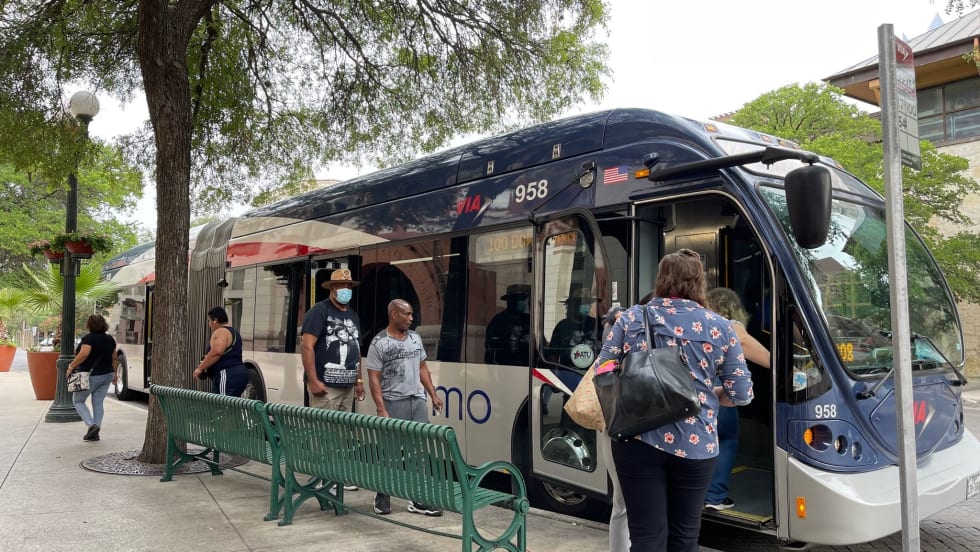
VIA Bus Ridership Grows 10.1% Through August 2026
San Antonio's VIA Metropolitan Transit reported the highest bus ridership growth among major Texas transit systems. Federal Transit Administration data ranked it second among the nation's 50 largest transit systems.
Read More →
CSA Group Releases Climate Resilience Standard for Transit, Passenger Rail
Developed with support from the Standards Council of Canada, CSA D700 guides assessing climate-related risks and planning adaptation measures for transit and passenger rail systems.
Read More →
ETA CEO John Maglio on Transit Technology, Innovation, and Building Agency Trust
ETA founder and CEO John Maglio explores the evolution of transit technology, the importance of reliable systems, and how stronger partnerships can help agencies improve operations and the passenger experience.
Read More →
COTA Launches First Customer Experience Action Plan to Improve Transit Service
The new plan outlines improvements to service reliability, accessibility, communication, and the overall rider experience across Central Ohio's transit system.
Read More →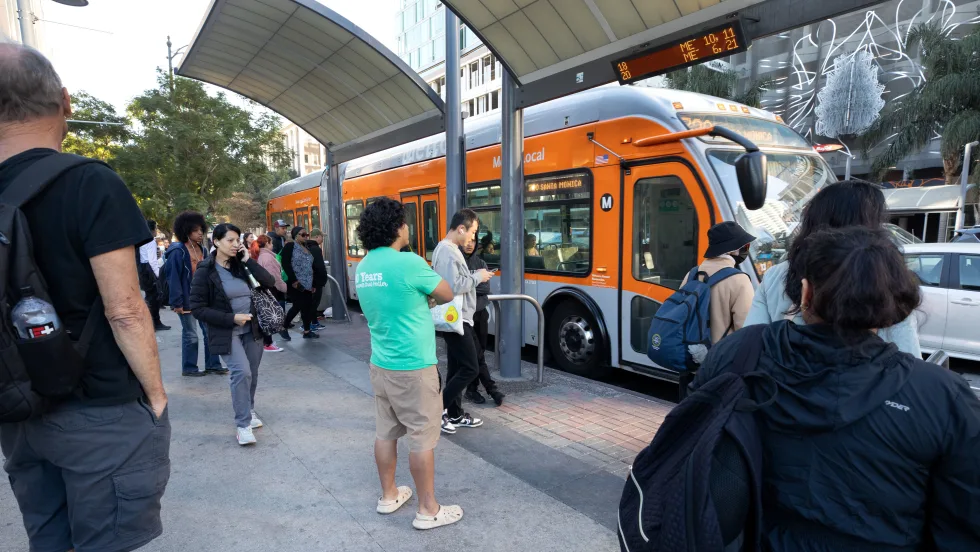
LA Metro September Ridership Climbs 3.9%, Led by Rail Growth
The agency recorded more than 27.2 million boardings, with rail ridership increasing 12.4% year over year and the D Line posting the largest gains.
Read More →