



Mineta Report Analyzes VMT Tools for California’s Climate Goals
Findings indicate that the consistency, contextual relevance, complexity, data accuracy, and user-friendliness of the VMT tools vary significantly based on their design and methodology.


By understanding the consistency, context of use, data usage, complexity, ease of use, and potential for misuse or misinterpretation of these tools, policymakers and planners can choose the best tool for their needs and ensure accurate VMT assessments to help California meet its climate goals.
Photo: Canva
New Mineta Transportation Institute (MTI) research, “Consistent VMT Mapping and Modeling in California: How Can We Better Assess the VMT Impacts of State and Local Transportation Projects?,” uses both qualitative and quantitative data, to answer the question: “What are the advantages and limitations of existing VMT calculators to determine the climate impacts of transportation projects to help meet California’s climate goals?”
The study divided the evaluation of VMT impacts into two main steps:
Qualitative analysis of the advantages and limitations of the existing VMT mapping and modeling tool, which included expert interviews.
Quantitative analysis of VMT mapping and modeling tools.
MTI Study Findings
Findings indicate that the consistency, contextual relevance, complexity, data accuracy, and user-friendliness of the VMT tools vary significantly based on their design and methodology, and each tool presents a set of limitations and advantages, making it suitable for a specific use or context but not necessarily for another.
Recommendations for the state include the following:
Improve access to accurate, validated data for creating and inputting into VMT models and tools.
Help create context-sensitive VMT tools capable of capturing local context and change over time.
Strengthen dialogue between jurisdictions to share information and tools.
Encourage using an integrated approach to VMT analysis — which often combines the use of different tools and datasets for various stages of decision-making and scenario planning.
“Potential for exploitation or loopholes exists in some of the VMT tools,” explain the study’s authors. “For example, the NCST Induced Travel Calculator might potentially produce misleading results due to its conservative estimates and fixed elasticity values. In contrast, VisionEval minimizes loopholes through its detailed and comprehensive scenario analysis, though its complexity could lead to misinterpretation of the findings. Users need to fully understand these tools so they can choose the best one for their specific needs.”
Identifying Best Tools
The research demonstrates that each VMT tool has its own strengths and weaknesses.
By understanding the consistency, context of use, data usage, complexity, ease of use, and potential for misuse or misinterpretation of these tools, policymakers and planners can choose the best tool for their needs and ensure accurate VMT assessments to help California meet its climate goals.
More Management
CATS Launches West Charlotte Microtransit Zone, Expands Transit Services
The new microtransit zone connects residents to key destinations as Charlotte Area Transit System rolls out the first phase of its 2055 Transit System Plan.
Read More →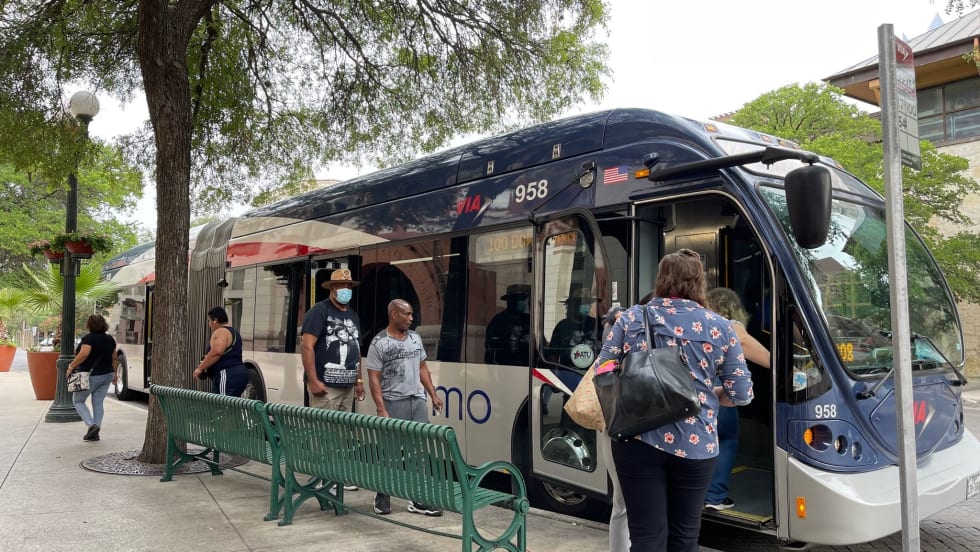
VIA Bus Ridership Grows 10.1% Through August 2026
San Antonio's VIA Metropolitan Transit reported the highest bus ridership growth among major Texas transit systems. Federal Transit Administration data ranked it second among the nation's 50 largest transit systems.
Read More →
CSA Group Releases Climate Resilience Standard for Transit, Passenger Rail
Developed with support from the Standards Council of Canada, CSA D700 guides assessing climate-related risks and planning adaptation measures for transit and passenger rail systems.
Read More →
ETA CEO John Maglio on Transit Technology, Innovation, and Building Agency Trust
ETA founder and CEO John Maglio explores the evolution of transit technology, the importance of reliable systems, and how stronger partnerships can help agencies improve operations and the passenger experience.
Read More →
COTA Launches First Customer Experience Action Plan to Improve Transit Service
The new plan outlines improvements to service reliability, accessibility, communication, and the overall rider experience across Central Ohio's transit system.
Read More →
LA Metro September Ridership Climbs 3.9%, Led by Rail Growth
The agency recorded more than 27.2 million boardings, with rail ridership increasing 12.4% year over year and the D Line posting the largest gains.
Read More →
Utilimarc Launches SmartReplace to Optimize Fleet Replacement Decisions
AI-powered SmartReplace helps fleets prioritize vehicle replacements, model budget scenarios, and build more defensible long-term strategies.
Read More →
APTA Honors 2026 Award Winners, Hall of Fame Inductees at TRANSform & EXPO
Innovations in autonomous and zero-emission transportation, standout transit systems, and industry leadership took center stage among this year's honorees.
Read More →
7 Ways to Build a Better Transit Internship Program
Lessons from DRPA/PATCO’s approach to creating a meaningful internship experience—and developing the next generation of transportation professionals.
Read More →
Scenes from APTA TRANSform & EXPO 2026
Transit leaders, manufacturers, and industry professionals gathered in Chicago to explore new technologies, share ideas, and discuss the future of public transportation.
Read More →