



Transit Bus Deliveries Stabilize in 2024, but Market Still Trails Pre-Pandemic Levels
OEM consolidation, lingering supply chain challenges, and rising ZEB demand define a transitional year for the North American bus market.

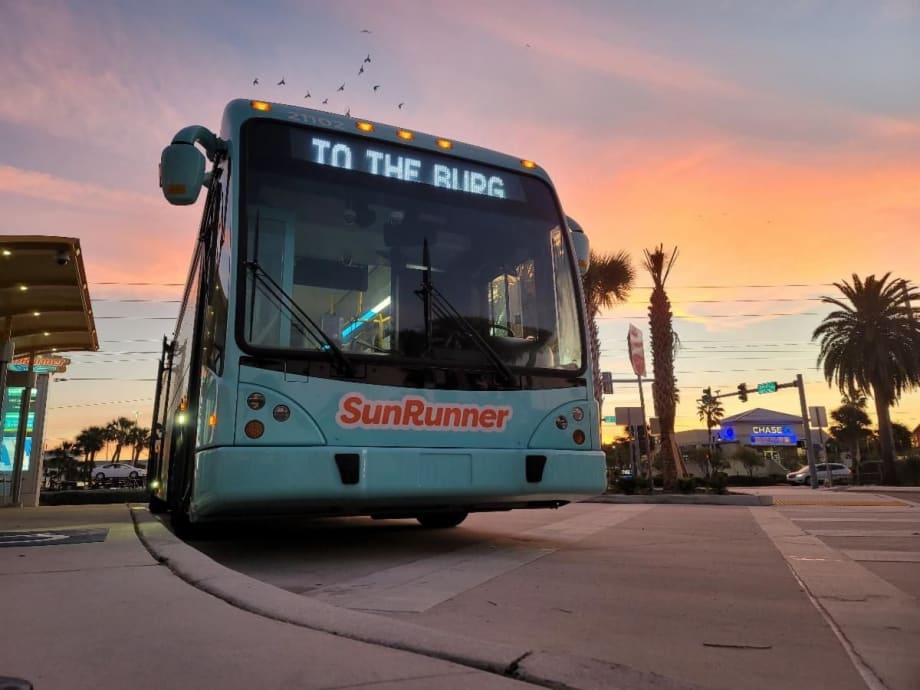
In calendar year 2024, transit bus deliveries were flat compared to 2023, with a nominal 2% increase.
Photo: PSTA
Calendar year 2024 saw a move to a more sustained level of stability in the North American transit bus supply sector, while only two heavy-duty transit bus suppliers continue to dominate customer deliveries in the U.S., following the market retrenchment of other bus OEMs in 2023.
The bus OEMs have settled into somewhat of a “new normal,” with labor at manufacturing plants essentially stabilized and supply chain issues still challenging, albeit on a more limited basis with specific suppliers.
The hyper-inflation issues that persisted post-COVID have stabilized as the OEMs worked through legacy contracts and now have order books primarily reflecting current supply chain costs.
Further, the FTA “Dear Colleague” letter issued in early 2024 addressing how to manage cost increases in contracts and advance and progress payments, bonding, and state contracts has added contractual tools in the quivers of both transit agencies and OEMs to stabilize the market's supply side.
Outlook Positive
Customer demand for new bus procurements, especially for zero-emission propulsion, continues to be bullish, with major OEM order books and backlogs at significantly high levels. This is positive; however, with reduced industry capacity in the U.S. and wait times for new bus deliveries in the 18 to 24-month range, delivery times are beyond historical.
As we look forward to 2025 and beyond, we have a dynamic landscape for the national transit industry that will need to be navigated, including:
The stability of federal funding under the new Republican Administration.
The federal government’s approach and funding for zero-emission buses.
Fiscal and budget challenges facing most U.S. transit systems.
Upcoming diesel emission changes in 2027.
Upcoming major world events, including the 2026 World Cup and the 2028 LA Olympics.
These items will impact customer demand and potentially bus OEM deliveries in the coming few years, so we will see what the future holds as these developments take hold.
Overall Transit Market Assessment
The following is our analysis for 2024 transit bus deliveries in North America.
2024 vs 2023 overall transit bus deliveries increased by 98 units from 4,349 units in 2023 to 4,447 units in 2024 for a slight 2% year-over-year increase.
2024 is the second year in a row where market deliveries were higher than the prior year, following 2020 to 2023, which saw year-over-year decreases from the high pre-pandemic deliveries of 6,320 units in 2019. However, the 2% year-over-year increase is at best a marginal increase, with the market still at only 70% of pre-pandemic levels.
Assessment from a Transit Vehicle Length Perspective
| Units by Size | 2023 | 2024 | 2024 vs 2023 (Units) | 2024 vs 2023 (%) |
| 30 Feet and Under | 214 | 160 | (54) | -25% |
| 35- to 40-Feet | 3,662 | 3,706 | 44 | 1% |
| 45 Feet | 128 | 100 | (28) | -22% |
| 60 Feet | 345 | 481 | 136 | 39% |
| TOTAL | 4,349 | 4,447 | 98 | 2% |
Source: METRO Magazine, based on numbers reported by participating suppliers. Some numbers projected
Overall, 35- to 40-foot units made up most deliveries in 2024, essentially a repeat of prior years, with 3,706 units delivered, representing 83% of all deliveries. This compares with 84% being in this length segment in 2023, with 3,662 units delivered in 2023. Thus, 2024 saw a 1% increase in deliveries in this segment vs. 2023.
30-foot and under units experienced another consecutive year of decline of 54 units, or a 25% reduction, from 214 units in 2023 to 160 units in 2024.
45-foot units experienced a decline of 28 units from 128 units in 2023 to 100 units in 2024, or a 22% overall reduction.
60-foot units exhibited an increase of 136 units in 2024 vs 2023, or a 39% uptick. Deliveries were 481 units in 2024 vs 345 units in 2023. Interestingly, only one bus OEM supplies the U.S. market with 60-foot models.
Assessment from a Propulsion Segmentation Perspective
| Propulsion Catalog | 2023 | 2024 | 2024 vs 2023 (Units) | 2024 vs 2023 (%) |
| Diesel | 2,003 | 2,090 | 87 | 4% |
| Hybrid | 886 | 760 | (126) | -14% |
| Natural Gas | 800 | 732 | 68 | -9% |
| Zero Emissions (Electric and Fuel Cell) | 660 | 865 | 205 | 31% |
| TOTAL | 4,349 | 4,447 | 98 | 2% |
Source: METRO Magazine, based on numbers reported by participating suppliers. Some numbers projected
Although order books are flush with zero-emission orders, industry deliveries are still dominated by the more traditional propulsion technologies of diesel and CNG as zero-emission bus production continues to ramp up to meet customer demand.
Diesel propulsion was still the predominant technology in 2024, with market deliveries of 2,090 units, representing an increase of 87 units or 4% vs. 2023. In 2024, diesel represented 47% of overall deliveries compared with 46% of deliveries in 2023.
Hybrid propulsion saw a decline in 2024 from 886 units in 2023 to 760 units in 2024, which was a decline of 14%. In 2024, hybrids represented 17% of the overall deliveries.
Natural gas fuel propulsion decreased from 800 units in 2023 to 732 in 2024. This 68-unit decrease resulted in a 9% year-over-year decline for natural gas. In 2024, natural deliveries represented 16% of the total deliveries, which is a 2% decline compared to 2023.
Zero-emission buses (comprising Battery Electric and Fuel Cell Buses) were 865 units in 2024 vs. 660 in 2023. This resulted in a 205-unit, or 31%, year-over-year increase for zero-emission buses. Overall, this propulsion segment represented 19% of deliveries in 2024 vs. 14% of the overall deliveries in 2023, showing the continued demand for ZEBs and the OEMs’ ramping up their production lines.
What's Down the Road?
In calendar year 2024, transit bus deliveries were flat compared to 2023, with a nominal 2% increase. In light of OEM retrenchment and some continued hangover COVID effects, we continue to be on a path to return to pre-pandemic delivery levels, but still have a long way to go.
New OEMs are entering the market, with Solaris from Poland recently announcing contracts that may increase deliveries in the coming years. Also, ENC has announced a rebirth after initially being slated to close.
Hopefully, these new and reborn entrants will learn the lessons of their predecessors in being consistently viable and profitable in the long term and that the FTA and agencies' efforts to stabilize the bus supply sector will have the desired effects.
More Bus

More Than a Summer Job: Building the Next Generation of Transit Talent
The Delaware River Port Authority and PATCO have transformed their internship program into a hands-on professional development experience that introduces students to the breadth of transportation careers — and creates a pipeline for future employees.
Read More →
LA Metro Board Awards 220 Battery-Electric Bus Contract to ENC
The contract, which is the largest base award of battery-electric buses by a U.S. transit agency, will be built in Southern California, sustaining good jobs as LA prepares to welcome the world in 2028
Read More →
Public Transit Conference Returning to GFX in 2027, Call for Papers Now Open
The Call for Papers is now open, allowing transit agency professionals and industry experts to help shape the PTC educational program by submitting session ideas for consideration.
Read More →
Indian River Transit’s Community-Focused Approach Earns National Recognition
Named APTA’s 2026 Outstanding Public Transportation System in its size category, Florida’s Indian River County transit system continues to grow ridership through fare-free service and a focus on evolving community needs.
Read More →
ENC Lands MATA Contract and More in Biz Briefs
In this edition of Biz Briefs, we spotlight the latest developments shaping the future of mobility.
Read More →
From Surviving to Thriving: Building Stronger Transportation Organizations
Bus Business Consultants founder Brian Dickson shares lessons on leadership, organizational health, and creating options for long-term success in a changing transportation industry.
Read More →
Everett Transit, Community Transit Outline Consolidation Agreement
The proposed agreement calls for a 50% increase in bus service in Everett, a new microtransit zone, continued paratransit service, and the transfer of Everett Transit operations to Community Transit.
Read More →
SEPTA Details Accelerate Vision for Transit System
The plan outlines investments in trolley modernization, new Metro and Regional Rail vehicles, accessible stations, and more frequent bus and rail service.
Read More →
Report: Transit Bus Manufacturing Supports 34,100 Jobs, $5.1B in GDP
The “Buses Mean Business” report examines the transit bus manufacturing industry’s economic footprint, supply chain, and rising demand for vehicle replacements.
Read More →
Biz Briefs: New Flyer Delivers in Columbus, Houston, Beep and Freebee Merge, and More
In this edition of Biz Briefs, we spotlight the latest developments shaping the future of mobility.
Read More →