



Consultant Q&A: HDR's Doug Jackson on Delivering Transit Megaprojects with Community Trust and More
As principal program manager for Toronto’s Ontario Line, he reflects on lessons learned and the importance of keeping community needs at the center of every decision.

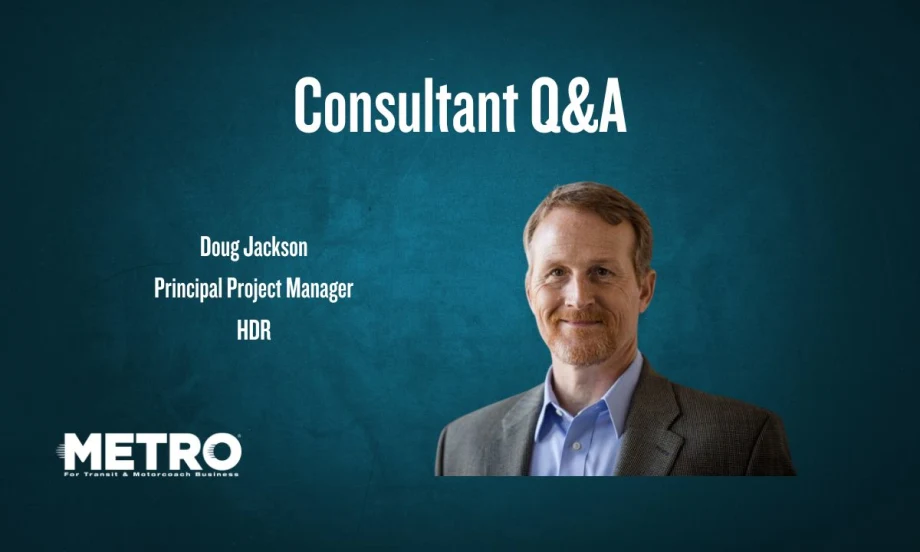
With deep expertise in alternative delivery and procurement, Doug Jackson has guided numerous public agencies in selecting optimal delivery methods for their most challenging programs.
Photo: HDR
- Doug Jackson emphasizes the significance of integrating community needs into every decision for successful transit megaprojects.
- Lessons from managing the Ontario Line highlight the necessity of maintaining community trust throughout project development.
- The experience gained underscores the role of transparency and accountability in fostering community support for large-scale infrastructure projects.
*Summarized by AI
A seasoned principal program manager at HDR with over 25 years of experience in the transportation industry, Doug Jackson is known for his strategic, long-term approach to complex infrastructure projects. He has led significant efforts across North America in rail, highways, and transit from early planning through operations, and currently oversees the Ontario Line transit project in Toronto.
With deep expertise in alternative delivery and procurement, Jackson has guided numerous public agencies in selecting optimal delivery methods for their most challenging programs. His track record includes leadership roles on high-profile, high-risk projects such as the Council Bluffs Interstate System in Iowa, Utah’s Mountain View Corridor, and Toronto’s Ontario Line.
Jackson spoke to METRO about gauging the success of a transit project, managing community outreach, and more.
About Project Delivery
What are the key factors that determine the success of a transit project from a consultant’s perspective?
We often think the keys to a successful project are technical. Based on my experience with large transit projects, the key is gaining buy-in from stakeholders and the community.
For instance, I worked on a light rail project in North Carolina that ran into hurdles and was eventually halted, in part due to a lack of support from key stakeholders. As a result, the project withdrew from the federal process and was halted, despite 60% of the design being completed.
Consensus goes beyond community support to an evaluation of key stakeholders and project partners. Do you have them on board or not? Is there a shared vision of the project by all? It’s critical to understand potential barriers from the start and develop strategies to mitigate costly delays or failure. Putting in the effort to build that consensus is a fundamental part of delivering a successful project on time, cost-effectively, and with quality.
How can public-private partnerships (PPPs) be leveraged effectively in transit project delivery?
P3S can be leveraged effectively on the correct type of project, but size, complexity, and risk are significant factors in whether the marketplace has an appetite for a P3 project delivery. We witnessed this firsthand on a new, extensive urban subway line in Toronto, where the construction market pushed back on using P3 due to the project's size and risk profile. We pivoted our procurement strategy to include multiple packages using different delivery methods in response to their feedback.
Understanding the local marketplace and managing those factors accordingly is critical to determining when P3 or other delivery methods are the best option for achieving overall program goals.
One P3 contracting model that deserves further attention is the rolling stock, systems, operations, and maintenance.
In the ROSSOM approach, the P3 concessionaire procures the vehicles, builds the track and systems, and operates and maintains the systems for a defined period.
The P3 concessionaire is not responsible for designing and constructing the civil infrastructure and stations. This could be an attractive option for P3 delivery teams, including vehicle manufacturers and system operators, who want to limit their design and construction risk. It does require the P3 team to act as a systems integrator across the other civil and station contracts. It should be procured early, providing time to collaborate with the different delivery contracts.
How the Past Influences the Present, Managing Community Outreach
What lessons have you learned from past projects that have influenced your approach to transit project delivery?
Transit projects often require a multi-year development period and a delivery timeframe. It’s critical not to lose sight of what is being built, a transit system to serve broader community needs and goals.
As projects advance through the multi-year process, clients, design teams, and contractors typically focus on delivering the infrastructure — a bridge, a station, or an essential track.
However, the owner and delivery team are often confronted with new decisions or third-party requirements that can alter the original transit service plan, impacting future customers and transit employees.
As transit projects advance, I maintain a broader perspective with each new delivery decision, focusing on the result.
For example, how could a design change during construction erode train service and customer or employee experience? Will this change impact operations by slowing down service times, causing train delays, or decreasing rider comfort? We need to deliver a high-quality transit system that meets the needs of its community, attracts customers, and is reliable.
What strategies have been most effective for gaining public support and managing community concerns?
The earlier the engagement begins, the better for everyone involved, and it must continue throughout the project's lifecycle. As projects move from planning to preliminary design to final design and construction, some agencies may have a mindset that engagement occurred during the planning stage, so there’s no need to continue or repeat it.
With multi-year, complex program development and delivery, it’s important not to have a gap in public outreach and engagement.
For instance, on a recent project, a very active neighborhood group was unhappy with how a proposed new transit light rail line would run at grade through their neighborhood rather than in a tunnel. We had to step back, invite them to the table, and listen to their concerns. We held meetings to understand their needs and desires better, and to gather input on the project’s aesthetics and training operations.
Together with the neighborhood group, we developed a competitive procurement process for local landscape architects to provide context-sensitive solutions to improve the project’s design and address their concerns. Showing how their input was incorporated into the project changed the dynamics between the client/owner, the project team, and the neighborhood. We built consensus and, more importantly, trust, which helped keep the project moving forward.
Doug Jackson spoke with METRO about gauging the success of a transit project, managing community outreach, and more.
Photo: METRO
Improving Collaboration
How can the industry improve collaboration among consultants, public agencies, and private-sector partners?
Progressive and integrated project delivery (IPD) models hold significant promise for improved collaboration.
Using these approaches, project owners bring designers and contractors to the table through a procurement process to collaborate on project specifics before the project's final cost is determined. Everyone works together to evaluate cost, schedule, risk, and scope. It allows collaboration and teamwork to flourish from the beginning, so the team knows collectively it’s making the best decisions to deliver the project.
With other alternative delivery methods we’ve relied on for years, like design-build, the designers, consultants, and private entities are on one side, and the public entities are on the other. There’s less trust. Contracts are administered based on what’s written in the contract, and in many cases, not on whether forcing compliance in every situation results in a good decision for the project.
We need delivery methods that allow the private sector to make project decisions that mitigate risk and control cost and schedule, without compromising the project owner or the public.
Delivery teams can build trust and make good project and business decisions through collaboration and integration with the owner. Doing what is right for the public and the project should be synonymous with making good business decisions for the private sector.
In a collaborative delivery model, decisions made for the project's good will also benefit the community. When this happens, the integrated team can start delivering on some project goals and promises and gain more community support for the program and future projects.
Quick Answers
Doug Jackson is the principal program manager for Toronto’s Ontario Line, overseeing the project's execution and delivery.
*Summarized by AI
More Management

Indian River Transit’s Community-Focused Approach Earns National Recognition
Named APTA’s 2026 Outstanding Public Transportation System in its size category, Florida’s Indian River County transit system continues to grow ridership through fare-free service and a focus on evolving community needs.
Read More →
ENC Lands MATA Contract and More in Biz Briefs
In this edition of Biz Briefs, we spotlight the latest developments shaping the future of mobility.
Read More →
From Surviving to Thriving: Building Stronger Transportation Organizations
Bus Business Consultants founder Brian Dickson shares lessons on leadership, organizational health, and creating options for long-term success in a changing transportation industry.
Read More →

Everett Transit, Community Transit Outline Consolidation Agreement
The proposed agreement calls for a 50% increase in bus service in Everett, a new microtransit zone, continued paratransit service, and the transfer of Everett Transit operations to Community Transit.
Read More →
Strada360’s Steve Lassey on Turning Transit Data Into Better Decisions
From breaking down data silos to preparing for AI, Strada360 CEO Steve Lassey discusses how transit agencies can use technology to improve operations, customer information, and long-term decision-making.
Read More →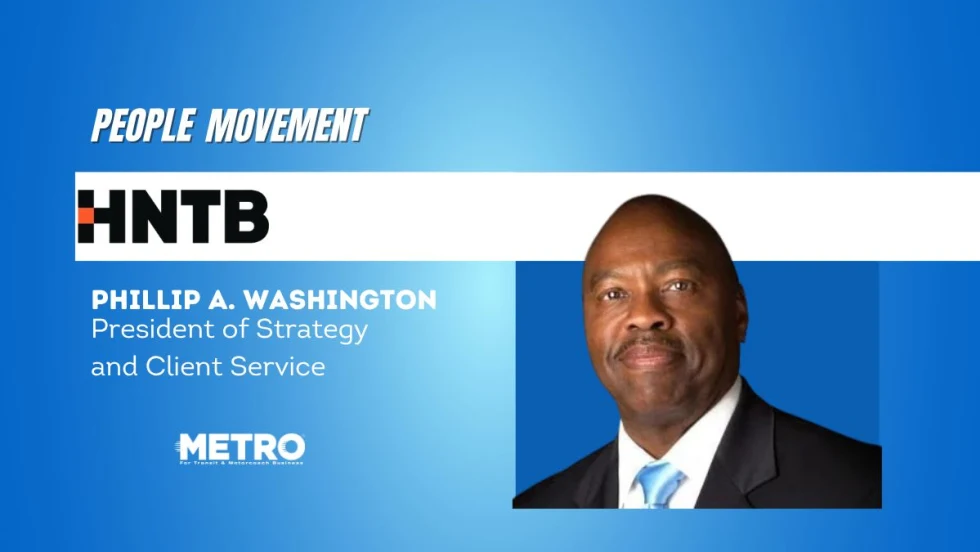
People Movement: Phil Washington Joins HNTB, Denver RTD Launches CEO Search, and More
In this edition, we also spotlight recent personnel moves at STV, the Eno Center for Transportation, and more, highlighting the people taking on new roles across the transportation industry.
Read More →
SEPTA Details Accelerate Vision for Transit System
The plan outlines investments in trolley modernization, new Metro and Regional Rail vehicles, accessible stations, and more frequent bus and rail service.
Read More →
FTA Ends Direct Oversight of MBTA Safety Actions
The federal agency closed its remaining special directive to the Massachusetts Department of Public Utilities following a safety review that began in 2022.
Read More →
Report: Transit Bus Manufacturing Supports 34,100 Jobs, $5.1B in GDP
The “Buses Mean Business” report examines the transit bus manufacturing industry’s economic footprint, supply chain, and rising demand for vehicle replacements.
Read More →
LIT Marks 10-Year Milestone at Annual Summit
Hosted by the COTA from September 10 to 13, the Summit carried the theme “Celebrating 10 Years of Excellence, Leadership, and Impact,” with every part of the program honoring the people, agencies, and partners who built LIT over its first decade.
Read More →