



New York MTA on Pace for Record-Breaking 2025 After Strong First Half
Amid a historic capital program focused on state-of-good-repair investments, subway safety also improved, with major crimes down 3.2% year-over-year and nearly 10% below 2019 levels.

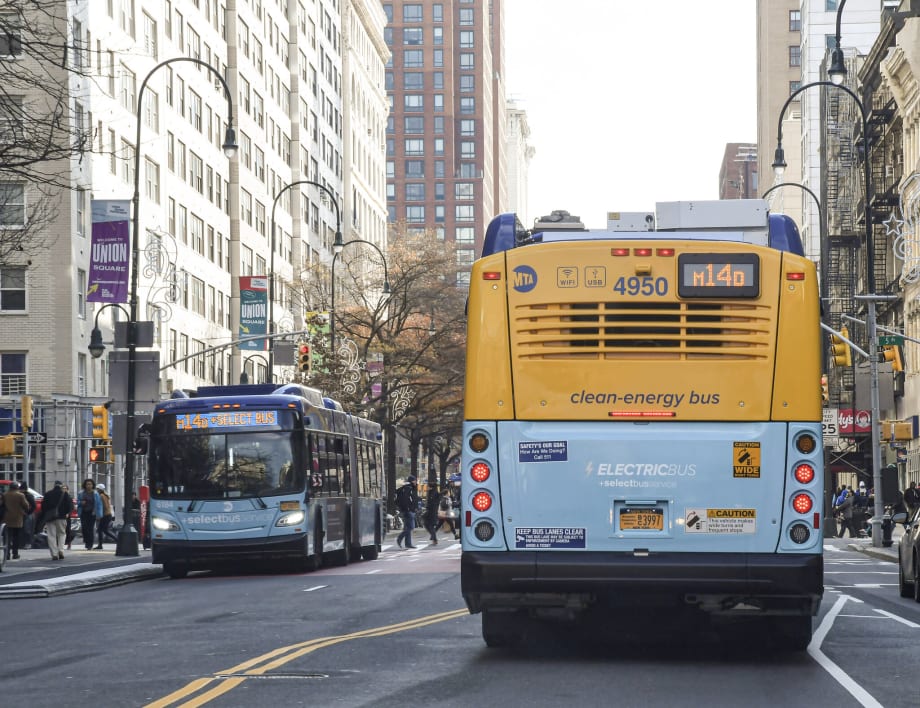
In the first half of 2025, performance across New York City Transit was at historic highs.
Photo: Marc A. Hermann

In the past several years, the MTA has increased service across the network.
Photo: METRO
The New York MTA is poised for a milestone year, driven by substantial gains in ridership, on-time performance, and customer satisfaction across NYCT, Long Island Rail Road (LIRR), and Metro-North (MNR) in the first half of 2025.
Amid a historic capital program focused on state-of-good-repair investments, subway safety also improved, with major crimes down 3.2% year-over-year and nearly 10% below 2019 levels.
“The new MTA is a business-like organization that delivers for customers, and the proof is in the data — soaring ridership, historic levels of on-time performance, and major improvements in customer satisfaction,” said MTA Chair/CEO Janno Lieber.
Increased Service Leading to Ridership Gains
In the past several years, the MTA has increased service across the network.
In 2023 and 2024, weekend and off-peak weekday service was increased on 12 subway lines, reducing wait times for millions of customers. The opening of Grand Central Madison in 2023 enabled a 41% increase in service on the LIRR.
Bus service has also improved across the city: service was increased on 8 express and 15 local routes with high ridership earlier this year, following the launch of congestion pricing. The Queens Bus Network Redesign, which began its first phase June 29, expands 24-hour service to hundreds of thousands of Queens bus riders and includes a $35 million annual investment in more service for the borough.
NYCT Hits Historic Highs
In the first half of 2025, performance across New York City Transit (NYCT) was at historic highs.
Weekday subway on-time performance in the first six months of 2025 was 83.7%, 2.4 percentage points higher than the same time last year and on track for the best non-pandemic year in recorded history.
Meanwhile, weekday subway delays are down 11% in 2025 compared to 2024, while weekend delays were down 14%.
Bus service delivery was above 95% each month of 2025, and bus speeds have improved over the first half of the year, thanks in part to reduced gridlock following the start of congestion pricing.
Across the board, customers are happier. In the biannual customer survey completed this spring, satisfaction for subways rose 8%, satisfaction for local buses rose 11%, and satisfaction for express buses rose 9% compared to the Fall of 2024.
Ridership has also surged in 2025. The first half of the year has seen record post-pandemic ridership for subways, buses, and paratransit.
In June, NYCT surpassed 106 million rides, up 10% from 2024, while 2025 subway ridership is up 8% compared to 2024 and 31% compared to 2022. Ridership gains have continued, with the first post-pandemic July days to exceed four million subway riders reached on July 9 and 10.
Bus ridership has also grown in 2025, with ridership up 12% compared to 2024. Bus paid ridership has grown in part following the MTA’s efforts to improve fare compliance through targeted deployments of fare enforcement teams. Combined, buses and subways have carried over 850 million customers in the first half of 2025.
Paratransit has also continued to see huge ridership and performance gains. In June, Paratransit served 1.3 million Paratransit riders on 904,000 completed trips, both above previous pre-COVID peaks, and delivered an on-time performance rate of 92 percent for the month. Customer satisfaction has remained high, with rates staying above 78% every month of 2025.
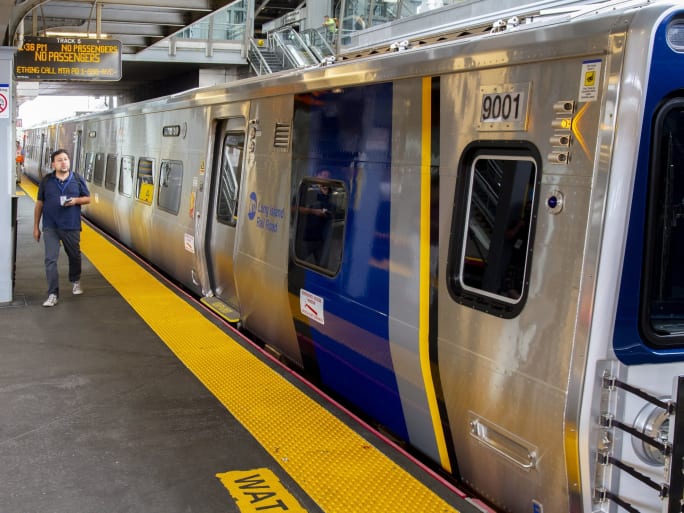
LIRR carried 6.9 million customers in June, representing 89% of pre-pandemic ridership — the best June since 2019.
Photo: LIRR
LIRR and MNR Improve On-Time Performance, Ridership
In June, LIRR hit a new post-pandemic high for weekday riders by averaging 266,047 weekday riders. On June 18, the agency set a new single-day post-pandemic ridership record, carrying 287,437 customers.
LIRR carried 6.9 million customers in June, representing 89% of pre-pandemic ridership — the best June since 2019. Year-to-date ridership on LIRR is up 9% compared to 2024 and up 64% from 2022.
LIRR also achieved the best June non-pandemic On-Time Performance in its history at 95.9%, up 1.4 percentage points from 2024.
On June 18, Metro-North carried nearly 259,000 riders, and the average weekday ridership for June was 235,450, both new post-pandemic highs. Year-to-date Metro-North ridership is up 6% compared to 2024 and up 63% compared to 2022.
Metro-North delivered an On-Time Performance rate of 98% in June, continuing its outstanding start to 2025. In the customer survey completed this spring, Metro-North received a satisfaction rating of 89% from customers, an increase of 4% from the Fall 2024 survey, while satisfaction among LIRR customers surged 11 percentage points from this time last year.
More Management

ENC Lands MATA Contract and More in Biz Briefs
In this edition of Biz Briefs, we spotlight the latest developments shaping the future of mobility.
Read More →
From Surviving to Thriving: Building Stronger Transportation Organizations
Bus Business Consultants founder Brian Dickson shares lessons on leadership, organizational health, and creating options for long-term success in a changing transportation industry.
Read More →
Everett Transit, Community Transit Outline Consolidation Agreement
The proposed agreement calls for a 50% increase in bus service in Everett, a new microtransit zone, continued paratransit service, and the transfer of Everett Transit operations to Community Transit.
Read More →

Strada360’s Steve Lassey on Turning Transit Data Into Better Decisions
From breaking down data silos to preparing for AI, Strada360 CEO Steve Lassey discusses how transit agencies can use technology to improve operations, customer information, and long-term decision-making.
Read More →
People Movement: Phil Washington Joins HNTB, Denver RTD Launches CEO Search, and More
In this edition, we also spotlight recent personnel moves at STV, the Eno Center for Transportation, and more, highlighting the people taking on new roles across the transportation industry.
Read More →
SEPTA Details Accelerate Vision for Transit System
The plan outlines investments in trolley modernization, new Metro and Regional Rail vehicles, accessible stations, and more frequent bus and rail service.
Read More →
FTA Ends Direct Oversight of MBTA Safety Actions
The federal agency closed its remaining special directive to the Massachusetts Department of Public Utilities following a safety review that began in 2022.
Read More →
Report: Transit Bus Manufacturing Supports 34,100 Jobs, $5.1B in GDP
The “Buses Mean Business” report examines the transit bus manufacturing industry’s economic footprint, supply chain, and rising demand for vehicle replacements.
Read More →
LIT Marks 10-Year Milestone at Annual Summit
Hosted by the COTA from September 10 to 13, the Summit carried the theme “Celebrating 10 Years of Excellence, Leadership, and Impact,” with every part of the program honoring the people, agencies, and partners who built LIT over its first decade.
Read More →
People Movement: Dan Dipert Coaches Adds Third-Generation Leader, Keolis Names New Valley Metro VP/GM, and More
In this edition, we also cover recent appointments and announcements at the Wabtec, SilverRide, HNTB, and more, showcasing the individuals helping to shape the future of transportation.
Read More →