



Michigan Transit Agencies Run Nearly 500 Buses on Propane Autogas
With approximately 500 propane transit buses now deployed across more than 15 agencies statewide, Michigan is driving advancements in mobility while reducing environmental impact and operating costs.


The ROUSH CleanTech Ford E-450 cutaway chassis is the only propane vehicle that has completed the Federal Transit Administration’s New Model Bus Testing Program.
Photo: ROUSH CleanTech
Transit agencies in Michigan are transforming public transportation with the adoption of propane autogas, reported ROUSH CleanTech.
With approximately 500 propane transit buses now deployed across more than 15 agencies statewide, Michigan is driving advancements in mobility while reducing environmental impact and operating costs, said Todd Mouw, executive VP at ROUSH, which will be exhibiting at the Michigan Public Transportation Conference, August 18 to 20.
“Our state’s transit agencies are demonstrating confidence in propane autogas as a reliable and environmentally friendly fuel option for their fleets,” said Mouw. “With the support of Roush engineering and our commitment to sustainability, Michigan is leading the charge toward a greener, more cost-efficient transit future.”

All of ROUSH CleanTech’s propane buses are certified to the ultra-low nitrogen oxide levels of 20 mg/hp-hr, making them 90% cleaner than the EPA’s strictest federal emission regulation and ready to meet EPA and CARB’s 2031 standards.
Photo: ROUSH CleanTech
Tech Fueling Propane
The agencies’ transit buses are equipped with advanced propane engine systems designed and built by the Livonia-based company.
The ROUSH CleanTech Ford E-450 cutaway chassis is the only propane vehicle that has completed the Federal Transit Administration’s New Model Bus Testing Program (Altoona Testing), which allows transit fleet operators to access federal funds, according to the company.
Flint Mass Transportation Authority (MTA) has over 150 buses fueled by propane.
“Propane is the ideal fuel to drive down operational costs and to carry our commitment to reducing our exposure to unstable imported fuel prices,” said Edgar H. Benning, CEO of MTA, which has been operating propane since 2011.
All of ROUSH CleanTech’s propane buses are certified to the ultra-low nitrogen oxide levels of 20 mg/hp-hr, making them 90% cleaner than the EPA’s strictest federal emission regulation and ready to meet EPA and CARB’s 2031 standards.
“We’re reaping the benefits of propane daily,” said Daniel Whitehouse, VP, paratransit and on-demand services, for Metro Detroit’s Suburban Mobility Authority for Regional Transportation (SMART). “Not only were we interested in the cost savings of the fuel and lower maintenance costs, we wanted to help make an impact on the environment with clean propane autogas.”
SMART currently operates over 60 propane buses.
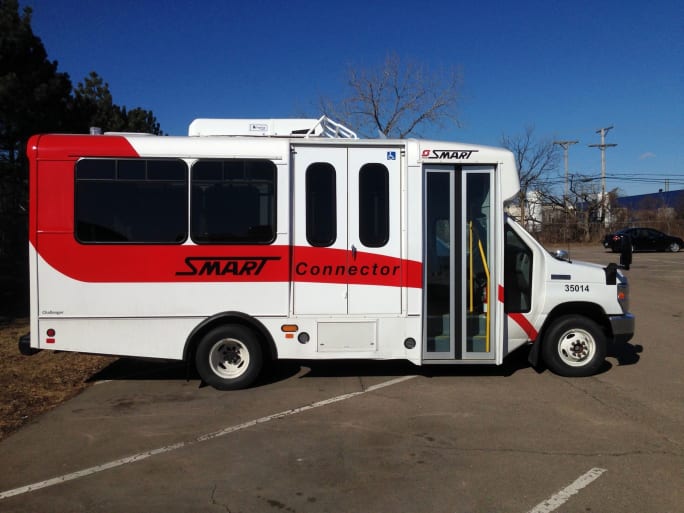
SMART currently operates over 60 propane buses.
Photo: ROUSH CleanTech
Clean and Environmentally Friendly
Propane, which is classified as a clean energy source by the Environmental Protection Agency, is an American-made fuel with more than 90% of the United States' propane supply produced domestically.
“Not only does propane work in our climate, but the vehicles also have similar engine [to gasoline engines], backed by the manufacturer's warranty with the same maintenance program,” said Steve Schipper, COO of The Rapid in Grand Rapids, which runs 47 propane buses. “It is also important that propane is a domestic fuel produced here in the United States, supporting American jobs and reducing dependency on foreign oil.”
The propane buses also lower daily operating costs due to reduced fuel and maintenance expenses. On average, propane autogas costs about 40% less than gasoline and 50% less than diesel, said ROUSH.
In addition, propane buses offer low maintenance costs, optimal drivability, long range, reliable cold-weather performance with unaided starts up to minus 40 degrees Fahrenheit, and a quick cabin warm-up.
“These vehicles are quieter and warm up faster during the winter months, which is an essential feature in regions that experience more frigid temperatures seasonally,” said Whitney Ehresman, transportation director for Allegan County Transportation.
The agency operates seven propane buses, which are a quarter of the agency’s fleet. In their first eight months, the buses saved the agency more than $150,000 in fuel costs.
More Bus

New York MTA Plans Largest Bus Fleet Upgrade in More Than a Decade
The agency is seeking manufacturers for 650 new CNG buses to replace aging vehicles, improve reliability, and advance its broader fleet modernization strategy.
Read More →
Building a Flexible Path to Transit Electrification
John Hroncich discusses BAE Systems’ modular and scalable approach, lessons learned from decades of real-world operations, and how agencies can identify electrification strategies that fit their fleets.
Read More →
Bus Tech Talk: Keeping Transit Technicians Ahead of the Technology Curve
LA Metro’s Obed Mejia discusses technician training, evolving maintenance technology, fleet replacement, and strategies for getting the most out of today’s transit fleets.
Read More →
Biz Briefs: RIPTA Unveils New Frontrunners, Clevland RTA Adds New Siemens, and More
In METRO's latest installment, we take a look at recent news from Siemens, Prevost, Dodge, and more partnerships making headlines across the transportation sector.
Read More →
People Movement: Holly Arnold Joins Transdev and More
In this edition, we also cover recent appointments and announcements at Pace, CamTran, MCI, and more, showcasing the individuals helping to shape the future of transportation.
Read More →
The High Cost of Transit Buses: Industry Leaders Look to Procurement Reform
Transit leaders and policymakers examine how standardized bus designs, streamlined procurement, and predictable funding could help agencies stretch budgets and deliver better service.
Read More →
The Business Voice Behind Public Transportation
As chair of APTA’s Business Members Board of Governors, Ray Melleady explains how more than 850 business members are partnering with transit agencies to advance funding, innovation, and industry-wide collaboration.
Read More →
From Surviving to Thriving: Building Stronger Transportation Organizations
Bus Business Consultants founder Brian Dickson shares lessons on leadership, organizational health, and creating options for long-term success in a changing transportation industry.
Read More →
Finding the ‘Happy Medium’: Optimizing Maintenance Without Sacrificing Reliability
The key to maintenance optimization isn’t doing less work—it’s doing the right work at the right time on the right assets.
Read More →
LA Metro, City of West Hollywood, and Partners Advance Smarter Bus Lane Enforcement
The award-winning partnership combines AI-powered detection with human oversight to improve bus reliability, accessibility, and enforcement efficiency.
Read More →