




Looking Back: Southern California's OCTA Authorizes Emergency Rail Stabilization
California’s OCTA Delivers First Wave of Sand as Part of Coastal Rail Protection Efforts
The quarter-mile of sand being placed on North Beach in San Clemente over the next week is the initial deposit on a commitment to make sand a major part of emergency rail protection.
September 8, 2025
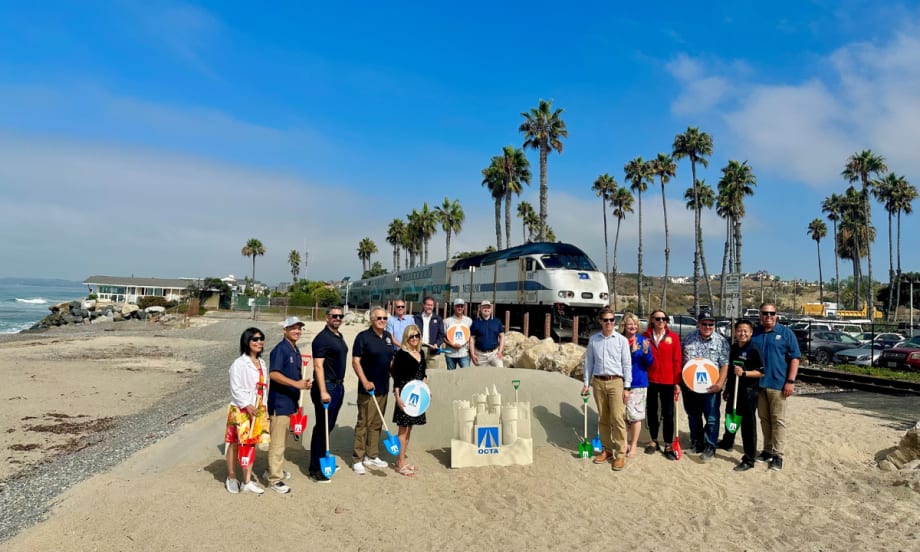
OCTA Board Members and executives gathered with federal, state, and local elected leaders on Friday, Sept. 5, to mark the beginning of sand nourishment in San Clemente to help protect the coastal rail line.
Photo: Orange County Transportation Authority
3 min to read
The Orange County Transportation Authority marked a key milestone in its ongoing emergency effort to protect the coastal rail line with an initial sand nourishment effort getting underway in San Clemente.
More than 300 truckloads of sand from a quarry in Palm Springs, totaling approximately 3,400 cubic yards of sand, are scheduled to be delivered to the shoreline between the rail line and the ocean over the next week, along a more than quarter-mile span of beach.
According to an agency release, the sand is being placed along the beach as an immediate step to help reinforce the rail line while longer-term reinforcement work continues.
OCTA leaders emphasized that this first wave of sand is an important initial deposit on a much larger effort to place a total of up to 540,000 cubic yards of sand along the San Clemente coastline, pending sand sourcing and additional state and federal permitting approvals.
“I want to thank the collective effort of agencies and leaders at every level of government who helped make this initial sand placement a reality,” said OCTA Vice Chair Jamey M. Federico, also a Dana Point Councilmember. “Reaching this milestone was possible because of our federal and state partners, multiple agencies including the Federal Railroad Administration, the California State Transportation Agency, California Transportation Commission, the Coastal Commission, the City of San Clemente, and the community.”
Rail Line Reinforcement Efforts Expand
The work is part of OCTA’s ongoing effort to focus on four priority areas to protect the rail line through south Orange County, which is a vital link in Southern California’s rail network for passengers, freight, and military assets. The sand nourishment is estimated to cost about $900,000.
“This initial placement of sand highlights our dedication to securing our rail corridor and protecting our coast,” said OCTA Director Katrina Foley, also the county’s Fifth District Supervisor. “We must work collaboratively with all levels of government to expedite sand renourishment efforts and protect our iconic Orange County beaches.”
Additional work near Mariposa Point is scheduled to begin later this month and will include the restoration of the popular San Clemente Pedestrian Beach Trail and the construction of a nearly 1,400-foot-long catchment wall to protect the rail line from debris caused by landslides on the hill above. That work is scheduled to be completed in summer 2026.
Background on the Emergency Rail Reinforcement Project
Over the past four years, San Clemente’s eroding bluffs — on both city and private property — have repeatedly forced the closure of the rail line that has operated largely uninterrupted for more than 125 years.
To prevent additional service interruptions, OCTA is leading efforts to immediately reinforce four of the most vulnerable areas along the 7-mile stretch of rail in San Clemente, while continuing a Coastal Rail Resiliency Study that will pursue additional solutions to protect the line for the next approximately 30 years.
The first part of that emergency work started in April and finished in June, including the strategic repair and placement of large boulders known as riprap to protect the track from coastal erosion.
OCTA worked in partnership with Metrolink and the LOSSAN Rail Corridor Agency, which operates Amtrak’s Pacific Surfliner, to temporarily halt passenger service while that work was completed on an expedited construction schedule over six weeks. Current work to place the sand on the shoreline and subsequent work are not expected to affect passenger rail service.
More Rail
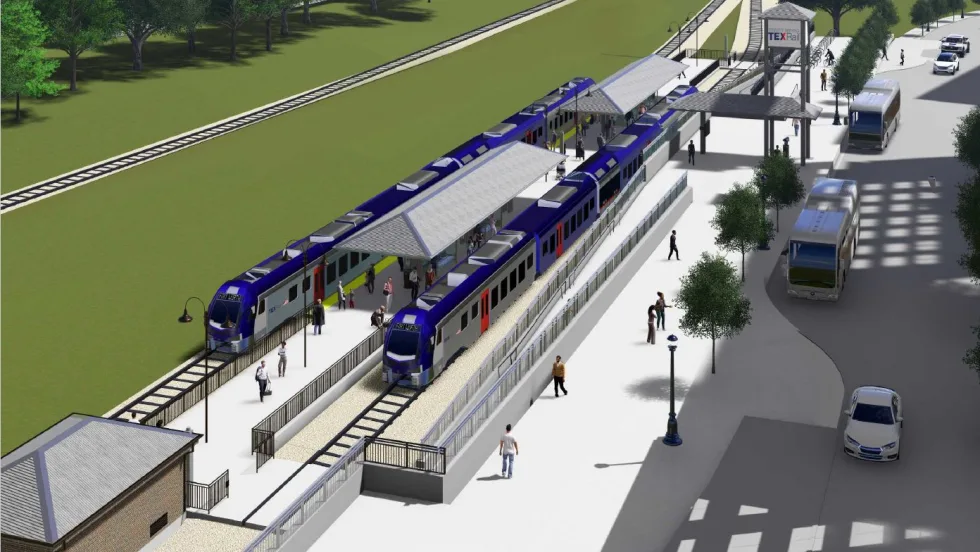
Trinity Metro Breaks Ground on $270M TEXRail Extension
The 2.1-mile extension will connect Fort Worth’s Medical District and Near Southside to downtown, surrounding communities, and Dallas-Fort Worth International Airport.
Read More →
Bringing Austin’s First Light Rail System to Life
Austin Transit Partnership CEO Greg Canally discusses the city's nearly 10-mile light rail project, its collaborative approach to project delivery, the importance of community engagement, and the milestones ahead as construction approaches in 2027.
Read More →
Metra Draft Plan Outlines Costs, Service Improvements for Regional Rail
The Systemwide Network Plan identifies infrastructure needs and potential investments to expand all-day, bidirectional rail service across the Chicago region.
Read More →
Amtrak Completes First Street Tunnel Upgrades, Restores Service
The nine-day construction project included replacing aging track infrastructure and modernizing switch systems near Washington Union Station.
Read More →
FRA Announces $2.3B for Passenger, Freight Rail Projects Nationwide
The CRISI Grant Program funding will support rail infrastructure improvements, safety upgrades, and projects aimed at improving freight and passenger rail service across 45 states and Washington, D.C.
Read More →
Caltrain’s Electrification Drives a New Era of Ridership Growth
The railroad’s shift to electric service has brought more frequent trains, stronger customer satisfaction, and increased ridership, earning it APTA’s Outstanding Public Transportation System award.
Read More →
FTA Advances $164M Broward County Commuter Rail Project
The proposed 10.5-mile commuter rail extension would connect Fort Lauderdale and Aventura, expanding passenger rail options in South Florida.
Read More →
New York MTA Launches Historic $1.9B Signal, Track Modernization Project
Funded in part by congestion pricing revenue, the project will replace nearly century-old signals along the A and C lines in Brooklyn and Queens.
Read More →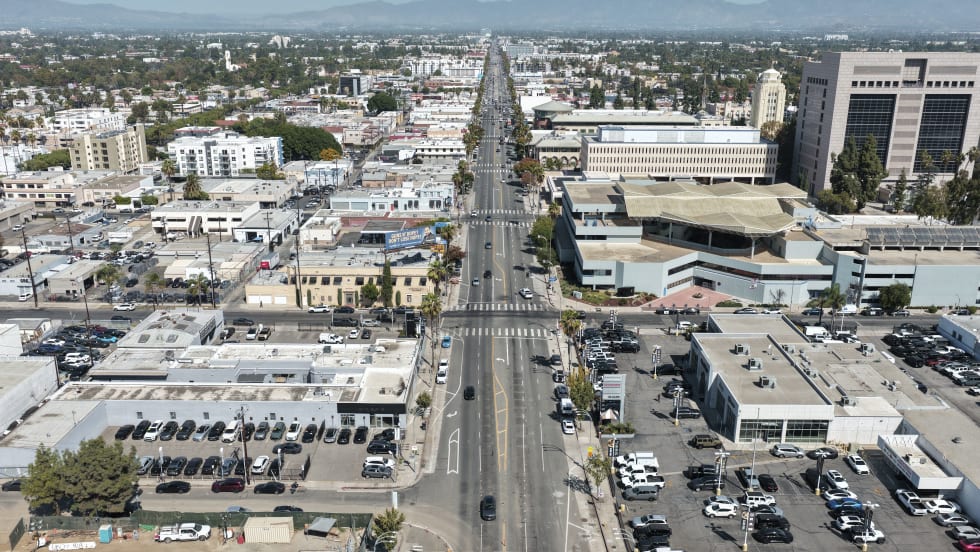
LA Metro Breaks Ground on East San Fernando Valley Light Rail Project
The 6.7-mile line will add 11 stations along Van Nuys Boulevard, expand access to jobs and regional transit connections, and support Metro’s broader efforts to improve mobility as rail ridership grows.
Read More →
CSA Group Releases Climate Resilience Standard for Transit, Passenger Rail
Developed with support from the Standards Council of Canada, CSA D700 guides assessing climate-related risks and planning adaptation measures for transit and passenger rail systems.
Read More →