




Keep Reading: How Two Transit Agencies Are Using Tech to Put Riders First
How Santa Maria Regional Transit Became a National Model for Smart, Sustainable Mobility
From all-electric buses and real-time data analytics to an autonomous security robot, SMRT is showing how smaller transit systems can lead the way in modernization.
October 27, 2025
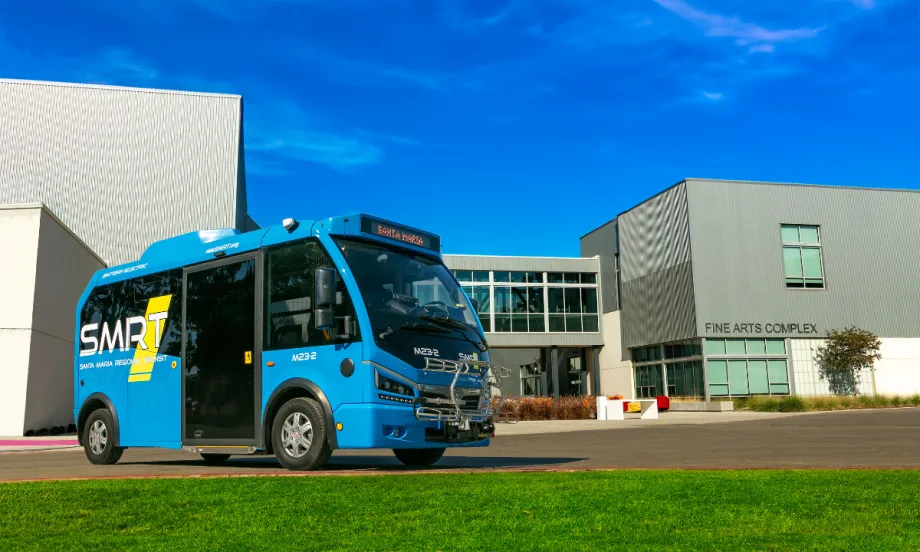
SMRT's partnership with Karsan introduced the electric eJest minibus, which enables ADA accessibility and improved driving maneuverability.
Photo: Newville Design
5 min to read
- Santa Maria Regional Transit is pioneering smart and sustainable transit solutions using all-electric buses.
- Integration of real-time data analytics enhances operational efficiency and decision-making in the transit system.
- Implementation of an autonomous security robot demonstrates innovative safety measures for transit services.
*Summarized by AI
Santa Maria Regional Transit (SMRT) of California, alongside SporTran of Shreveport, Louisiana, recently earned the Community Transportation Association of America's (CTAA) Large Transportation System of the Year award, sending a powerful message across the industry: small agencies can lead significant change.
"When our small team heard that our significant efforts to enhance public transit in Santa Maria and throughout northern Santa Barbara County were being recognized with the CTAA award, we felt a tremendous amount of validation of our efforts, along with motivation to keep on going," said Gamaliel Anguiano, transit services manager for the City of Santa Maria.
According to CTAA's website, large transit is defined as providing service in an urban area with a population of more than 50,000 and/or receiving 5307 funds.
The Large Transportation System of the Year award recognizes transportation systems for innovative and creative services in their communities, responsiveness to customer and community needs, collaboration with other public and special services transportation providers, accessible transportation services, and more.
These traits have become a hallmark of SMRT's success. Through data-driven planning, bold investments in technology, and a commitment to the rider experience, the agency has redefined what's possible for a mid-sized California transit system.
How SMRT Is Redefining Modern Transit
Just a few years ago, SMRT's transit network resembled that of other small cities, characterized by limited routes, inconsistent service windows, and outdated vehicles. Today, Santa Maria boasts an on-time performance rate of over 96% and ensures that 95% of residents live within 1/4 miles of a bus stop.
Outside the City of Santa Maria, SMRT's service area includes the unincorporated communities of Orcutt and Tanglewood, as well as regional service to the towns of Guadalupe, New Cuyama, Lompoc, Vandenberg, Los Alamos, Buellton, Solvang, Santa Ynez, and the Chumash reservation, along with recently launched service to San Luis Obispo County.
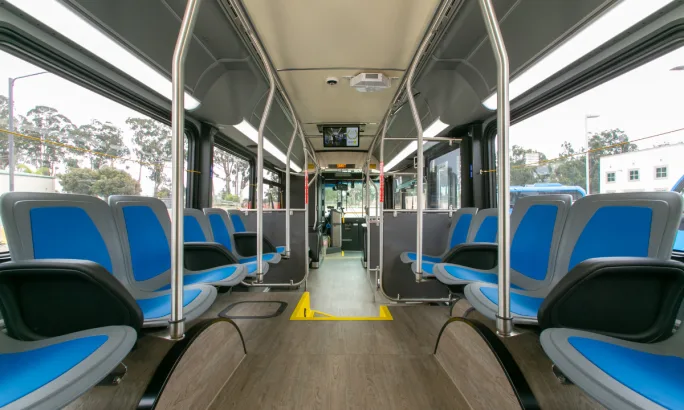
SMRT's new electric bus fleet reflects that, featuring AI-assisted technology, USB charging, infotainment screens, contactless fare options, and more.
Photo: Newville Design
This transformation was driven by a simple philosophy that every improvement should directly benefit the rider. SMRT's new electric bus fleet reflects that, featuring AI-assisted technology, USB charging, infotainment screens, reclining seats, Wi-Fi, contactless fare options, and even medical-grade air purification systems.
Each bus also features new branding and hidden "Easter eggs" in its livery, fun design touches that connect with the community and make everyday commutes memorable.
"It carries a lot of weight for our small team to receive this national award," said Anguiano. "It is tempting to think that only the big agencies with much more resources are the only ones able to get big things done."
One of Santa Maria's most notable achievements is its deep commitment to sustainability. By the end of 2025, the agency expects to operate a 100% electric fleet of more than 40 vehicles, making it one of the first small-city transit systems in the United States to achieve full electrification.
With over $38 million invested in electric buses and charging infrastructure, SMRT recognized the need to protect its assets. The solution? "Officer Bus-Ster," a fully autonomous security robot that patrols the agency's transit yards 24/7.
Equipped with LIDAR, SONAR, Infrared, thermal imaging, and motion detection, the robot provides constant surveillance, according to Anguiano, at half the cost of traditional security while tripling patrol coverage.
"We quickly concluded that we could not afford even a single incident of electric vehicle or infrastructure vandalism," said Anguiano.
Data, Decisions, and the Drive for Smarter Mobility
Behind the scenes, SMRT's operations are guided by real-time data. The agency uses analytics to plan routes, evaluate service levels, and communicate transparently with riders.
Through mobile trip planning, tap-to-pay systems, real-time tracking, and even onboard games, the agency blends functionality with fun. However, in some ways, the new data validated their initial efficiency assumptions predating the technology rollouts, and overall, it helps SMRT make appropriate course corrections.
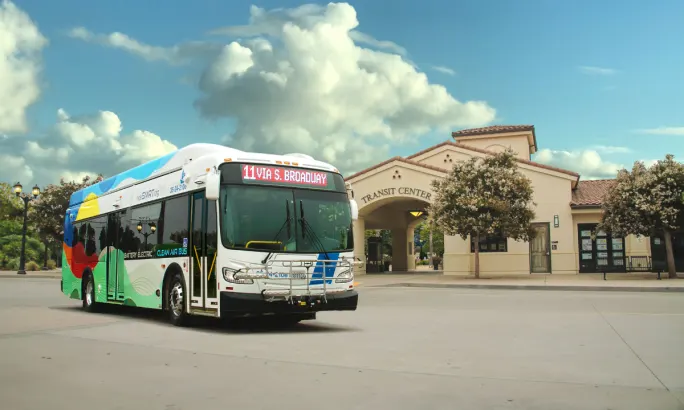
By transforming a small municipal system into a national model of innovation, Santa Maria Regional Transit has demonstrated that big ideas don't have to originate from big cities.
Photo: Newville Design
"Transit planning has often been half art, half science," said Anguiano. "Technology provides the science to show our public and our leadership why certain decisions need to be made."
Although data showed that SMRT's fixed routes serve nearly all riders, the agency saw an opportunity to reach those whose work or school schedules extend beyond regular service hours. The answer? Microtransit.
"For us, Microtransit was never about offering an alternative to a dwindling fixed-route system," said Anguiano. "Rather to offer more and to do so efficiently."
SMRT's partnership with Karsan introduced the electric eJest minibus, which enables ADA accessibility and improved driving maneuverability. With curb-to-curb service and a low floor, the eJest can navigate tight spaces like cul-de-sacs and parking lots in the "latest of evening hours."
Innovation Without Limits: What's Next for SMRT
Anguiano insists that SMRT's story is still being written. Over the next four years, the agency plans to expand its service area, develop rapid transit corridors, test autonomous shuttle routes, and even experiment with augmented reality rider guides.
"We still have to deal with the FTA, limited funding, limited staffing, and highly technical work, [...] what might set us apart from others is that despite universal challenges, we are committed to 'leaving no stone unturned' to enhance the transit riding experience," said Anguiano.
By transforming a small municipal system into a national model of innovation, Santa Maria Regional Transit has demonstrated that big ideas don't have to originate from big cities.
"I am a firm believer that there is nothing that we in Santa Maria are accomplishing that is not achievable by another transit agency, even with our industry challenges," Anguiano said.
Quick Answers
Santa Maria Regional Transit has implemented all-electric buses, real-time data analytics, and an autonomous security robot to modernize its transit system.
*Summarized by AI
Subscribe to Our Newsletter
More Management
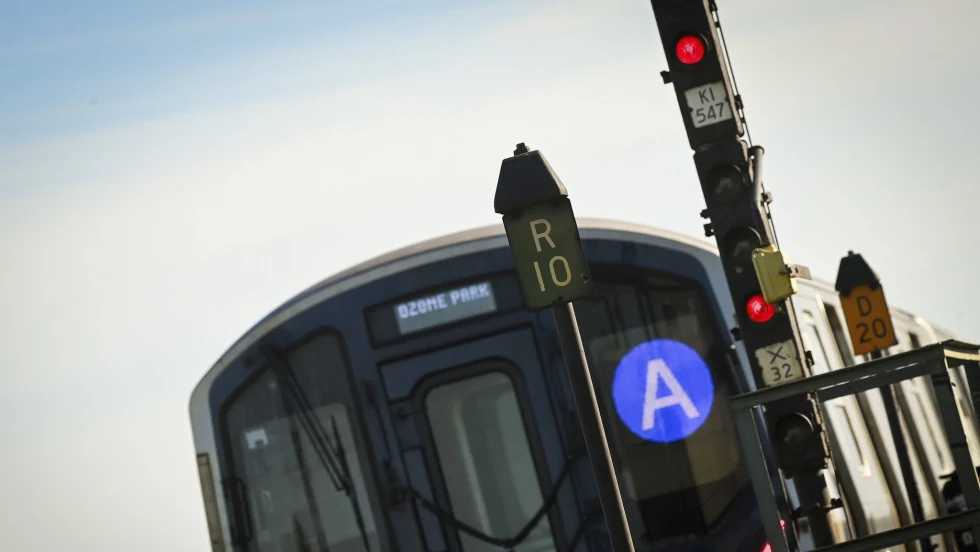
New York MTA Launches Historic $1.9B Signal, Track Modernization Project
Funded in part by congestion pricing revenue, the project will replace nearly century-old signals along the A and C lines in Brooklyn and Queens.
Read More →
Brian Dickson on Building Stronger, More Resilient Transportation Organizations
Bus Business Consultants Founder Brian Dickson discusses the leadership principles, operational discipline, and strategic planning that separate transportation companies positioned for long-term success from those stuck in survival mode.
Read More →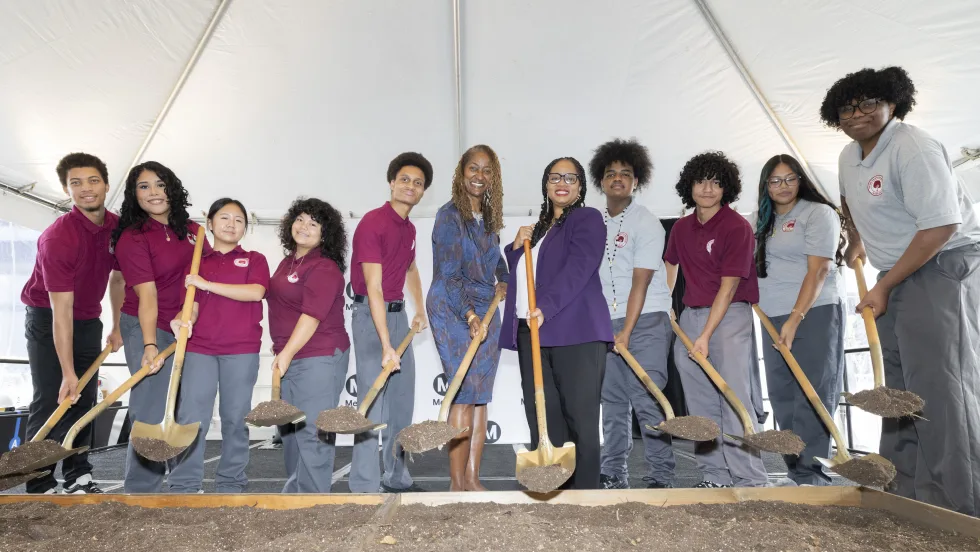
LA Metro Breaks Ground on Vermont BRT Project
The 12.4-mile corridor is projected to serve 66,200 daily riders, reduce travel times by up to 24%, and create the nation's busiest bus rapid transit corridor.
Read More →
Building Stronger Leaders, More Resilient Transit Teams
Dr. Carol Parker Walsh discusses leadership development, employee retention, workplace culture, and preparing transit’s workforce for AI and automation.
Read More →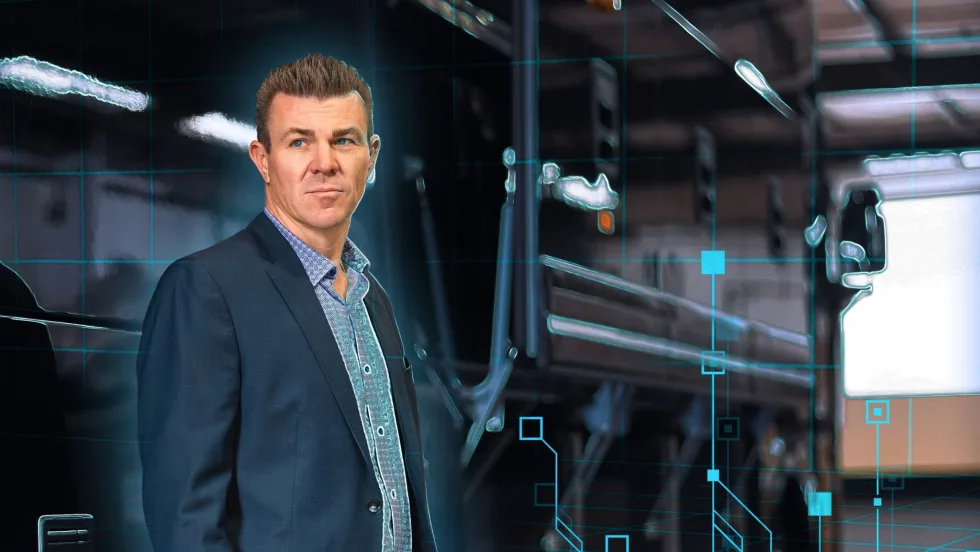
Roman Cornell on ABC Companies’ Evolution and the Future of Passenger Transportation
The company’s CEO discusses carrying forward a third-generation family legacy, ABC’s continued evolution in passenger transportation, support for increasingly complex fleets, and how technology and continued investment could help operators improve uptime.
Read More →
CATS Launches West Charlotte Microtransit Zone, Expands Transit Services
The new microtransit zone connects residents to key destinations as Charlotte Area Transit System rolls out the first phase of its 2055 Transit System Plan.
Read More →
VIA Bus Ridership Grows 10.1% Through August 2026
San Antonio's VIA Metropolitan Transit reported the highest bus ridership growth among major Texas transit systems. Federal Transit Administration data ranked it second among the nation's 50 largest transit systems.
Read More →
CSA Group Releases Climate Resilience Standard for Transit, Passenger Rail
Developed with support from the Standards Council of Canada, CSA D700 guides assessing climate-related risks and planning adaptation measures for transit and passenger rail systems.
Read More →
ETA CEO John Maglio on Transit Technology, Innovation, and Building Agency Trust
ETA founder and CEO John Maglio explores the evolution of transit technology, the importance of reliable systems, and how stronger partnerships can help agencies improve operations and the passenger experience.
Read More →
COTA Launches First Customer Experience Action Plan to Improve Transit Service
The new plan outlines improvements to service reliability, accessibility, communication, and the overall rider experience across Central Ohio's transit system.
Read More →