




People Movement: The Latest from MARTA, NCTD, and More
MARTA to Modernize Entire Fare Collection System
The agency launches a comprehensive fare system upgrade, introducing contactless payments, new Breeze cards, and a redesigned mobile app by spring 2026.
October 28, 2025
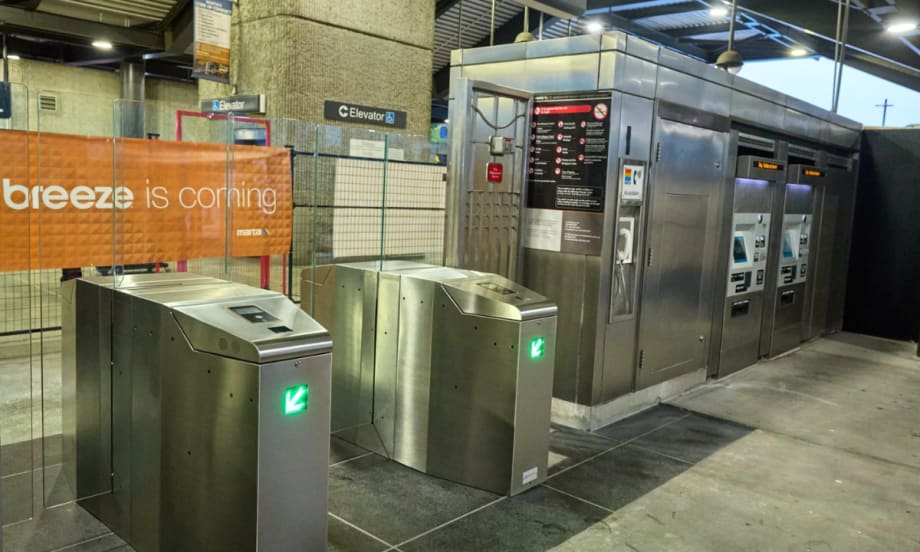
Better Breeze faregates and ticket vending machines at Lindbergh Center Station southeast entrance.
Photo: MARTA
3 min to read
The Metropolitan Atlanta Rapid Transit Authority (MARTA) will replace its entire fare collection system over the next six months, with a goal of implementing and completing customer transition by spring 2026.
The system will retain the popular Breeze name, but fare media and fare collection equipment, including Breeze cards and tickets, faregates and validators, Breeze vending machines, and the mobile app, will be updated and modernized, along with fareboxes in later project phases.
"It's great to keep fares unchanged for years, but not an entire fare collection system," said MARTA Interim General Manager and CEO Jonathan Hunt. "MARTA is implementing some incredible projects and initiatives next year ahead of the World Cup, including new trains, a new bus network with on-demand transit zones, a new bus rapid transit line, and a new On the Go app and MARTA website. We need to ensure our Breeze system is aligned with these once-in-a-generation improvements and ready for the future."
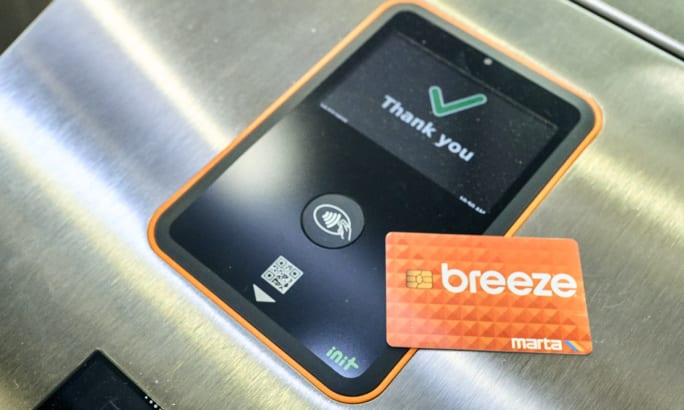
MARTA's new fare cards are seeing a redesign, with more information available in 2026.
Photo: MARTA
MARTA's Contactless Future Takes Shape
MARTA began installing new fare equipment at Lindbergh Center Station on Sept. 22 and at Doraville on Oct. 8. Installation of new contactless payment terminals on buses started in mid-September.
The installation of new equipment will continue systemwide in phases until the customer transition period next April. Access to all rail stations will be maintained, and there will be a month-long period in spring 2026 for customers to transition from the current Breeze system to the Better Breeze system.
Features of the new Better Breeze system include:
New, contactless fare payment equipment. The agency is replacing faregates, fareboxes, validators, and Breeze vending machines systemwide. The Better Breeze faregates can be monitored and adjusted remotely, reducing fare evasion and resulting in a safer, more secure transit system.
Open payment where riders can tap their bank card, smartphone, or mobile wallet to pay for their ride. Fare remains $2.50 for a one-way trip.
An updated app that customers will need to download and create a new account to purchase fares.
New physical cards and continued options of multi-day and monthly passes.
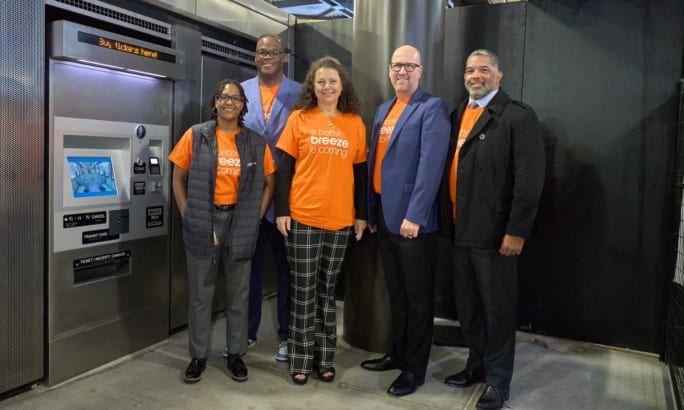
L to R: Rhonda Allen, MARTA Deputy General Manager; Jonathan Hunt, MARTA Interim General Manager & CEO; Jennifer Ide, Chair, MARTA Board of Directors; Carl Commons, INIT CEO; Steven Parker, MARTA Chief of Staff.
Photo: MARTA
INIT and MARTA Collab on Fare Collection and Mobile App
INIT Innovations in Transportation, Inc., has already begun construction of MARTA's Better Breeze fare collection system, which includes 1,800 station and onboard payment readers, 275 ADA-compliant ticket vending machines, and over 500 faregates, with nearly half equipped for ADA accessibility.
INIT's back-office fare management system allows for secure, real-time transaction processing and supports transparent revenue sharing.
Riders will also see improvements in the new Breeze app, which will let them purchase and manage fares directly on their smartphones. New account management tools will enable them to stay in control of their balances and trip history, alongside features like contactless payments, mobile ticketing, and reloadable fare cards.
More Management

METRO Opens Submissions for 2026 Motorcoach Awards
Nominations are now being accepted for METRO Magazine’s Operator of the Year and Innovative Operator of the Year awards.
Read More →
New York MTA Advances Final Contract for Second Avenue Subway Expansion
Contract Four is the largest in the Second Avenue Subway Phase 2 project and includes construction of station infrastructure, tracks, and signals for the subway expansion, MTA officials said. Work on Contract Four will begin in 2027.
Read More →
Transit Agencies Highlight Safety Gains at National Summit
Leaders from 15 major transit systems shared crime-reduction results and safety initiatives while discussing the role of continued federal support.
Read More →

NITA Names New Leadership, Expands Reduced-Fare Program at First Board Meeting
The new regional transit authority appointed its first board chair and interim executive director while extending reduced fares across CTA, Metra, and Pace for eligible riders.
Read More →
Beyond the Checklist: A Structured Approach to Transit Maintenance
Reliability-Centered Maintenance helps transit agencies move beyond routine checklists to focus limited resources on the assets and failures that have the greatest impact on safety, reliability, and service.
Read More →
APTA 2026 Nominating Committee Selects Leadership Slate, Names Chair and Vice Chair Nominees
Leadership changes will help shape the association’s priorities and its representation of the transportation industry during the 2026–2027 term.
Read More →
DART Launches Major Security, Fare Enforcement Initiative
The 90-day demonstration will deploy coordinated security teams at five light rail stations while testing controlled access and gathering data to guide future investments.
Read More →
Sponsored•September 9, 2026
Advancing Fare Collection Through Technology and Innovation
Learn about delivering 1300 gates at 91 stations while managing fare evasion. Explore the large scale deployment, solution customization and real-world results that affect the region. Prepare for deployment in your region now.
Read More →
Game Day in Motion: Moving Millions During the 2026 World Cup
Between packed transit stations and team motorcoaches, see how agencies and operators across North America tackled the transportation demands of the 2026 FIFA World Cup.
Read More →
Surface Transportation Extension Averts Shutdown, Leaves Transit Funding Gap
The stopgap keeps federal transportation programs moving, but missing advance funding could complicate the transit and rail projects agencies are planning next.
Read More →