



New York MTA Marks Record Year for Ridership, Performance in 2025
The subway, Long Island Rail Road, and Metro-North Railroad all recorded record-highs for on-time performance in 2025.

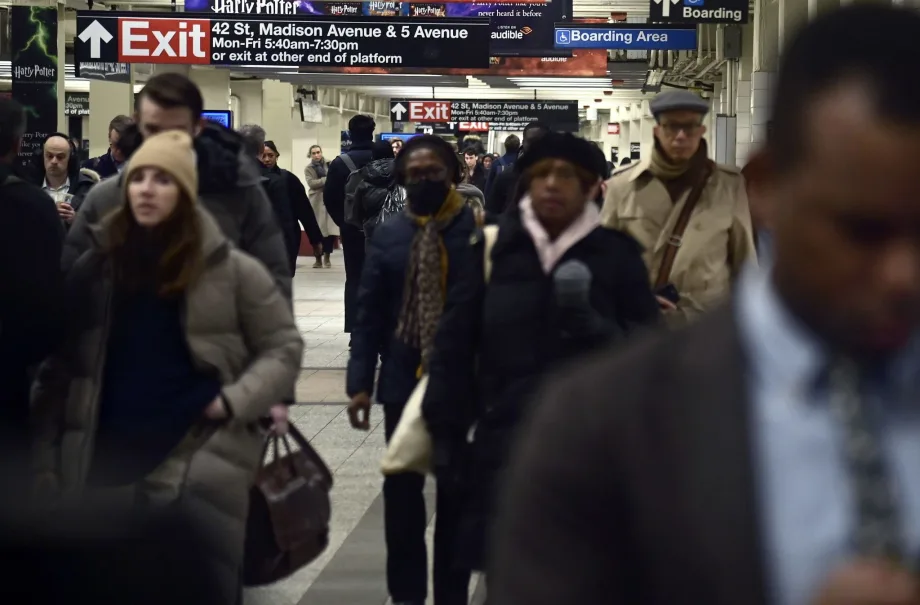
The improvement in subway service was driven by increased focus on data-driven schedule and service management; a drop in delays related to public-conduct incidents; and improved schedules that mitigate the impacts of scheduled maintenance and capital work.
Credit: Marc A. Hermann
New York’s Metropolitan Transportation Authority (MTA) had a record-breaking year in 2025, with significant milestones in performance, reliability, and ridership.
The subway, Long Island Rail Road, and Metro-North Railroad all recorded record-highs for on-time performance in 2025. Ridership also experienced substantial growth in 2025: nearly 1.9 billion trips were taken on New York City Transit’s subway, bus, and paratransit services, up roughly 7% from 2024.
New York City Transit
Weekday and weekend On-Time Performance (OTP) in 2025 reached the highest levels since electronic record-keeping was launched, excluding the pandemic period when 24/7 service was suspended.
Weekday OTP in 2025 was 83.7%, a 2.1 percentage point improvement from 2024, and weekend OTP was 86.6%, 2.4 points better than 2024. In August, weekday OTP on the subway reached 85.2%, the best single-month performance in history.
The improvement in subway service was driven by increased focus on data-driven schedule and service management; a drop in delays related to public-conduct incidents; and improved schedules that mitigate the impacts of scheduled maintenance and capital work.
The subway system experienced about 13,000 fewer delays in 2025 than in the previous year, despite increased regularly scheduled service. In 2025, the Department of Subways also increased service on several lines, including the A and L in November, and the M in December, in conjunction with the FM swap.
Subway ridership grew substantially in 2025, with nearly 1.3 billion total trips, up 7% from 2024. Subway ridership continued its post-pandemic recovery, with total trips in 2025 up almost 30% from 2022 and at 85% of pre-pandemic levels.
The subway broke its post-pandemic single-day weekday and weekend ridership records on multiple occasions in 2025, with the most recent single-day high of 4.65 million customers on December 11.
On buses, the MTA has added additional service across the city in 2025. Following the launch of congestion pricing, the MTA and Governor Hochul committed $8 million from the Outer Borough Transportation Account to increase service on 22 high-ridership bus routes, including 8 Express Bus routes connecting riders to Manhattan and 14 critical Local Bus routes, thereby reducing wait times.
In June and September, the MTA phased in the Queens Bus Network Redesign, which included a $35 million annual investment to increase all-day frequency, 11 new bus routes, and 25 new Rush Routes, resulting in a 7% reduction in travel time.
Systemwide, bus speeds, customer journey time performance, and service delivered were all improved in 2025. Bus ridership also grew by roughly 8% in 2025, with nearly 440 million total trips.
Paratransit also continued to break records in 2025. October was the first month in history with more than one million riders on the service. Overall ridership is at 161% of pre-pandemic levels, reflecting improved service and higher customer satisfaction.
Customer survey data also reached record highs in 2025: November satisfaction was at 67% for subway riders and 62% for bus riders, while paratransit satisfaction has consistently been in the high 70s all year. This increase in satisfaction was driven primarily by improved customer safety: 71% of subway customers reported feeling safe on the system in November, the highest rate since the MTA began monthly surveys in 2022.
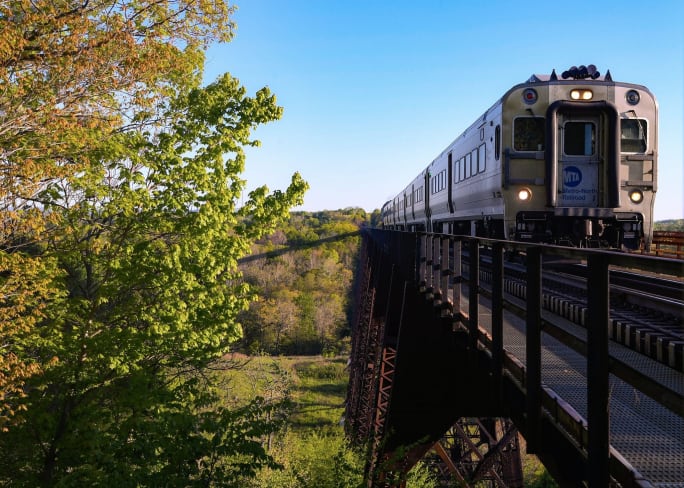
Metro-North carried 69 million riders in 2025, up 6% from 2024.
Credit: Marc A. Hermann
Long Island Rail Road and Metro-North
The MTA’s railroads also clocked strong performance and ridership results in 2025.
The Long Island Rail Road (LIRR) recorded the most significant increase in ridership among MTA modes in 2025, with 81 million customers, up 9% from 2024. The LIRR also broke several post-pandemic records in December, with 183,250 people taking the train on Saturday, December 13, the highest post-pandemic Saturday, and 152,661 customers on Sunday, December 21, the highest post-pandemic Sunday.
On September 24, the LIRR carried more than 300,000 riders for the first time since the pandemic. Overall, LIRR ridership is at 92% of pre-pandemic levels.
Performance on the LIRR was also at or above record levels in 2025. OTP for the year exceeded 96%, up 1 point from 2024 and the best non-pandemic year in at least a decade. And customer satisfaction reached new heights, with 81% of riders feeling satisfied, an 11-point increase from 2024.
Metro-North continued to deliver excellent service in 2025, with an OTP of 97.8%. This strong performance was matched by improvements in service, including the ahead-of-schedule launch of the new “Super-Express” service on the Hudson Line on October 5, which slashed travel times between Poughkeepsie and Grand Central to under 90 minutes.
Metro-North carried 69 million riders in 2025, up 6% from 2024.
The week of December 15 saw the highest post-pandemic ridership recovery week for Metro-North, with 827,015 total customers. The weekend of December 20-21 was Metro-North's strongest post-pandemic ridership weekend, with 245,638 customers. Metro-North ridership is now at 88% of pre-pandemic levels.
More Management

METRO Opens Submissions for 2026 Motorcoach Awards
Nominations are now being accepted for METRO Magazine’s Operator of the Year and Innovative Operator of the Year awards.
Read More →
New York MTA Advances Final Contract for Second Avenue Subway Expansion
Contract Four is the largest in the Second Avenue Subway Phase 2 project and includes construction of station infrastructure, tracks, and signals for the subway expansion, MTA officials said. Work on Contract Four will begin in 2027.
Read More →
Transit Agencies Highlight Safety Gains at National Summit
Leaders from 15 major transit systems shared crime-reduction results and safety initiatives while discussing the role of continued federal support.
Read More →

NITA Names New Leadership, Expands Reduced-Fare Program at First Board Meeting
The new regional transit authority appointed its first board chair and interim executive director while extending reduced fares across CTA, Metra, and Pace for eligible riders.
Read More →
Beyond the Checklist: A Structured Approach to Transit Maintenance
Reliability-Centered Maintenance helps transit agencies move beyond routine checklists to focus limited resources on the assets and failures that have the greatest impact on safety, reliability, and service.
Read More →
APTA 2026 Nominating Committee Selects Leadership Slate, Names Chair and Vice Chair Nominees
Leadership changes will help shape the association’s priorities and its representation of the transportation industry during the 2026–2027 term.
Read More →
DART Launches Major Security, Fare Enforcement Initiative
The 90-day demonstration will deploy coordinated security teams at five light rail stations while testing controlled access and gathering data to guide future investments.
Read More →
Advancing Fare Collection Through Technology and Innovation
Learn about delivering 1300 gates at 91 stations while managing fare evasion. Explore the large scale deployment, solution customization and real-world results that affect the region. Prepare for deployment in your region now.
Read More →
Game Day in Motion: Moving Millions During the 2026 World Cup
Between packed transit stations and team motorcoaches, see how agencies and operators across North America tackled the transportation demands of the 2026 FIFA World Cup.
Read More →
Surface Transportation Extension Averts Shutdown, Leaves Transit Funding Gap
The stopgap keeps federal transportation programs moving, but missing advance funding could complicate the transit and rail projects agencies are planning next.
Read More →