



2011- Women In Transportation: Rosemary Sheridan
Title: VP, communications and marketing Organization: American Public Transportation Association City: Washington, D.C.

Rosemary Sheridan's "stepping stone" job at NJ Transit eventually led to her role at APTA, where she has been pivotal in emphasizing advocacy for the public transportation industry.
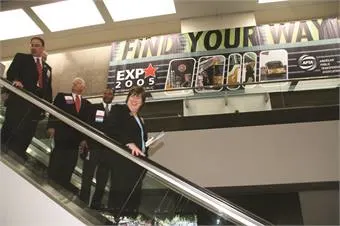
Rosemary Sheridan's
Straight out of college at Montclair University in New Jersey, Rosemary Sheridan — now vice president of communications and marketing for APTA — wanted to be a newspaper reporter. "I still think it's one of the best jobs out there," she says, and for four years her reporting dream came true as she worked for different dailies and weeklies.
In the early 1980s, she heard from another reporter about a position opening at New Jersey Transit, a job she figured she would use as a stepping stone to somewhere else. As the publications writer for New Jersey Transit, which had just been established as an agency, she gathered information and wrote the employee and customer newsletters.
Sheridan's stepping stone quickly turned into a promotion, and then, a few more. She helped develop the communications department and cultivated community outreach programs, before eventually heading the press and media relations office. "I'm proud to have been part of the team that built the organization and significantly increased service and ridership," she says.
Her growth at New Jersey can be attributed to her focus on media and outreach campaigns. For example, Sheridan would have customers come in and meet the GM while providing feedback on their trip. She also led the effort to create an emergency response team. If there was a service interruption, "employee volunteers, within an hour's notice, could be out at a rail or bus location to help out," she says, adding that the program won APTA's Innovation Award in the early 90s.
This creativity made Sheridan the perfect candidate for APTA, which had realized a need to strengthen its efforts in communications and marketing.
"The opening at APTA was a really good opportunity to work on public transit issues at the national level," she says. Sheridan has called APTA home since 1998 as VP of communications and marketing, where she worked to create the department.
"There were pieces of the department around the organization, so it was about bringing that all together," she says, adding she had the specific goal to make APTA more visible and spotlight the importance of public transit to individuals, communities and the country.
This mindset comes easily to Sheridan because of her love of advocacy.
"Together with our members, we've taken it from a place where public transportation was mostly on the defensive to where people now better understand the benefits, and people want more public transit not less," she says. "This is not only a job, but it's a cause as we impact the lives of millions of Americans every day."
Her emphasis on advocacy started with helping to create "Public Transportation Partnership for Tomorrow," where APTA members contributed funds into what ended up producing a $30 million, five-year campaign that included national advertising, media relations, research, government affairs and lobbying. "It brought all our advocacy efforts together in a much stronger and more visible way for our industry," she says.
APTA made the initiative a permanent part of the organization, now called Research, Communications and Advocacy, because of its initial success. Several other efforts continue to aid these goals, such as the ongoing campaign "Public Transportation Takes Us There."
Regardless of all her talent in the transportation industry, her experience comes full circle to her first job out of college. "My reporting skills have helped me in every job that I've had," she says. "It is all about listening and asking questions, and then taking that information and telling a story that resonates with your audience."
More Bus

New York MTA Plans Largest Bus Fleet Upgrade in More Than a Decade
The agency is seeking manufacturers for 650 new CNG buses to replace aging vehicles, improve reliability, and advance its broader fleet modernization strategy.
Read More →
Building a Flexible Path to Transit Electrification
John Hroncich discusses BAE Systems’ modular and scalable approach, lessons learned from decades of real-world operations, and how agencies can identify electrification strategies that fit their fleets.
Read More →
Bus Tech Talk: Keeping Transit Technicians Ahead of the Technology Curve
LA Metro’s Obed Mejia discusses technician training, evolving maintenance technology, fleet replacement, and strategies for getting the most out of today’s transit fleets.
Read More →
Biz Briefs: RIPTA Unveils New Frontrunners, Clevland RTA Adds New Siemens, and More
In METRO's latest installment, we take a look at recent news from Siemens, Prevost, Dodge, and more partnerships making headlines across the transportation sector.
Read More →
People Movement: Holly Arnold Joins Transdev and More
In this edition, we also cover recent appointments and announcements at Pace, CamTran, MCI, and more, showcasing the individuals helping to shape the future of transportation.
Read More →
The High Cost of Transit Buses: Industry Leaders Look to Procurement Reform
Transit leaders and policymakers examine how standardized bus designs, streamlined procurement, and predictable funding could help agencies stretch budgets and deliver better service.
Read More →
The Business Voice Behind Public Transportation
As chair of APTA’s Business Members Board of Governors, Ray Melleady explains how more than 850 business members are partnering with transit agencies to advance funding, innovation, and industry-wide collaboration.
Read More →
From Surviving to Thriving: Building Stronger Transportation Organizations
Bus Business Consultants founder Brian Dickson shares lessons on leadership, organizational health, and creating options for long-term success in a changing transportation industry.
Read More →
Finding the ‘Happy Medium’: Optimizing Maintenance Without Sacrificing Reliability
The key to maintenance optimization isn’t doing less work—it’s doing the right work at the right time on the right assets.
Read More →
LA Metro, City of West Hollywood, and Partners Advance Smarter Bus Lane Enforcement
The award-winning partnership combines AI-powered detection with human oversight to improve bus reliability, accessibility, and enforcement efficiency.
Read More →