



2014 Transit Bus Fleet Survey: Top Fleets Taking Steps to Attract Growing Markets
With usage amongst millennials and Baby Boomers gaining popularity, many agencies are reporting measures to pull more of these segments onboard, including targeted marketing programs and increased technologies. Meanwhile, the amount of alternative-fueled vehicles has nearly doubled over the last 10 years.
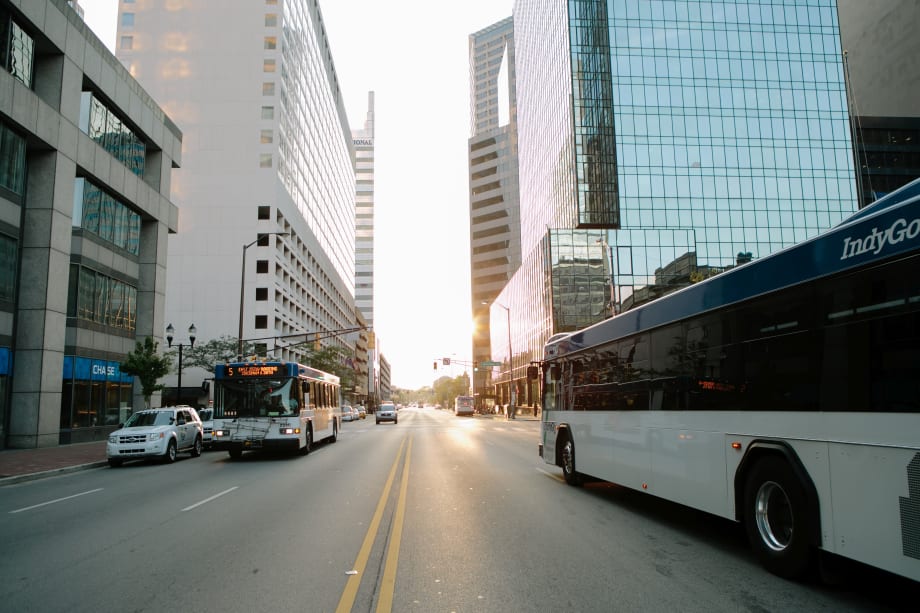
IndyGo - No. 86
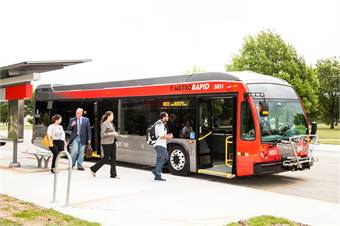
Capital Metro - No. 46
To mark METRO’s 110th year, we added 10 more transit agencies to our Top 100 Bus Fleets survey, which is topped by the Metropolitan Transportation Authority’s (MTA) New York City Transit/MTA Bus Co. with 6,782 total vehicles.
This is the first year the MTA has combined the two fleets into one number, with the total fleet count coming in at 10% of the 68,835 vehicles reported by 110 transit agencies, covering three countries and 33 states. The amount of total vehicles climbed 16% compared to 2004’s 59,337 total reported and 5% compared to 2013.
Meanwhile, New Jersey Transit (2,508), the Los Angeles County Metropolitan Transportation Authority (2,360), Chicago’s Pace Suburban Bus (1,960) and the Southeastern Pennsylvania Transportation Authority (1,860) round out the top five, with Woodbridge, Va.’s Potomac and Rappahannock Transportation Commission closing out the Top 110 with 154 vehicles.
Trends and initiatives
As studies continue to find so-called millennials — those born between 1982 and 2004 — driving less and being more open to alternative forms of transportation, many agencies are making efforts to become more attractive to that market, as well as on the opposite end of the spectrum, to Baby Boomers.
Of these initiatives, adding real-time bus information, offering free Wi-Fi, creating apps and improving fare payment, such as adding smart cards and smartphone payment technology, are the most popular for attracting millennials, as well as marketing and branding efforts.
In Montreal, for example, the Societe de Transport de Montreal (No. 10) reports it has repositioned the agency as a “younger and more dynamic organization with a brand identity that is much more engaging.”
Meanwhile, other agencies, including West Covina, Calif.’s Foothill Transit (No. 63) and Syracuse, N.Y.’s Central New York Regional Transportation Authority (No. 77) report expanding their social media outreach to “reach millennials where they are,” with other popular initiatives including outreach to schools and universities, the expansion or revision of bus routes, and adding more bike racks.
Popular initiatives for attracting Baby Boomers, include outreach to senior living communities, travel training, targeted marketing, increasing space for mobility aid devices, and either free or discounted fares.
When asked what technology or equipment they are adding to increase efficiencies or improve safety, many transportation agencies are reporting the implementation of computer aided dispatch/automatic vehicle location systems, security cameras, enhanced trip planning and automated stop announcement systems.
Additional improvements being made include expanded use of alternatively-propelled vehicles and adding automatic passenger counting systems, as well as LED lighting and bus displays.
At New York MTA, new initiatives undertaken by the agency in the last year, include adding a bus operator security door, improved fire detection, security cameras onboard buses; proactively addressing pedestrian safety in alignment with the city’s “Vision Zero” action plan; increased observational rides and on-street observations and direct engagement with bus operators; enhanced bus operator training with emphasis on distracted pedestrians and cyclists; researching new technologies to help mitigate collisions; collaborating with the Department of Transportation on traffic engineering and streetscaping.
Meanwhile, other agencies report they are working on either expanding their existing fleet or purchasing new buses to replace outdated vehicles, improving bus stop and transit center accessibility, expanding late night service, improving security both on-board buses and at pickup points, and creating rapid or targeted bus routes.
IndyGo - No. 86
The numbers
A closer look at the numbers reveals 48,770 buses are 35 feet or longer, making up 71% of the total vehicles reported, with 14,210, or 21%, of vehicles 35 feet and under. Fifty-eight percent, or 39,879, of the total vehicles are low-floor applications and 13% of are used for demand response. This year’s Top 10 makes up 36% of the Top 110 Bus Fleet totals, which is approximately 2% higher than 2013. Overall, this year’s respondents report that they intend to order 6,701 vehicles in the next year, up 13% from last year’s number.
Meanwhile, the amount of alternatively-propelled vehicles reported total 16,964 and make-up 25% of the fleet totals reported for 2014, with natural gas continuing to lead the way with 8,539 vehicles. Hybrid-electric propulsion continues to follow closely behind with 7,277 vehicles, or 43%, of the total alt-fuel vehicles reported, with electric vehicles — a new category for 2014 — making up 4% of the sum. Overall, 64% of respondents reported electric vehicles as the type of vehicle propulsion they are most interested in adding to their fleets, followed by natural gas and hybrid, with 36% and 19%, respectively.
Digging a bit deeper, 17 transit agencies in this year’s Top 110 are from Canada, thanks to the addition of Brampton Transit, which reported 359 total vehicles and debuts at No. 57. Overall, seven of those Canadian agencies cracked the top 20, led by the Toronto Transit Commission at No. 6, with 1,851 reported vehicles. Meanwhile, with 16 transit agencies, California remains the state with the most representation in this year’s Top 110.
With all the budget and staff cuts going on around the nation, METRO would especially like to thank all of the transit agencies for participating this year. If you know a fleet that belongs on this list or have suggestions on how to improve our future lists, please let us know at info@metro-magazine.com.
To view the story as it ran in print, click here.
More Bus

New York MTA Plans Largest Bus Fleet Upgrade in More Than a Decade
The agency is seeking manufacturers for 650 new CNG buses to replace aging vehicles, improve reliability, and advance its broader fleet modernization strategy.
Read More →
Building a Flexible Path to Transit Electrification
John Hroncich discusses BAE Systems’ modular and scalable approach, lessons learned from decades of real-world operations, and how agencies can identify electrification strategies that fit their fleets.
Read More →
Bus Tech Talk: Keeping Transit Technicians Ahead of the Technology Curve
LA Metro’s Obed Mejia discusses technician training, evolving maintenance technology, fleet replacement, and strategies for getting the most out of today’s transit fleets.
Read More →
Biz Briefs: RIPTA Unveils New Frontrunners, Clevland RTA Adds New Siemens, and More
In METRO's latest installment, we take a look at recent news from Siemens, Prevost, Dodge, and more partnerships making headlines across the transportation sector.
Read More →
People Movement: Holly Arnold Joins Transdev and More
In this edition, we also cover recent appointments and announcements at Pace, CamTran, MCI, and more, showcasing the individuals helping to shape the future of transportation.
Read More →
The High Cost of Transit Buses: Industry Leaders Look to Procurement Reform
Transit leaders and policymakers examine how standardized bus designs, streamlined procurement, and predictable funding could help agencies stretch budgets and deliver better service.
Read More →
The Business Voice Behind Public Transportation
As chair of APTA’s Business Members Board of Governors, Ray Melleady explains how more than 850 business members are partnering with transit agencies to advance funding, innovation, and industry-wide collaboration.
Read More →
From Surviving to Thriving: Building Stronger Transportation Organizations
Bus Business Consultants founder Brian Dickson shares lessons on leadership, organizational health, and creating options for long-term success in a changing transportation industry.
Read More →
Finding the ‘Happy Medium’: Optimizing Maintenance Without Sacrificing Reliability
The key to maintenance optimization isn’t doing less work—it’s doing the right work at the right time on the right assets.
Read More →
LA Metro, City of West Hollywood, and Partners Advance Smarter Bus Lane Enforcement
The award-winning partnership combines AI-powered detection with human oversight to improve bus reliability, accessibility, and enforcement efficiency.
Read More →