



5 Keys to Post-Crash Preparedness
Crashes happen, even to good drivers. Coach operators need to have a game plan in place long before the squeal of tires, crunch of metal and shattered glass lead them to the courtroom.
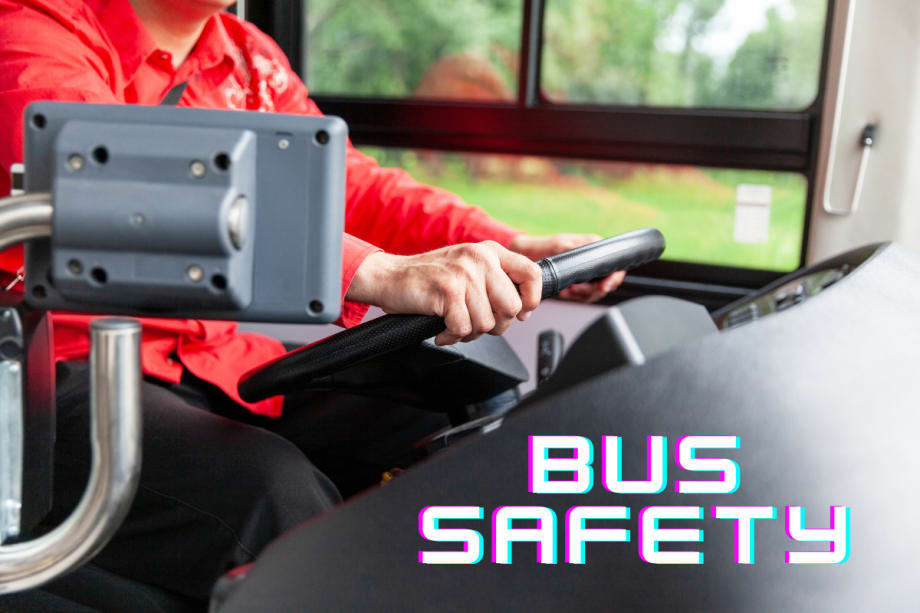
To do the right thing, you and your company must be prepared for that phone call you hope will never come.
Photo: Metro
After a bus crash, confusion can be king. The convergence of driver calls, passenger problems, police activity, equipment issues and response demands can literally overwhelm any company. What can be done? What must be done? Questions abound, but answers are few.
Amid this confusion is the realization that everything you do, have done or are planning to do may be subject to intense scrutiny by both enforcement personnel and litigation attorneys. These are indeed pressure-filled moments where you and your company are facing some very critical decisions. What you do in these first moments can and will make a big difference.
Your actions can solve personal and human dilemmas, as well as protect your company and its financial health. To do the right thing, you and your company must be prepared for that phone call you hope will never come.
Secrets to Preparation
Lightning may never strike your company, but it will strike someone. Good preparation is like a lightning rod — it reduces the effect of the strike and minimizes the damage done. It’s vital to be prepared to respond when that call comes in. Most managers don’t like those immediate, critical decision-making moments, and preparation can reduce the stress and possibility of error. But beware: your plans can be forgotten, ignored or slow to be implemented.
The enemy is complacency and lack of use; the solution is readiness testing. With the stakes so high, your preparations need to be complete and should involve all of your people, operations and equipment. Knowing what can and will happen at the scene and in the months following the loss will without question get you motivated to prepare your organization for effective post-bus crash management.
To effectively respond, your preparations should encompass five steps: organization, training, crisis planning, responding, and litigation awareness.
1. Organization
Your preparation ought to be in at least two parts, starting with your driver hiring. In the face of driver shortages, it is all too easy to hire the wrong person. Placing the wrong driver behind the wheel can have huge consequences because that person is making financial decisions for your company as he or she drives.
Are you sure they will slow and stop for that yellow light or will they decide to speed up and run the red light? And that same driver can end up in a courtroom, testifying as a representative of your company before a jury deciding your company’s fate. Who you hire makes a big difference.
The driver dilemma aside, there are clearly other organizational responsibilities in regulatory compliance and record keeping. While compliance may often seem to be a bureaucratic exercise, in a courtroom, failures to comply with minimum safety standards are magnified and become damaging testaments to your safety failures. Your records and documents are much the same.
Failures in record keeping make it impossible for you to prove a training session was held, a physical examination was provided or a tire was changed at the proper moment. In court, those hours of documenting pay dividends investors can only dream about.
2. Driver Training
The best training for your drivers begins with safety and crash avoidance. Such training reduces or eliminates costs, it doesn’t increase them. Proper training — well documented — makes post-crash decision making a lot easier.
Drivers should also be trained in managing those after-crash moments. Be sure to include things the driver can and must do, what they shouldn’t do and how to react to situations that commonly arise, from offering aid to the injured to handling direct threats to personal safety. Follow it up with written guidance, in clear step-by-step instructions. Repeat this training from time to time to assure maximum effectiveness.
If you provide single-use cameras for emergencies, which is always a good idea, train your drivers in how and when to use them. It is important to show your driver workforce not only what to photograph (and what not to photograph) and the best ways to do this, but also how to go about doing this so that the pictures taken provide the maximum degree of information with the minimum amount of controversy.
3. The Crisis Plan
Crisis management plans have become, in recent months, very fashionable, with consultants providing thick manuals and endless directives to anyone who will listen (and pay their fee). But crisis management plans need not be complex, or expensive; in fact, the simpler they are, often the better they are. Without question, a good plan can simplify your post-crash decision making.
Your plan needs to include several elements, beginning with the definition of a crisis, which, once encountered, triggers action steps that might include:
Creation of a central authority, where all needs and actions are evaluated and approved.
Assignment of a public spokesperson, to whom everyone will defer if and when public statements are demanded.
Providing for a response to the crash scene by the company Ñ who will go and what they will do.
Steps to mitigate the effects by providing aid, comfort and assistance to passengers and their families.
4. Immediate Response
In the aftermath of a crash, you and your company, as well as your insurer, should travel to the crash or incident scene so that there is a highly visible effort to support and cooperate, as well as conduct a proper investigation, of the loss.
Until you arrive, the company representative at the scene is your driver. He or she will be pressed for information, answers and decisions. This is certainly not a situation that will produce helpful results, and a company management representative can take the heat and help avoid the downside of your already rattled driver being placed “on the spot.”
Time is an element as well. Minutes count, especially to those injured or their families, and your good efforts to aid and assist them offer the possibility that potential litigation can be defused, or at the very least, kept away from an emotional, vendetta approach.
Finally, you must be prepared to conduct your own investigation. A proper and thorough company investigation is the only sure way to solve the questions of causation, driver action and liability. These three investigation goals are critical to your company’s future.
5. Litigation Awareness
One side of the accident response process is as vital as it is unpleasant — litigation is a business reality. Every action you take before, during and after the crash is subject to examination, evaluation and discussion as plaintiffs seek to pinpoint negligence, legal violations or poor operating practices. Years after an event, you could find yourself in a courtroom defending yourself and your company. Your records, reports, files and even your people will be subject to scrutiny.
A word to the wise: Take time before and during any adverse situation to think about what you write.
How will it sound when read to a jury? Think about what you say. Will others be able to take your words, interpret them for their own purposes and make you wish you had never spoken? Think about what documents you place in a file. Every piece of paper is subject to discovery and review by adversarial experts. Think about how you document the crash incident: your opinions and conclusions, along with the driver’s reports and your own investigation, will be handed over to the adversarial party’s representatives.
Once litigation is initiated, it is too late to undo the damage. Truth telling is the only option, and you and your employees should speak only the truth. But the wise company prepares for litigation by guarding what is documented and assuring that the qualifications, certification, training and quality of its people, equipment and operations are clear to anyone reviewing company records.
More Management

Indian River Transit’s Community-Focused Approach Earns National Recognition
Named APTA’s 2026 Outstanding Public Transportation System in its size category, Florida’s Indian River County transit system continues to grow ridership through fare-free service and a focus on evolving community needs.
Read More →
ENC Lands MATA Contract and More in Biz Briefs
In this edition of Biz Briefs, we spotlight the latest developments shaping the future of mobility.
Read More →
From Surviving to Thriving: Building Stronger Transportation Organizations
Bus Business Consultants founder Brian Dickson shares lessons on leadership, organizational health, and creating options for long-term success in a changing transportation industry.
Read More →

Everett Transit, Community Transit Outline Consolidation Agreement
The proposed agreement calls for a 50% increase in bus service in Everett, a new microtransit zone, continued paratransit service, and the transfer of Everett Transit operations to Community Transit.
Read More →
Strada360’s Steve Lassey on Turning Transit Data Into Better Decisions
From breaking down data silos to preparing for AI, Strada360 CEO Steve Lassey discusses how transit agencies can use technology to improve operations, customer information, and long-term decision-making.
Read More →
People Movement: Phil Washington Joins HNTB, Denver RTD Launches CEO Search, and More
In this edition, we also spotlight recent personnel moves at STV, the Eno Center for Transportation, and more, highlighting the people taking on new roles across the transportation industry.
Read More →
SEPTA Details Accelerate Vision for Transit System
The plan outlines investments in trolley modernization, new Metro and Regional Rail vehicles, accessible stations, and more frequent bus and rail service.
Read More →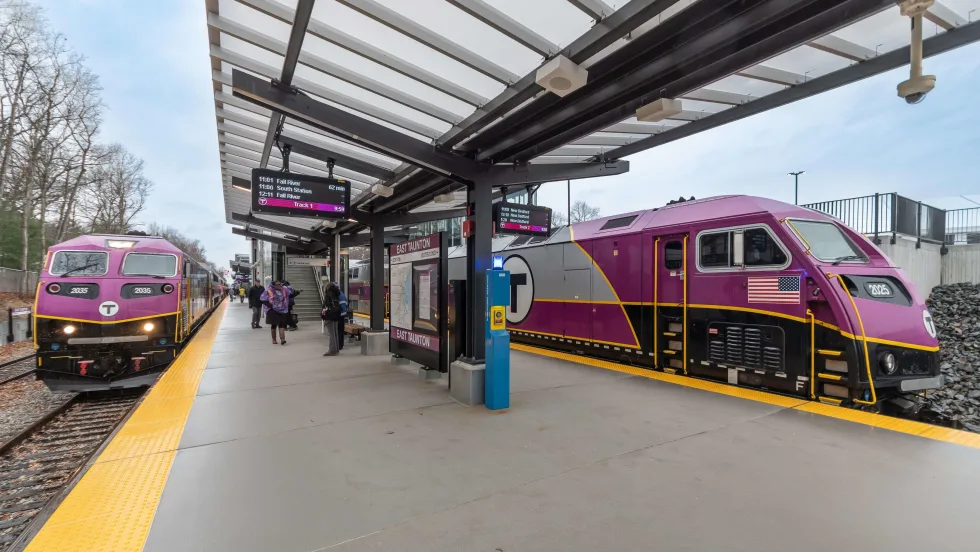
FTA Ends Direct Oversight of MBTA Safety Actions
The federal agency closed its remaining special directive to the Massachusetts Department of Public Utilities following a safety review that began in 2022.
Read More →
Report: Transit Bus Manufacturing Supports 34,100 Jobs, $5.1B in GDP
The “Buses Mean Business” report examines the transit bus manufacturing industry’s economic footprint, supply chain, and rising demand for vehicle replacements.
Read More →
LIT Marks 10-Year Milestone at Annual Summit
Hosted by the COTA from September 10 to 13, the Summit carried the theme “Celebrating 10 Years of Excellence, Leadership, and Impact,” with every part of the program honoring the people, agencies, and partners who built LIT over its first decade.
Read More →