



Alternative Transit Project Delivery Offers Attractive Options
Although it is slow to take off in the U.S., there are plenty of possible benefits that could be derived through public-private partnerships, design-build and more. Experts are quick to point out, however, that it is not a magic bullet for completing construction projects.
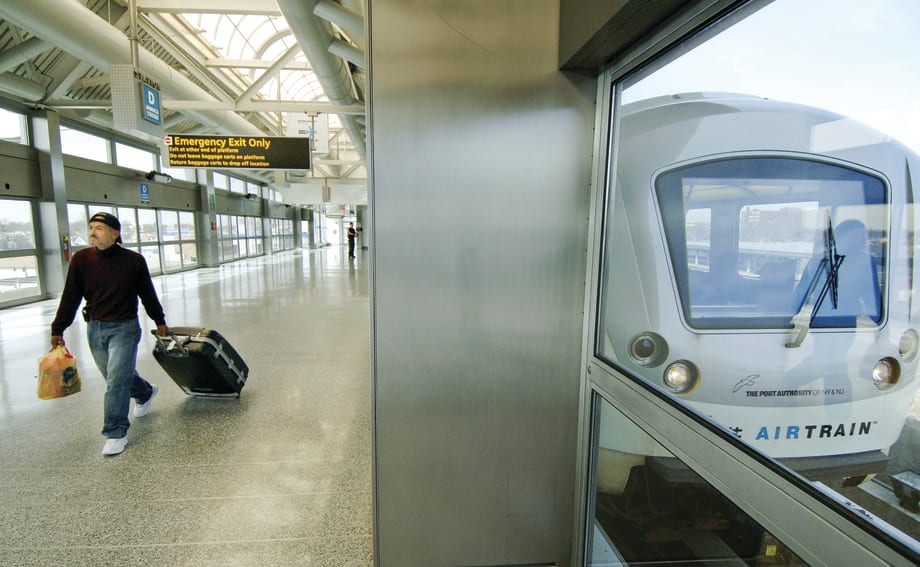
Experts say alternative project delivery enables public transit agencies to transfer risk to the private sector and focus on what they do best, moving and servicing people.
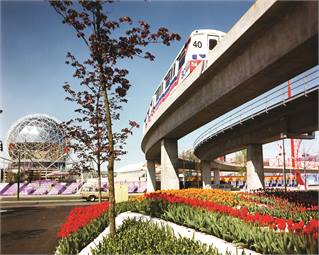
Alternative project delivery, including public-private partnerships (PPPs); design-build; and design-build-operate-maintain, are viewed as attractive options for transit agencies, as they transfer risk and accelerate the project process.
However, while these forms of project delivery continue to take hold in Europe, Asia and Africa, there have been a limited amount of projects in the U.S. that have utilized these innovative solutions.
METRO Magazine spoke to representatives from several companies to discuss why forms of alternative project delivery have been slow to take off in the U.S., as well as the possible benefits and what transit agencies should look for before selecting a partner.
How does alternative project delivery benefit a public transportation agency?
Mel Placilla (Director, professional services, transportation group, HDR): What we advise is that they have to have some drivers to want to do alternative delivery; one is time. You can go much faster [with alternative project delivery] because you lose multiple months, in some cases, between development of final plans and bidding and then getting construction started with traditional forms of delivery.
Additionally, for us and most organizations that deal with alternative delivery, the mantra is allocate the risk to the entity best able to manage the risk.
Samara Barend (VP/P3 development director, AECOM Capital): In a PPP, for example, you have an integrated form of project delivery, where there’s one single point of accountability, unlike a traditional delivery where the designer and contractor each report to the state or city agency they are working for. In a PPP, there is a full integration of design, construction, long-term operations and financing. That integration allows much more risk transfer from the public sector to the private sector. And because you’re able to transfer that risk, you can generate considerably more cost savings, because much of the risk you’re transferring are risks that the private sector has much more ability to control than the public sector — overall project delivery, scheduling, budget.
Basically, in a PPP, the private sector is taking the risk that project will be delivered on time and on budget, otherwise they do not get paid.
Lorenzo Reffreger (head of sales, systems, North America, Bombardier Transportation): What a public transportation agency is acquiring, other than the services, is cost certainty, because there are different elements involved that allow the agency to know what the costs are. And, when the contractor is able to act as sort of one-stop shop, the integration of all those elements makes it easier for the agency to have cost certainty.
There’s also an amount of schedule certainty, because these are turnkey procurements where the agency is basically saying ‘give me everything and this is the date by which I need to open.’
Overall, alternative project delivery enables the public agency to focus on what they do, rather than maintaining equipment.
Stephanie Brun-Brunet (VP, turnkey & infrastructure systems, Alstom): [Alstom] approaches all of these [alternative project delivery] structures as turnkey projects, and while there are differences, they all offer agencies and cities the same fundamental benefit — the ability to move new transportation projects forward in a resource-constrained environment.
Giving private sector partners a stake in the project's success also reduces the level of public sector risk associated with things like managing project interfaces, integrating systems and technologies, minimizing delay and ensuring the system meets established performance requirements. Private sector involvement also helps ensure on-time delivery and that the project comes in on or under budget — Deloitte recently found that alternative project structures can be 20% less expensive than design-build projects. [PAGEBREAK]
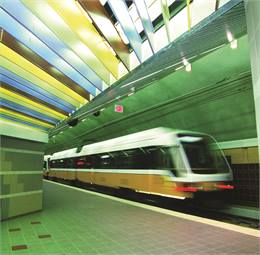
Photo Courtesy DART
What are some situations where alternative project delivery may be more ideal?
George Pierson (President/CEO, Parsons Brinckerhoff): Certainly, it’s best for Greenfield projects, as well as an extension off of an existing project or system where you have the ability to go out and really control the environment in which you’re working.
Where it is an upgrade to an existing line and is tied very closely into the existing system, it becomes less favorable. The reason for that is the more flexibility that one can give to the design-build contractor, the more room for innovation, cost savings and schedule savings there is.
Reffreger: There is no definition of a best project. Obviously when it’s going to be a Greenfield application, it might be easier because you are starting from scratch and don’t have any constraints or parameters that you need to fit into.
Brun-Brunet: Alternative project or procurement schemes really become relevant for projects with a total price tag of $150 million or greater. Beyond that, they can be applied to any type of project as long as the agency in question understands and accepts a few basic realities of a public private partnership as it pertains to their project.
First, the project has to be viable, and its structure should be thoroughly guided and vetted by experienced financial, legal and technical advisors.
Additionally, a public-private partnership is not a substitute for public transportation funding. It is a way to accelerate projects by leveraging some public money to attract private investment while controlling costs and guaranteeing certain performance criteria for construction, operation and maintenance of the system.
Also, private partners assume some of the risk associated with a new transportation project, but not all of it. Any risk linked to public activity, such as land acquisition, relocating utilities, changing laws or inflation, remains in the purview of the public agency or entity driving the project. In turn, the private partner or consortium assumes the risk of constructing the system on-time and on-budget, and operating and maintaining it profitably for as long as 30 years.
Finally, as with any large-scale effort to better serve the public, transportation projects need a political champion to drive them forward and build broader support throughout the community. After all, why would people ride a train they never wanted in the first place? The importance of community engagement in making these innovative transportation projects successful really cannot be understated.
What should agencies look for when choosing a partner?
Placilla: They want to look at the credentials of the company — their financial wherewithal, their performance records, the credentials of the people they are planning on putting on the job. Have they done a project like this before? Bottom line is can the company provide the bonding necessary for the project, and ultimately, can they write down a number that is competitive?
Barend: Consider if there is any ability to gather innovation through a PPP. A PPP can bring a lot more innovation than a traditional delivery, but if it’s a very simple construction project with a little design that’s needed, then there won’t be many benefits in terms of innovation. You need to consider the public policy ramifications and if there’s existing transit and maintenance already. If there’s a transit line that already exists and you’re going to expand, you have to consider what you’re going to do with your existing workforce and how you’d deal with that, if you embarked on a PPP.[PAGEBREAK]
Experts say alternative project delivery enables public transit agencies to transfer risk to the private sector and focus on what they do best, moving and servicing people.
Do you want to include operations and maintenance, or do you just want to include major maintenance? That is a major factor to consider.
Reffreger: You need to look at a reliable, proven technology provider. There are a lot of people in our industry that do many things, but there are very few in the industry that can integrate all the different elements. You certainly have to go through a process to find people that are going to be able to integrate all these into one seamless delivered network.
Pierson: If I was sitting on an agency’s review board, [I would] obviously look for all the important things, such as the experience and qualifications of the firm or team that is put forward. I think, though, that what is going to deliver value and be viewed as delivering value more and more is the ability of a team to really deliver that value in a cross-disciplinary manner.
That is to say, the days of someone who is a design engineer and only a design engineer are moving behind us. Teams need to be able to bring expertise in planning, design and construction even if they are only doing the planning or the design. They need to have the full range of abilities because these projects, whether they are in traditional plan, design and build mode or they are in the design-build integrated mode, are requiring the full skillsets more and more because they are part of an integrated approach, even if there are separate companies doing the work.
So, what I would look for is the ability to integrate multidisciplinary skillsets in that team, so that you have the best solution.
Why do you think alternative project delivery has been slow to take hold in the U.S.?
Brun-Brunet: Transit agencies in the U.S. are accustomed to a traditional, well-established approach to transportation project financing, which relies very heavily on federal funding. That familiarity has, until very recently, given agencies little or no reason to consider alternative procurement schemes. The federal model is also very prescriptive in terms of technical specifications, which has left little room for the system design innovation inherent to a private partnership.
Now, with less certainty around the long-term flow of federal transportation funding, agencies are beginning to explore creative, outside-the-box ways to address their communities' evolving transportation needs. Hence, the renewed interest.
Pierson: One of the reasons why there’s been a little reluctance within transit agencies is because each [different form of alternative project delivery] involves some level or degree of loss of control, if you will, by the agency.
For example, if you go design-build, instead of detailing and controlling exactly how it’s designed, one has to put together performance specifications around how it would operate and then let the design-build contractor go about ensuring it is delivered within those specifications.
There is a range of possibilities within those specifications and the transit agency, in effect, loses control of where within that range the system falls, but that is what has to happen. There is a natural reluctance for that to happen, but that’s just human nature.
Finally, do you expect alternative project delivery to grow in the U.S.?
Barend: I think transit is a great market. There are a number of cities and states looking at innovative options for PPPs in transit. The opportunity for cost overruns and schedule delays has been significant on diverse projects we’ve seen in the U.S. that have been traditionally delivered, so I think PPPs present an interesting choice.
Pierson: Nothing succeeds in generating interest like success. So, if you take the [FasTraks] project in Denver, and that becomes a success in that it produces a system with a lower cost and a shorter schedule, other transit agencies are going to look at that and think that if [that agency] can achieve those benefits why can’t they?
In fact, they will look and say, ‘if they can achieve those benefits so can we.’ Therefore, transit agencies will have to look at [alternative project delivery], because everyone is constrained on funds, and if they can produce more with less, it’s incumbent upon them to do so. I haven’t met anybody in a transit agency who isn’t interested in producing the same quality of a project faster and cheaper.
More Bus

New York MTA Plans Largest Bus Fleet Upgrade in More Than a Decade
The agency is seeking manufacturers for 650 new CNG buses to replace aging vehicles, improve reliability, and advance its broader fleet modernization strategy.
Read More →
Building a Flexible Path to Transit Electrification
John Hroncich discusses BAE Systems’ modular and scalable approach, lessons learned from decades of real-world operations, and how agencies can identify electrification strategies that fit their fleets.
Read More →
Bus Tech Talk: Keeping Transit Technicians Ahead of the Technology Curve
LA Metro’s Obed Mejia discusses technician training, evolving maintenance technology, fleet replacement, and strategies for getting the most out of today’s transit fleets.
Read More →
Biz Briefs: RIPTA Unveils New Frontrunners, Clevland RTA Adds New Siemens, and More
In METRO's latest installment, we take a look at recent news from Siemens, Prevost, Dodge, and more partnerships making headlines across the transportation sector.
Read More →
People Movement: Holly Arnold Joins Transdev and More
In this edition, we also cover recent appointments and announcements at Pace, CamTran, MCI, and more, showcasing the individuals helping to shape the future of transportation.
Read More →
The High Cost of Transit Buses: Industry Leaders Look to Procurement Reform
Transit leaders and policymakers examine how standardized bus designs, streamlined procurement, and predictable funding could help agencies stretch budgets and deliver better service.
Read More →
The Business Voice Behind Public Transportation
As chair of APTA’s Business Members Board of Governors, Ray Melleady explains how more than 850 business members are partnering with transit agencies to advance funding, innovation, and industry-wide collaboration.
Read More →
From Surviving to Thriving: Building Stronger Transportation Organizations
Bus Business Consultants founder Brian Dickson shares lessons on leadership, organizational health, and creating options for long-term success in a changing transportation industry.
Read More →
Finding the ‘Happy Medium’: Optimizing Maintenance Without Sacrificing Reliability
The key to maintenance optimization isn’t doing less work—it’s doing the right work at the right time on the right assets.
Read More →
LA Metro, City of West Hollywood, and Partners Advance Smarter Bus Lane Enforcement
The award-winning partnership combines AI-powered detection with human oversight to improve bus reliability, accessibility, and enforcement efficiency.
Read More →