



An Inside Look at SARTA's Hydrogen Fuel-Cell Bus Program
SARTA received Calstart’s 2020 Blue Sky Award for its use of hydrogen fuel cell vehicles and its Borrow A Bus program. The program aims to create awareness for hydrogen technology.
SARTA joined the “Generation Zero” pledge program in July, which consists of groups committed to clean alternative fuel solutions for the transportation industry.
Photos courtesy SARTA
Ohio’s Stark Area Regional Transit Authority (SARTA) purchased its first hydrogen fuel cell bus in 2010. Now, the agency continues to grow its sustainable transportation technology.
Kirt Conrad, CEO at SARTA, discusses implementing a hydrogen fuel-cell program, the impact of technological development, and more.
A Timeline of the Hydrogen Fuel-Cell Program
In April 2021, SARTA started working with NICE Research Inc., a clean energy technology incubator, on a three-month project to test NICE America’s mobile submerged pump liquid hydrogen refueling unit.
Over the course of three months, the agencies filled five buses back-to-back in less than an hour and completed 52 consecutive fills of at least 25kgs in 11.5 hours. They also performed 118 fills of SARTA’s 40-foot and paratransit HFC vehicles during the project.
Conrad says he believed NICE America’s technology enabled hydrogen fuel cell vehicles to capture a share of the alternative fuel market.
SARTA then announced it joined the “Generation Zero” pledge program in July. The program consists of groups committed to clean alternative fuel solutions for the transportation industry.
The agency may have joined in 2021, but it all started in 2005. That’s when Conrad’s interest in hydrogen fuel cell buses blossomed. Conrad says the interest only grew once he was introduced to the renewable hydrogen energy cycle.
“This is the idea that hydrogen can be created from water using solar energy,” Conrad says. “Then, hydrogen can be used to create electricity with the only byproduct being water. Ohio has the third largest fuel cell supply chain in the country. So, that combined with all of NASA's fuel cell and energy research being done at NASA's Glen Research center in Cleveland, gives Ohio a strong network to support our hydrogen fuel cell efforts. We started in 2016 with two buses. We now have 20 buses. We would like to transition all of our buses to hydrogen.”
Fifteen of the 20 vehicles are 40-foot buses. The remaining five are paratransit vehicles.
Mike Ammann, director of sales, ElDorado National (California), explains how hydrogen fuel cell technology works.
“The fuel cell, like a battery, has a positive (cathode) and negative (anode) terminal that sandwiches an internal membrane (electrolyte),” Ammann says. “Gaseous hydrogen (H2) stored in roof-mounted tanks, flows into the membrane where it mixes with intake air — containing oxygen. A reaction occurs that separates the H2 molecule into electrons and protons. The electrons create an electrical charge — creating electricity, while the protons attach to the oxygen and create H2O — water — the only emission produced.”
The first fuel cell buses were delivered to SunLine Transit approximately seven years ago, according to Ammann.
The Impact of Technology Evolution
The battery packs for fuel cell programs have changed over the years. Ammann explains how technology has changed since the original American Fuel Cell program.
“The original American Fuel Cell program was powered by a 150kW fuel cell and a supplementary battery pack of 11kW,” Ammann says. “The majority of the propulsion power came from the fuel cell, with the batteries as a supplement during acceleration and grades. The current ENC Axess FC is in its second generation. This configuration is dubbed the Battery Dominant Fuel Cell bus. It has a smaller, 85kW fuel cell, and a larger 50kW battery bank.”
Technology development has moved at lightspeed since SARTA started on the fueling and vehicle development, according to Conrad.
“When we started there were no OEMs producing buses,” Conrad says. “Now there are two with a couple of more coming online. The same can be said with the hydrogen fueling. The cost has come down and the number of providers has increased.”
Conrad says there are also providers that are moving to totally renewable and green hydrogen.
“When we built the first seven buses, SARTA was like the general contractor on a house,” Conrad says. “We purchased the glider, fuel cell, and tanks all separately. We took the business risk of not having a single point of contact. However, we felt it was important to take the risk to move the project development forward. We have demonstrated technology from several companies and national laboratories to move the technology forward.”
Conrad adds that SARTA created the Midwest Hydrogen Center to conduct research and outreach to transit systems and local communities.
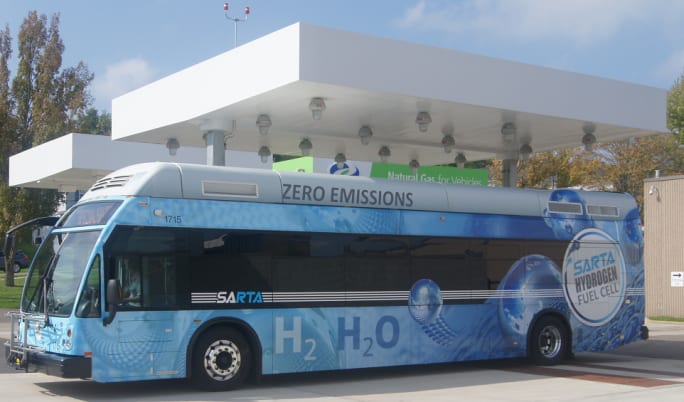
In April 2021. SARTA started working with NICE Research Inc., a clean energy technology incubator, on a three-month project to test NICE America’s mobile submerged pump liquid hydrogen refueling unit.
Challenges of Using Hydrogen
One challenge when using hydrogen is the limited supply chain, but Conrad says SARTA’s experience using hydrogen has been generally good.
“From the vehicle side, there can be long lead times on some replacement parts because of the limited supply chain,” Conrad says. “The long-term challenge is green hydrogen production. This is needed to really reduce CO2 emissions.”
Ammann echoes Conrad’s thoughts about the main obstacle.
“There are few public commercial hydrogen stations,” Ammann says. “Most are limited in capacity and are not adequate to fill multiple 40kg to 60kg hydrogen buses. Most transit agencies that have gone to hydrogen have installed in-house filling stations. Typically, liquid hydrogen is trucked in and stored in tanks for later use.”
Ammann adds that hydrogen prices are not regulated and prices vary by manufacturing process and geographic proximity to large capacity hydrogen generating facilities.
Conrad shares advice to other agencies about implementing a hydrogen program.
“The big thing is to realize the electrification of transit is happening,” Conrad says. “At some point in the future, you might not be able to get a diesel bus. Systems should start their electrification plans as soon as possible and plan for expansion.”
Borrow A Bus Program
SARTA received Calstart’s 2020 Blue Sky Award for its use of hydrogen fuel cell vehicles and its Borrow A Bus (BaB) program. The program aims to create awareness for hydrogen technology.
The program went on a Zero Emissions Tour, but it was sidelined in 2020 due to COVID-19.
The tour ramped back up with an announcement on May 28 with a 10-day trip through California.
It was announced on June 4 that the tour would continue with a trip through California that lasted one week. The trip consisted of eight stops.
Borrow A Bus has now toured nearly 50 cities in the U.S. and Canada.
“We want to make fuel cell vehicles available to transit systems and communities to see and try the technology,” Conrad says. “Most people are surprised it is not a spaceship and it is reliable technology.”
SARTA and ENC now work together toward the same goal.
“We share the same commitment to the success of the technology and frequently participate in joint projects,” Ammann says. “Since hydrogen buses are not plentiful, SARTA graciously offers their buses in order to demonstrate the technology at other transit agencies.”
More Zero Emissions
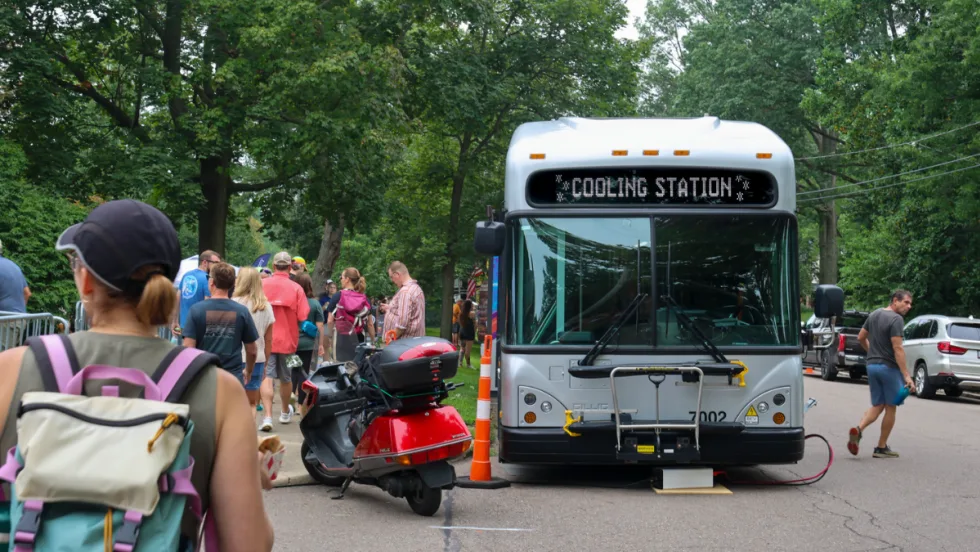
Ohio’s METRO RTA Turns Electric Buses into Mobile Power Sources at PorchROKR
See how three Gillig battery-electric buses powered festival stages while the agency’s new Park & Ride service carried approximately 1,000 attendees, demonstrating another potential use for transit agencies’ electric fleets.
Read More →
CALSTART and Forth Combine to Form Catalyst Mobility
The new name represents a renewed vision for the nonprofit focused on advancing clean, equitable, and affordable transportation solutions that move people and goods.
Read More →
Building a Flexible Path to Transit Electrification
John Hroncich discusses BAE Systems’ modular and scalable approach, lessons learned from decades of real-world operations, and how agencies can identify electrification strategies that fit their fleets.
Read More →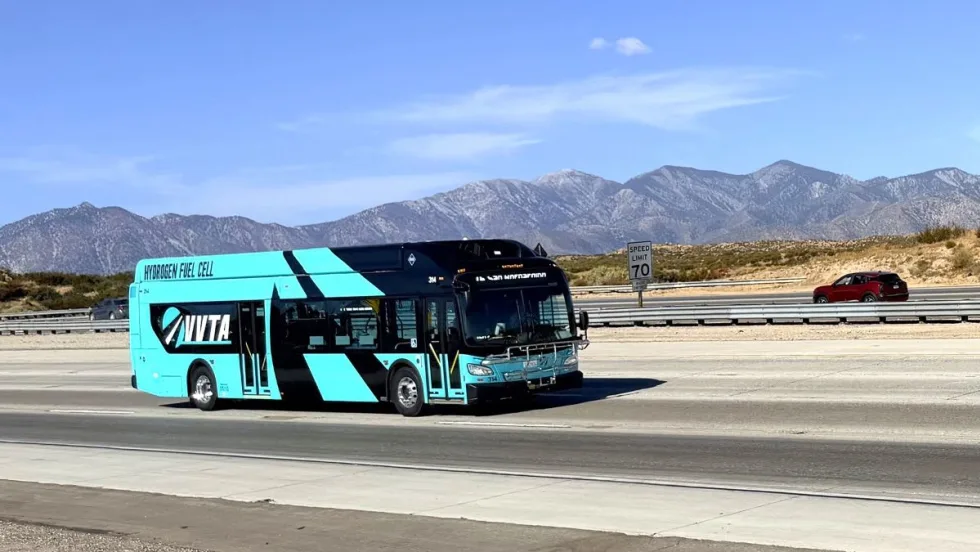
California's VVTA Begins Phased Rollout of Hydrogen Fuel Cell Buses
The agency is introducing 13 zero-emission buses into revenue service while evaluating performance across its urban, rural, and long-distance routes.
Read More →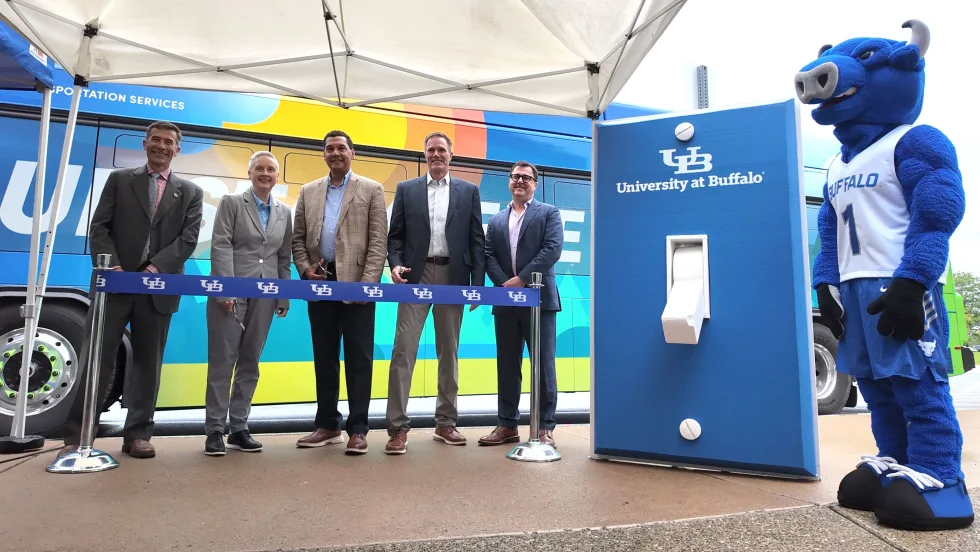
Inside Look: University at Buffalo Puts First 8 Electric Buses Into Stampede Service
UB, transportation solutions provider WeDriveU, and fleet electrification specialist Zenobē marked the deployment in the presence of students, university administrators, and local officials.
Read More →
Biz Briefs: OCTA Taps Clean Energy for Hydrogen Station, Stadler to Supply Via Rail Vehicles, and More
From manufacturers and suppliers to transit agencies and motorcoach operators, these updates offer a snapshot of the projects, partnerships and business moves driving the industry forward.
Read More →
AC Transit’s Cecil Blandon on Building the Next Generation of Transit Maintenance Leaders
The agency’s maintenance chief discusses leadership, workforce development, zero-emission technology, and preparing technicians for the future of public transportation.
Read More →
CTDOT Taps STV for Electric Bus Facility Design
The firm will work with CTDOT and RVT to define the facility layout, operational requirements, and long-term flexibility for RVT’s growing electric fleet.
Read More →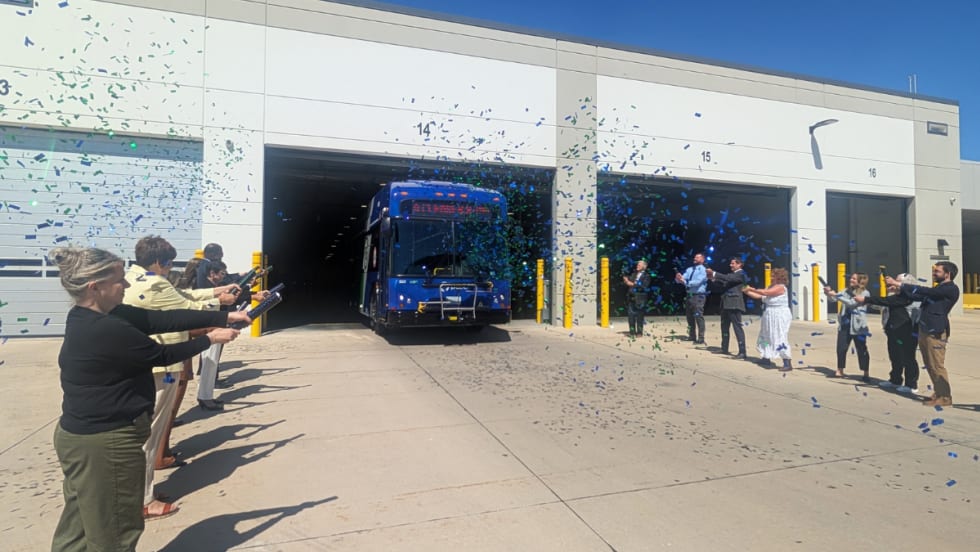
Chicago’s Pace Deploys 24 Hybrid-Electric Buses in Will County
The new buses reduce emissions and fuel consumption while advancing the agency's long-term goal of transitioning to a fully zero-emission fleet.
Read More →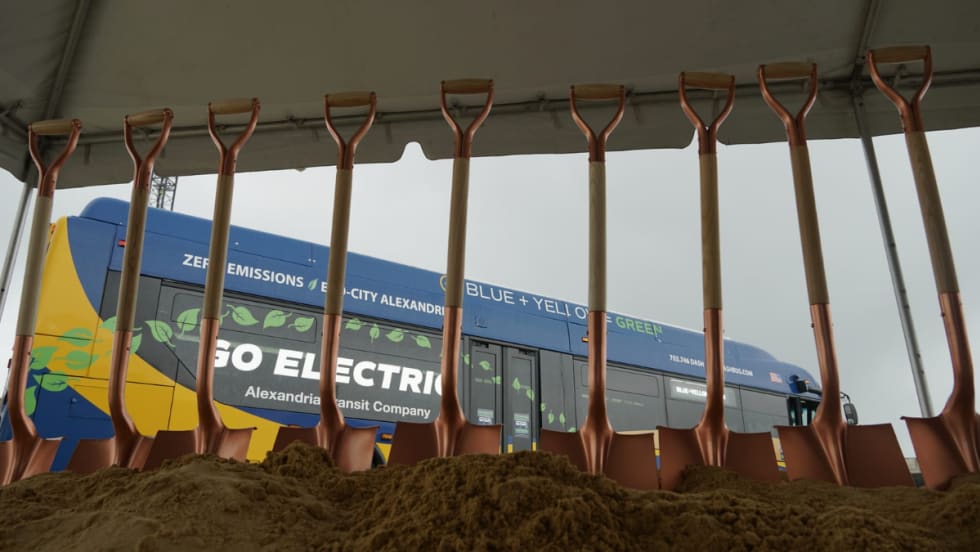
DASH Breaks Ground on First On-Route Electric Bus Chargers in D.C. Region
The fast-charging infrastructure will help extend electric bus range, improve fleet utilization, and support DASH's goal of transitioning to a fully zero-emission fleet.
Read More →