



RELATED: Md.'s MARC Upgrades Fleet, Service to Boost Ridership
Anatomy of a Rail System Shutdown, Reconstruction
In order for scheduled repairs to take place when subway ridership was at its lowest all year, the Maryland Transit Administration undertook an unprecedented plan to shut down the central core of the 33-year-old subway system for 21 days.
by Paul Shepard
November 23, 2016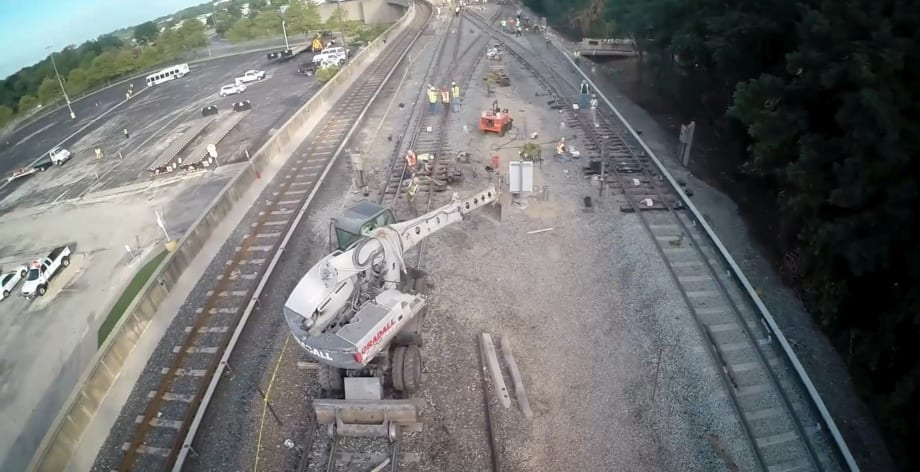
Track reconstruction work photo taken by a drone.
8 min to read
Track reconstruction work photo taken by a drone.
The expressions on the faces of Maryland Transit Administration managers ranged from mild panic to stunned disbelief in April 2015, when MTA Administrator Paul Comfort sent official word to his staff that five of the Metro Subway’s busiest stations would be completely, or partially, closed for nearly a month the next summer due to track and interlocking reconstruction.
While scheduled repairs would take place when subway ridership was at its lowest all year, the challenges ahead in the unprecedented plan to shut down the central core of the 33-year-old subway system for 21 days were manifold.
“From construction delays to our alternative transportation system failing, this massive undertaking had the potential for going seriously awry and causing even more difficulties for our riding customers,” says Comfort. “But through a combination of intense planning and follow-up meetings, hard work by our construction team, and repeated messages to the public on how to make the best of the situation and plan ahead, we were able to call the shutdown a complete success.”
Plan for best, prepare for worst
While planning for the best, numerous departments at the MTA prepared for the worst. The Office of Communications and Marketing anticipated a flood of newspaper and local television news stories on how the shutdown was inconveniencing, or possibly endangering, its riders. But, none were written or broadcast.
The Office of Customer and Community Relations expected to see a stack of customer complaints on how the station closures made them late or miss work. However, fewer than 10 formal complaints were recorded by the office.
The project to replace three central interlockings to bring the track, the track bed, and associated signaling and traction power to a state of good repair was even completed a day ahead of schedule — and slightly under budget.
It was an impressive performance, especially considering the MTA had to plan and execute nine separate contracts, including material procurement, installation, and perhaps most importantly bus shuttle services.
“It’s all about advanced planning, scheduling, programming, monitoring, and team work,” says Suhair Al Khatib, MTA deputy administrator and chief engineering officer. “I believe the method by which we conducted this massive repair project could be a model for other transit agencies to follow, if they run into similar circumstances.”
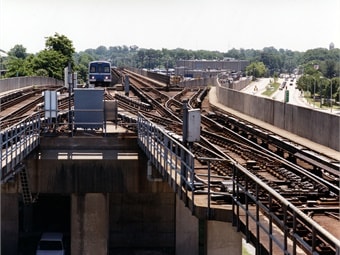
The system shutdown occurred after a popular festival but before the school year started.
Single-track or close stations
The first decision Comfort had to make regarding the project was the most impactful — whether to single-track trains through the repair zone or to bite the proverbial bullet and close stations in the work area.
Each option presented its own set of pitfalls. Single-tracking would allow service to continue, but would drag repairs on for up to a year. It would also increase the potential for major delays due to train or construction equipment breakdown.
Station closure would shorten the service disruption time, but would generate a daunting complexity — how to get more than 10,000 passengers each weekday around the work zone in a safe and efficient manner.
“We decided the 21-day shutdown option was best for our customers and the agency and that we would have to provide a bus bridge to replicate our subway service,” Comfort says. “We developed a two-year plan that would account for every hour of every day until we were back and running normal service.”
Once the closure decision was made in April, it was determined the best window for the shutdown was from the following late July to mid-August — after Baltimore’s massive Artscape festival and before the beginning of the school year.
Materials procurement
It was extremely difficult to implement the design and advertise the project in a conventional form within 16 months before construction start, so the agency decided to procure all the repair materials itself.
The decision was made to divide material procurement into seven contract packages for direct solicitation from suppliers. This decision resulted in a shorter bid process, avoided general contractor involvement and markup, and minimized the cost of the materials.
Under the contracts, all the materials had to be shipped to Baltimore sites before a May 30 deadline or liquidated damages would be enacted.
“We made it happen by monitoring the process, arranging kickoff meetings, conference calls, and follow-up with the suppliers,” Al Khatib says. He added that the MTA inspected, accepted advanced procured materials, and turned them over to the selected contractor for installation.
The requirement of laydown inspection for the special track work at the supplier’s plant was made as part of contract documents and resulted in inspections as far away as Chicago Heights, Ill. and Cheyenne, Wyo.
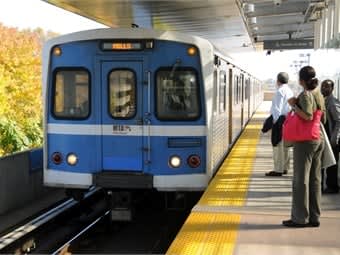
‘Bus bridge’ creation
While the construction/engineering side of the project progressed, the other key aspect of the project — the creation of a “bus bridge” — was taking root.
The bus bridge (or bus shuttle) would mirror the regular Metro Subway route and transport riders, via bus, to each of the closed stations on the regular subway schedule.
A contract solicitation was prepared and issued for a single provider to provide all management and operational services of the bus bridge.
The scope of work sought out a firm to provide the drivers, staff, and vehicles needed to handle the ridership. Because it was summer, the MTA required that all vehicles have air conditioning and be 100% ADA-compliant.
While MTA gave estimates as to the number, age, and capacity of vehicles needed for this project, the contractor would be responsible for distribution of the work through the creation of their own “run cut.”
But even with the rather flexible nature of the offering, the MTA found many charter and commuter bus service companies unable to respond to the bid, which had to be reissued.
The problems: upcoming national political conventions in Cleveland and Philadelphia dried up the market of available bus companies and the 100% ADA-compliance requirement was burdensome.
Little could be done about the political conventions, but because the expected demand for ADA-compliant vehicles was thought to be minimal, the requirement was lifted. Instead, the MTA would supplement any additional need through the use of its paratransit system vehicles as a backup.
Using the existing MTA Mobility contractor, additional ADA-accessible vehicles were scheduled to be on-call as needed to respond to any need over and above what could be provided by the contractor.
The redrawn request for proposal drew a single responsive bid from a firm proposing the use of school buses. After requesting a best and final offer, MTA staff recommended awarding and executing the contract.
No issues were left to chance. To provide comprehensive service to all passengers to and from all five impacted Metro Subway stations, the plan was developed to establish both local and express bus bridge routes.
Traditional, social media
The MTA also used “Transit Ambassadors” from a private contractor who passed out informational fliers and directed customers in need of assistance how to travel the subway system route during the station closure.
Press releases were distributed to news media outlets throughout the region well in advance of the closure to publicize how it would affect passenger travel time through the system.
But while reaching out to traditional media outlets served its purpose, it may have been the outreach on social media that provided the best connection with customers on the rail closure.
Weeks before the closure, the MTA produced and posted links to a video on the agency’s social media platforms (Facebook, Twitter, YouTube, Pinterest, Instagram, Tumblr, LinkedIn, and Snapchat) explaining the need for the shutdown and how customers could best work around the closures.
MTA staff also closely monitored both Facebook and Twitter — swiftly answering customer questions about the closure and bus shuttle.
Comfort also pointed to support he received from Maryland Transportation Secretary Pete Rahn and his staff in clearing logistical hurdles for getting his plan off the drawing board and into operation.
“We understood some people would be opposed to closing the stations for that length of time,” Comfort says. “But when we made the decision and got the support of the Secretary (Rahn), it made the entire process run much smoother because it had the stamp of approval from our leader.”
To manage expectations of the public, it was recommended that passengers allow “up to an hour” of additional travel time per trip to arrive at their destination on time. However, in reality, most delays were far shorter than 60 minutes even during morning and afternoon rush hours.
Operational committee formed
An internal MTA operational committee was formed, including all departments that were effected and who would support this operation. Weekly meetings were scheduled and department heads were invited to attend.
Meeting topics ranged from setting the number of MTA police officers needed at staging areas to gauging whether social media posts conveyed the most updated information on the bus bridges, to checking if Baltimore-area high school, college, or Baltimore Orioles baseball games would be seriously affected by the station closures.
In short, sufficient time was provided to complete all tasks and address any unforeseen problems. So, no last-minute decisions were needed on any critical mission item.
“While the MTA contracted out the operation of these services, the MTA never contracted out its management and oversight of these services to our passengers,” Comfort says. “Because the MTA remained engaged and involved in all aspects of the service throughout the shutdown, the contractor was responsive to all service needs.”
During the bus bridge operation, there were no preventable accidents, no passenger or employee reported injuries, and no major crimes committed on the bus shuttles. All that while transporting approximately 15,000 passengers each weekday.
Paul Shepard is a public information officer at the Maryland Transit Administration.
Subscribe to Our Newsletter
More Rail
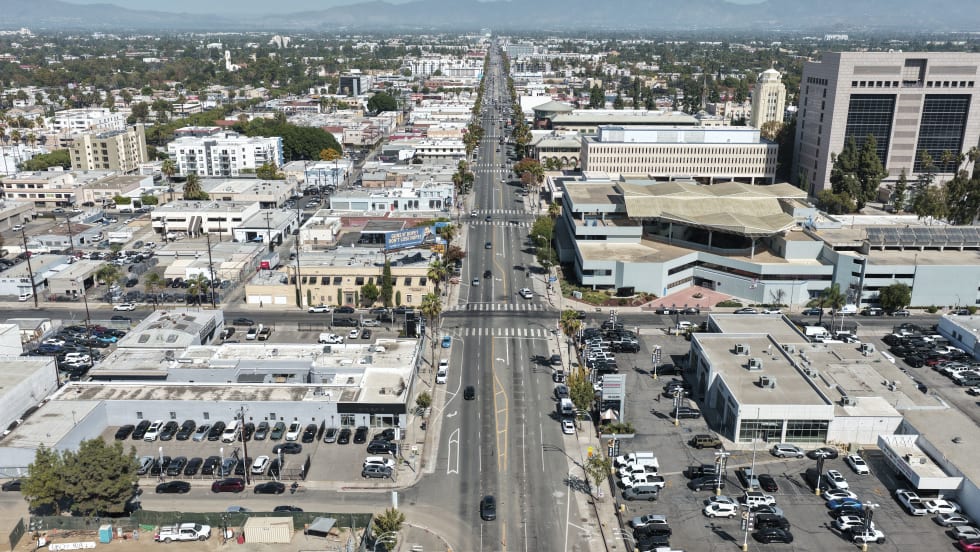
LA Metro Breaks Ground on East San Fernando Valley Light Rail Project
The 6.7-mile line will add 11 stations along Van Nuys Boulevard, expand access to jobs and regional transit connections, and support Metro’s broader efforts to improve mobility as rail ridership grows.
Read More →
CSA Group Releases Climate Resilience Standard for Transit, Passenger Rail
Developed with support from the Standards Council of Canada, CSA D700 guides assessing climate-related risks and planning adaptation measures for transit and passenger rail systems.
Read More →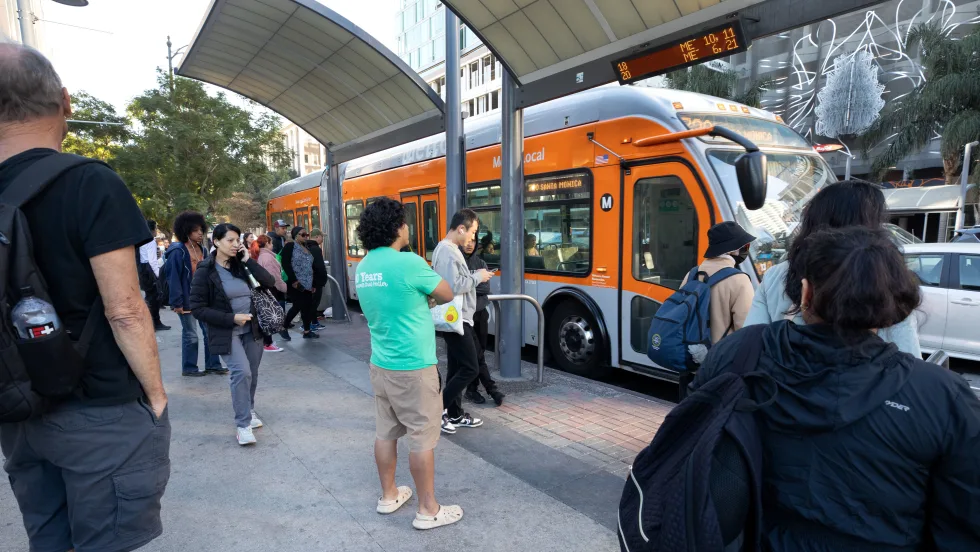
LA Metro September Ridership Climbs 3.9%, Led by Rail Growth
The agency recorded more than 27.2 million boardings, with rail ridership increasing 12.4% year over year and the D Line posting the largest gains.
Read More →
First Full MetroLink Rail Expansion Completed in 20 Years with $192M Airport Project
The project links two St. Louis-area airports by light rail while adding roadway and bike trail connections to improve regional access and mobility.
Read More →
Utilimarc Launches SmartReplace to Optimize Fleet Replacement Decisions
AI-powered SmartReplace helps fleets prioritize vehicle replacements, model budget scenarios, and build more defensible long-term strategies.
Read More →
Scenes from APTA TRANSform & EXPO 2026
Transit leaders, manufacturers, and industry professionals gathered in Chicago to explore new technologies, share ideas, and discuss the future of public transportation.
Read More →
USDOT Awards $416 Million for Florida Rail Crossing Safety Upgrades, New Brightline Station
The projects aim to reduce risks for motorists and pedestrians at rail crossings while expanding passenger rail access along Florida’s Space Coast.
Read More →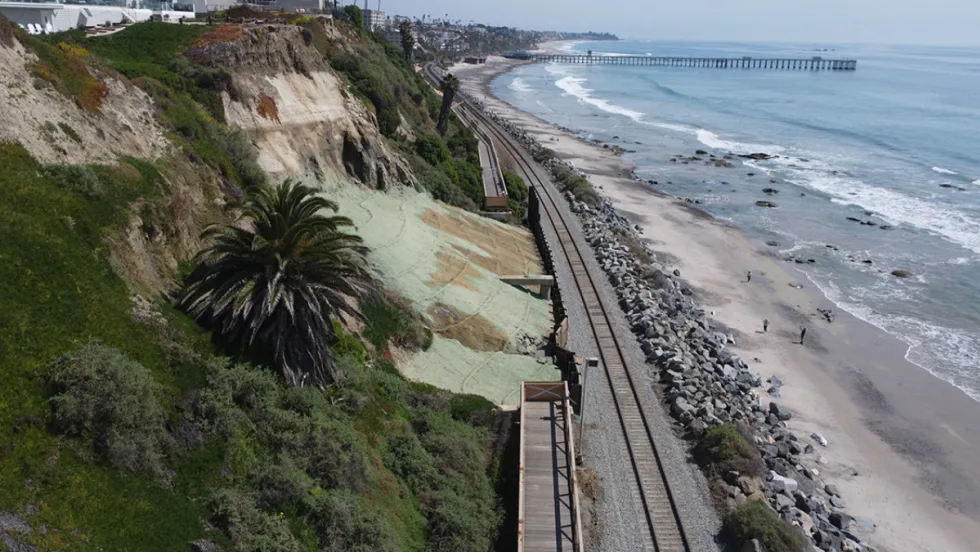
OCTA Declares Emergency to Protect Rail Corridor From Coastal Erosion
The California agency is accelerating shoreline protection and plans to place approximately 690,000 cubic yards of sand along the San Clemente coast to protect a key passenger and freight rail link.
Read More →
More Than a Summer Job: Building the Next Generation of Transit Talent
The Delaware River Port Authority and PATCO have transformed their internship program into a hands-on professional development experience that introduces students to the breadth of transportation careers — and creates a pipeline for future employees.
Read More →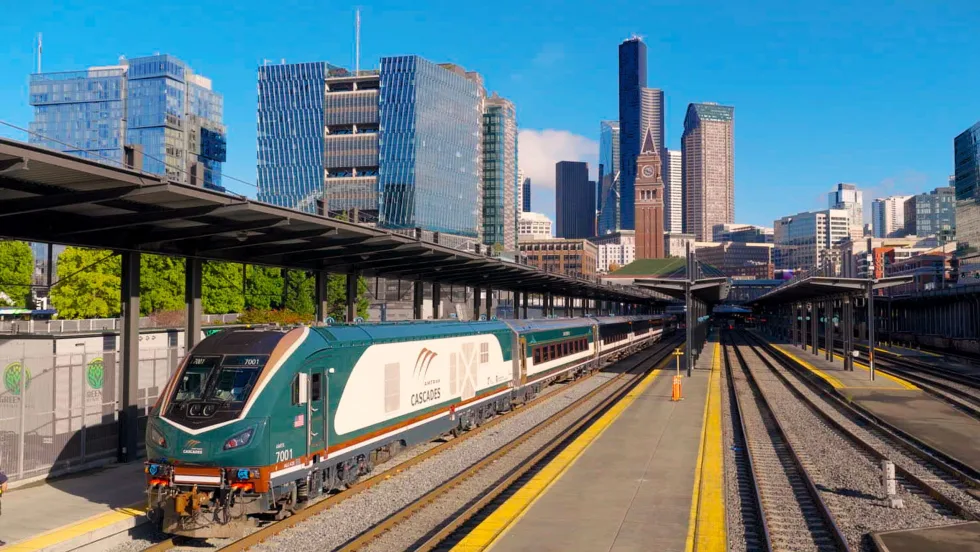
Airo Trains Make Their Amtrak Cascades Debut in the Pacific Northwest
Effective immediately, two cutting-edge Airo trainsets will join the Amtrak Cascades route, operating four daily trips between Vancouver, B.C., Seattle, Portland, and Eugene, Oregon, marking the first introduction of Airo trains into passenger service anywhere in the country.
Read More →