



Apprenticeships Help Relieve Transportation's Technician Shortages
Apprenticeships strengthen classroom training by engaging students, taking what was learned in the classroom, and applying it directly to specific job tasks.
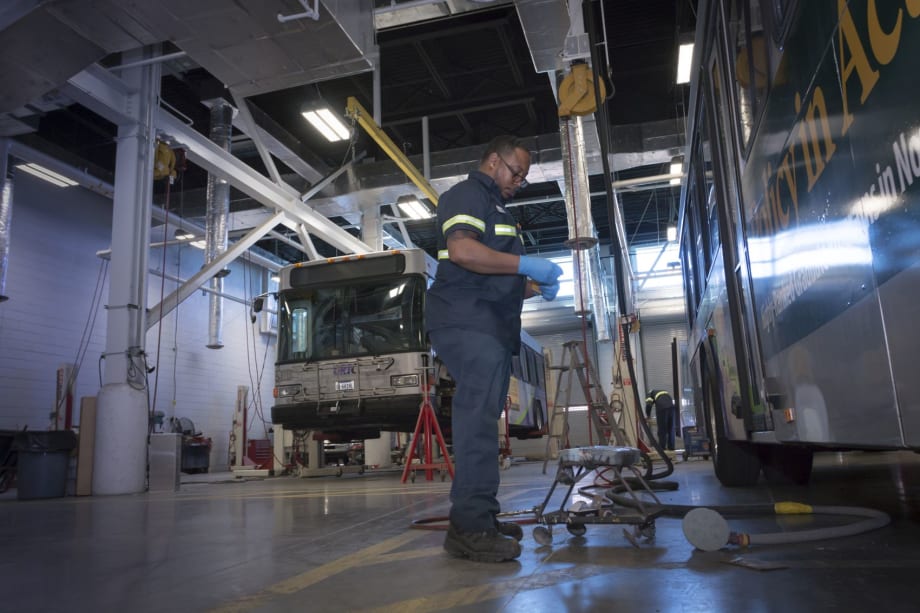
Apprenticeship strengthens classroom training by engaging students, taking what was learned in the classroom and applying it directly to specific job tasks.
GRTC
Apprenticeship strengthens classroom training by engaging students, taking what was learned in the classroom and applying it directly to specific job tasks.
GRTC
The use of apprenticeships to transfer skills from one generation to the next dates back to ancient Egypt, Rome, and Greece. In early America, the practice of training younger workers through apprenticeship was carried over from England and other European countries where master craftspeople worked side by side with apprentices. When apprentices achieved the status of craft workers they became accepted as highly regarded members of society.
Times have changed. Gone are the negative aspects of this traditional form of learning, where apprentices became indentured to serve a master without compensation for several years in exchange for learning a trade. Unfortunately, some positive aspects of apprenticeship have also diminished such as the time-tested process of learning by doing, the hallmark of an apprenticeship program. Too many instructors have replaced hands-on learning with PowerPoint presentations, somehow believing that three days of lecture will somehow translate into the ability to tune an engine or adjust doors.
Classroom instruction certainly has its place, but is ineffective when done in excess. There’s an old adage that applies to technical training: “Teach me I forget. Show me I remember. Engage me I understand.” Apprenticeship strengthens classroom training by engaging students, taking what was learned in the classroom and applying it directly to specific job tasks.
In an effort to revitalize apprenticeships, the Department of Labor (DOL) in 2015 awarded American Apprenticeship Grants to 46 public-private partnerships. The winning grantees will train and hire more than 34,000 new apprentices in industries such as health care, IT, and public transportation. The Transportation Learning Center was selected to develop and implement registered apprenticeship programs in five transit occupations, including transit coach operator, rail vehicle maintenance, rail signals maintenance, transit elevator-escalator maintenance, and bus maintenance. The Center, based in Silver Spring, Md., (www.transportcenter.org) is a non-profit national organization that develops and supports technical training partnerships for front-line workers in public transportation, primarily technicians and vehicle operators. Since 2001, the Center has also supported training partnerships in 12 states, developed national training standards for six frontline occupations, established industry-wide consortia for developing training materials, and established several Career Pathways programs.
Establish guidelines
Regarding bus maintenance apprenticeship, the Center has established a national joint labor-management committee to advance apprenticeships according to established DOL guidelines. Subject matter experts (SMEs) from 18 agencies have developed a comprehensive bus maintenance apprenticeship framework, approved by DOL, that agencies can use to establish a three-year registered apprenticeship. The bus program is competency based where candidates can opt out of certain training if they demonstrate proficiency, thereby shortening the program’s duration. Likewise, apprentices who complete learning modules are required to demonstrate an ability to perform key tasks before progressing. Like all DOL-sponsored apprenticeships, the program is designed with flexibility, allowing agencies to benefit from the national guidelines but tailoring them to address individual agency needs and resources.
The Bus Maintenance Apprenticeship Framework consists of 10 job functions encompassing essential competencies that apprentices must master to become a journey-level technician. Job functions include all major bus areas such as electrical and electronics, steering and suspension, propulsion, and more. Tasks associated with each job function are based on learning objectives developed under a joint program with APTA and the Center, and task lists contained within the Automotive Service Excellence (ASE) transit bus program. Upon completion of the training, which consists of about two-thirds OJT and one-third of related instruction (classroom, labs, etc.), apprentices receive nationally recognized certificates of completion.
The Center’s role under the DOL program is to develop national apprenticeship standards that agencies would then use to become formally registered with the DOL or an approved state apprenticeship agency. Achieving registered status is important because it recognizes the agency’s apprenticeship training as meeting industry adopted standards, and assures that bus technicians are adequately prepared for their many work responsibilities. Additionally, agencies that register their apprenticeship programs may be eligible for tax credits and other funding.
The process to develop a registered-apprenticeship program requires some effort at a time when agency resources and staffing are already stretched thin. But given the growing complexity of today’s buses coupled with the growing shortage of skilled technicians, transit has little choice but to grow their own. Gone are the days where a once-simple diesel engine powered a bus with a basic electrical backbone. Today’s transit bus is a complex mixture of mechanical and electrical/electronic systems that require specialized skills to repair and maintain.
Technology onslaught
The onslaught of new technology comes at a time when senior technicians are retiring in droves and replacements are becoming increasingly scarce, leaving agencies scrambling to supply road-ready buses to meet peak service demands. Transit has
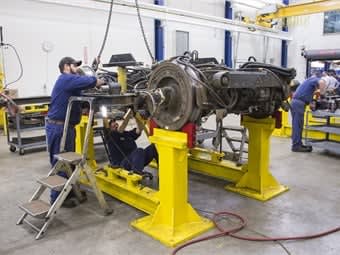
At Metro Transit in Minnesota, more than half of its bus technicians are above the age of 50, mirroring a trend seen across the transit industry.
Metro Transit
the highest percentage of aging workers in the U.S. among all industries, 35% are over the age of 55. At Metro Transit in Minnesota, more than half of its bus technicians are above the age of 50, mirroring a trend seen across the transit industry. But not to worry, there are plenty of skilled bus technicians ready and willing to take their place. Not! Subsequent generations have a diminishing regard for things mechanical, choosing instead to work on computers and IT. This bodes well for maintaining buses because so many of the systems are electronically controlled, but making the match has not proven easy. Bus work is still dirty and work schedules typically revolve around nights and weekends.
Furthermore, car, and truck shops that compete for the same limited pool of younger workers are far more successful at recognizing the labor shortage and taking steps to mitigate it.
There are several steps needed to achieve registered apprenticeship status, but they’re not onerous. First, top labor and management representatives from the agency must commit to the program. A joint apprenticeship committee (JAC) of SMEs is formed with equal representation to develop local standards (joint agreement) that determine how the apprentice program is structured (i.e., apprentice and mentor selection process, work hours, wage progression, etc.) and the training program’s content (i.e., work process schedule, OJT and classroom coordination, etc.). The final step is to formally register with DOL and launch the program.
Assistance is available from a number of sources. Partnering with local community colleges helps share the training load and can offer college credits, while representatives from the local DOL office of apprenticeship are available to guide agencies through the registration process and offer assistance after the program is underway. The Transportation Learning Center is also available to help with DOL registration, assist with developing the joint labor-management agreement and work process schedule, and provide onsite mentor training.
There are several benefits to forming a registered-apprenticeship program for both sides. Because their training program meets national industry standards, agencies get assurances the candidates that pass through their program are properly trained to adequately maintain the fleet. Increased skills resulting from the training also increases productivity and reduces service interruptions. Apprentices receive a technical education with little or no debt, have the potential to earn college credit, and are given a long-term career opportunity with increased wage potential.
The prospect of undertaking a registered apprenticeship program to thoroughly train technicians may appear daunting to some. So too is the reality of trying to maintain a fleet of modern transit buses with an understaffed and undertrained workforce. A structured program of learning where classroom instruction is followed by OJT mentor training is an effective and proven way to transfer skills. After all, the pool of experienced technicians is not likely to increase, nor are transit buses likely to get less complex over time.
John Schiavone is Program Director at the Transportation Learning Center. He will discuss apprenticeship programs at the Transit Maintenance Forum, which will be held in conjunction with BusCon 2018 in Indianapolis Oct. 1 to 3.
More Bus

New York MTA Plans Largest Bus Fleet Upgrade in More Than a Decade
The agency is seeking manufacturers for 650 new CNG buses to replace aging vehicles, improve reliability, and advance its broader fleet modernization strategy.
Read More →
Building a Flexible Path to Transit Electrification
John Hroncich discusses BAE Systems’ modular and scalable approach, lessons learned from decades of real-world operations, and how agencies can identify electrification strategies that fit their fleets.
Read More →
Bus Tech Talk: Keeping Transit Technicians Ahead of the Technology Curve
LA Metro’s Obed Mejia discusses technician training, evolving maintenance technology, fleet replacement, and strategies for getting the most out of today’s transit fleets.
Read More →
Biz Briefs: RIPTA Unveils New Frontrunners, Clevland RTA Adds New Siemens, and More
In METRO's latest installment, we take a look at recent news from Siemens, Prevost, Dodge, and more partnerships making headlines across the transportation sector.
Read More →
People Movement: Holly Arnold Joins Transdev and More
In this edition, we also cover recent appointments and announcements at Pace, CamTran, MCI, and more, showcasing the individuals helping to shape the future of transportation.
Read More →
The High Cost of Transit Buses: Industry Leaders Look to Procurement Reform
Transit leaders and policymakers examine how standardized bus designs, streamlined procurement, and predictable funding could help agencies stretch budgets and deliver better service.
Read More →
The Business Voice Behind Public Transportation
As chair of APTA’s Business Members Board of Governors, Ray Melleady explains how more than 850 business members are partnering with transit agencies to advance funding, innovation, and industry-wide collaboration.
Read More →
From Surviving to Thriving: Building Stronger Transportation Organizations
Bus Business Consultants founder Brian Dickson shares lessons on leadership, organizational health, and creating options for long-term success in a changing transportation industry.
Read More →
Finding the ‘Happy Medium’: Optimizing Maintenance Without Sacrificing Reliability
The key to maintenance optimization isn’t doing less work—it’s doing the right work at the right time on the right assets.
Read More →
LA Metro, City of West Hollywood, and Partners Advance Smarter Bus Lane Enforcement
The award-winning partnership combines AI-powered detection with human oversight to improve bus reliability, accessibility, and enforcement efficiency.
Read More →