



BART launches mobile seat lab to elicit customer feedback
The mobile seat lab took several months to create and contains four stations, each equipped with several different seats.
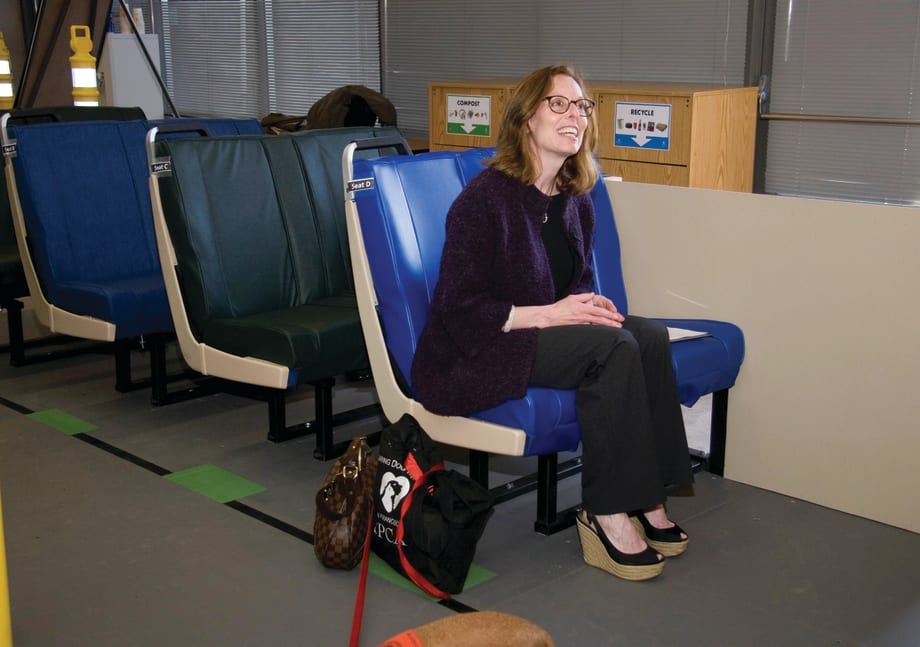
To include user input, the agency has created a mobile seat lab where visitors can test out different seats and provide feedback on their favorites.

The Bay Area Rapid Transit District (BART) is offering its riders a unique opportunity to have their say in the transit agency's $3.4 billion "Fleet of the Future" plan to replace its existing train cars.
To include user input, the agency has created a mobile seat lab where visitors can test out different seats and provide feedback on their favorites. So far, the response has been "overwhelming," said Linton Johnson, BART chief communications officer.
With issues such as dated technology and strain from increased ridership, BART plans to replace the current fleet of A2/B2, C1 and C2 train cars with at least 700 to 1,000 new energy-efficient train cars. Maintenance also has been an expensive issue, considering that many of the parts are not only scarce but also out of production.
"I see this as a fantastic opportunity to actually look at a number of different designs," said Janet Abelson, chair of BART's Accessibility Task Force. "It's been a really long time since BART has had an opportunity to update and upgrade the seating."
Many of the train cars currently in the fleet have been running since BART's establishment in 1972 and are the oldest in the nation, with an average age of about 30 years. Some of the vehicles were refurbished in the late 1990s, but the fleet is nearing the end of its useful lifecycle.
"[The seat lab] was the brainchild of our chief marketing officer, Aaron Weinstein, who is in charge of ensuring that our customers have a big voice in the design of the Fleet of the Future," Johnson said. "It will be [customers], their children and their grandkids who will be riding the train cars for the next 40 years."
The mobile seat lab took several months to create and contains four stations, each equipped with several different seats. One of the stations showcases different seat heights, another showcases widths, and a third station showcases different legroom and area volumes, Johnson explained. The fourth station features three seats from other transit agencies for comparison.
"I think that everybody should have the opportunity to come out, really sit in the seats, see the closeness of the legs, see the new design of the trains [and] see the customer-friendly train that [BART is] trying to put together," said Courtland "Corky" Boozé, Richmond city councilmember.
The mobile seat lab will visit all nine BART districts and incorporate feedback from visitors, via interviews and surveys, into the design process. The agency has currently received project proposals from five companies - Alstom Transportation, Bombardier Transit Corp., CAF USA Inc., China South Locomotive and Rolling Stock Corp. Ltd., and Hyundai Rotem USA Corp. - and expects to award a contract in 2011.
The first mobile seat lab stop was held May 1, though the tour to the other eight districts will continue through the year.
"There are more labs to be done," Johnson said. "This is just the start of the conversation."
More Paratransit

Driving Smarter Paratransit
John Hanlon shares how AlphaRoute is leveraging AI-powered technology to help paratransit providers optimize operations, support frontline staff, and enhance the rider experience.
Read More →
METRO Magazine Announces 2026 Innovative Solutions Awards Winners
Projects Recognized for Advancing Mobility Through Technology, Accessibility, Workforce Innovation, and Operational Excellence
Read More →
Biz Briefs: STV teams with Amtrak, Motorcoach Operators Boost Fleet and Land Contracts, and More
From manufacturers and suppliers to transit agencies and motorcoach operators, these updates offer a snapshot of the projects, partnerships and business moves driving the industry forward.
Read More →
Biz Briefs: Masabi Teams with St. Louis Metro and More
In METRO's latest installment, we take a look at recent news from Transdev, Hitachi, and more partnerships making headlines across the transportation sector.
Read More →
New York MTA Leverages Zoning Program to Advance Station Accessibility
Accessibility enhancements at Nevins St Station will be financed through a development agreement tied to the MTA's Zoning for Accessibility initiative.
Read More →
Reinventing Fleet Maintenance with Real-time Visibility and AI
Transit leaders need to know what needs fixing, where to look, who is responsible, when work is completed, and what it costs without having to chase information across disconnected systems.
Read More →
SamTrans Sets Priorities for Potential Connect Bay Area Revenue
The board-approved framework allocates future funding to maintaining service, rider improvements, equity initiatives, and infrastructure repairs.
Read More →
Chicago's NITA Act Moves Into Next Phase as Service Improvements Begin
Rider-focused improvements will begin rolling out across the system immediately as CTA, Metra, and Pace increase service this summer in the six-county region.
Read More →
2026 METRO Buyer’s Guide & Directory
Searching for the right vehicles, technology, equipment, or services for your public transit or motorcoach operation? This industry guide brings together manufacturers and suppliers from across the transportation market — all in one place. Download it to connect with the companies that help agencies and operators improve mobility, enhance operations, and move their organizations forward.
Read More →
Rays the Mark Foundation to Honor CDTA’s Emily DeVito at October Fundraiser
Event at Chicago-area Ravisloe Country Club will support DeVito, a transit employee and mother of twins battling kidney failure and awaiting a transplant.
Read More →