



Daimler Begins New Era of Leadership, Innovation
Continued success and innovation are on tap for new President/CEO Richard Ferguson’s regime, as the company prepares to roll out vehicles with engines that meet EPA 2010 standards and, down the road, looks to introduce new innovative vehicles.
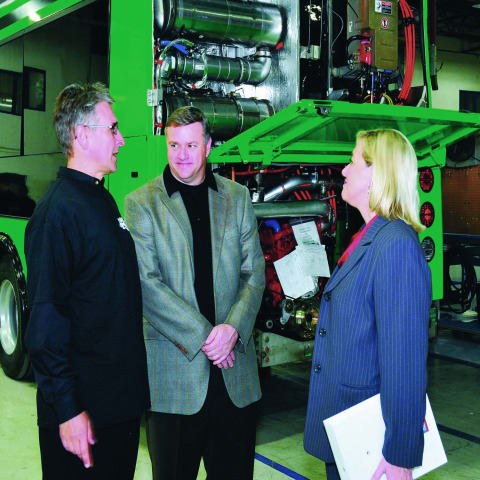
[IMAGE]MET1daimler-.jpg[/IMAGE]Since taking over as President/CEO of Daimler Buses North America, Dr. Andreas Strecker helped the company more than triple its revenue, - from $188 million in 2001 to $650 million in 2009 - successfully introduced three new products to the market and grew the company's customer base. During his tenure, Daimler also became the first manufacturer to have orders for more than 3,000 hybrid transit buses. Dr. Strecker, who stepped down from his position on Dec. 31, 2009 to pursue other professional assignments, reflects on the success of the last few years, while his predecessor Richard Ferguson discusses navigating the company into the future.
Can you discuss some of the initiatives that helped grow Daimler's business?
Dr. Andreas Strecker: Certainly, it starts with products. If you have good products, many issues can be overcome. Basically, we introduced three new main products - the first is the Setra S 417, which redefined luxury travel in the marketplace. We also launched a new low-floor transit bus - the Orion VII - and a successful, now world leading diesel-electric hybrid version, which was the first bus worldwide to use Lithium-Ion batteries in series production. Our last product introduction was the Sprinter shuttle bus, which is also in a class of its own when it comes to fuel consumption and design quality. It's not a cutaway, but it's a uni-bodied design that is very robust and, on the same token, very lightweight. It also has a very modern, clean-diesel engine that is fuel efficient - in fact, head and shoulders above the competition.
The next focus is our customers. You need someone to purchase your vehicles and, for us on the transit side, we relied on New York City and Toronto in the beginning. They each placed very sizable orders over the years, which bought us time, so to speak. While building these large, similar orders, we were able to work toward gaining efficiencies and optimizing our production processes. In the past, Orion had issues in handling multiple orders at the same time. With all of our internal improvement programs, we were able not only to build a better, more reliable bus, but our entire production process is now more efficient. This allows us to offer customers a premium, yet competitively priced product, and many other customers came onboard like Houston, Ottawa, San Francisco and, now, also Seattle. These new orders came at a good time because we needed to diversify, and we did so successfully.
How was the company able to reach the market? Was it basically through these long-term customers?
Strecker: We had to gain, or regain, the confidence of our customers. In the early days, Orion was notorious for delivering late. When I came onboard, this was the first issue that we had to address to become successful in the transit market. My team worked on our internal processes, focusing on the basics: building the product properly, developing work instructions on how to build it and creating reliable production schedules. This not only helped our customers, but we are now very competitive within the industry. We partnered with our colleagues in Germany, who build transit buses as well - in fact producing the most worldwide. We compared how they built buses, what processes they used, how much time they needed and then introduced the lessons learned out of these benchmarks. We were fortunate to have this experience, and it helped us a great deal. I think it was the first time that Orion had the chance to get the help and resources that were never available when it was a family-owned company.
Of your accomplishments during this time, what would you say is the one you are most proud of?
Strecker: I am most proud of the fact that we took four entities that were completely independent and all losing money, and turned things around. Most experts would have thought that we were crazy to take four struggling entities and attempt to not only improve them but ensure that they are all working as one company. It is quite rare these days, but we did it. We were able to build one company, with one vision and with a great team of people. We share resources and experiences across multiple brands and products - Setra, Orion and Sprinter - which in turn produces higher quality products, services and an improved customer experience.
From a more personal standpoint, the one accomplishment that I am most proud of is that when I started, Orion was not very well regarded within the market because of late bus deliveries. Now, to have Orion as the largest builder of hybrid buses worldwide is something that I am very proud of.
Can you discuss how the industries you serve have changed during your tenure?
Strecker: The amount of sophistication of the products is ever increasing. For example, now the Orion VII hybrid has Lithium-Ion batteries. We have numerous electronic components and controls on the bus that require a completely new level of qualifications in engineering as well as in production. Our people have to install these new innovations and ensure their operation. Furthermore, our customers now have to maintain this latest technology. In the future, even more electric accessories will be introduced in our products, including air-conditioning, air compressors and steering pumps. These innovations will allow the bus to drive some distance only on battery power. This trend will not be reversed. And, the qualification level will be further increased for everybody involved.
On the motorcoach side, things like wireless Internet, satellite TV, electronic vehicle tracking and preventive maintenance information systems are all available for motorcoaches. In fact, many are standard features these days and were all developed only in the last four to five years.
The level of our own sophistication within the market is also increasing. I've seen customers keeping up with the latest trends, encouraging new technologies and professionally engaged within the market. The days where you simply took a customer golfing and a contract was signed on the ninth hole are over. We have to prove our product can make money for the customer and this holds true for all markets - transit, motorcoach and shuttle bus. Therefore, we have to tailor our marketing and sales approach toward these requirements.
[PAGEBREAK]
Rich, with all of these accomplishments and benchmarks that Andy has set during his time, how do you feel about filling his shoes?
Rich Ferguson: You have to remember that I was with the company during the more difficult times right after Daimler acquired Orion - so this industry is not new for me. My initial approach will be to build off of the camaraderie and team spirit that has evolved over the years within the organization. We will continue to face challenging economic conditions across all markets. In 2009, our motorcoach and shuttle bus segments were already impacted, but we are starting to predict a similar experience for the transit market in 2010 as well. This is all occurring at the same time we are launching cleaner-air technologies, using EPA 2010-certified engines for all three products. We must take the building blocks that Andy provides and move forward with the next round of innovations and, later, new products that are on the near horizon.
I'm very excited to be back, and it's a unique and exciting time within the industry and our business, for that matter. I'm very proud to have been chosen to come back and work with the team.
Aside from what you discussed is there a goal you have set for yourself in taking this position?
Ferguson: You have to look at things kind of short, medium and long. Short term, the most important thing is what we just chatted about, which is bringing to the market the EPA 2010 engines in all three product lines. We also have a challenge as it relates to the Sprinter side of the business. Everyone is well aware of what's happened to the Dodge dealer network, and now we have two new dealer networks that we'll have to work with - Freightliner and Mercedes-Benz. Then, the next thing is determining what's the long-term product positioning of Orion strategically looking out a number of years, and what are the products that we need to continue to innovate and bring to our customers to make them successful.
How do you size up the competition? Do you see something that somebody is doing that is going to really force the company to step up a bit more?
Ferguson: We've always been an industry leader since Andy came in. What we need to do is to figure out how we can put together a trendsetting product line that further reduces weight; improves fuel economy; and brings even greater benefits to all of our customers, whether it's coach, minibus or transit. From my perspective, while you look to the competition as a guideline, we have a unique advantage because we are part of a worldwide organization - Daimler. We can partner and learn from our colleagues using successes found in automotive, truck and bus products around the world and bring these successful solutions to North America.
There are rumors that you may release new things out to the market. Is there anything you can reveal at this time?
Ferguson: Folks know that we're looking at an expanded Setra product line; however, we just aren't quite ready to talk about what's coming just yet. On the minibus/shuttle side we need to review what our customer needs are, mostly as it relates to capacity and what the new distribution network for the Sprinter will bring us. On the transit side, an expanded product line beyond just the 35-foot and 40-foot versions would definitely enhance our ability to meet our customers' needs.
Andy, have you given any advice to Rich about the future?
Strecker: Absolutely. We have grown our revenue, from under $188 million to $700 million. We are profitable, and our employees are very proud of our accomplishments over the last eight years. My advice to Rich is to certainly not be content with the status quo and to keep moving forward to the next level. You have to further adapt our processes and prepare the company for future products. For example, when Setra introduces the next motorcoach, you'll need to ensure the infrastructure is in place to support the additional volumes. The same holds true for Orion when new products are later introduced. Your production locations have to be able to carry the additional volumes. The road to future success at Daimler Buses won't be boring, this I can predict.
With the current economy the way that it is, how do you feel it's going to impact the industries that you serve?
Ferguson: From my standpoint, the difficult economic environment that we've operated in for the last 18 months or so is already impacting the coach and Sprinter side of our business. From the transit side right now, in many municipalities they have positioned themselves with some dollars from the stimulus funding this year, but we are already seeing announcements from major transportation entities about budget shortfalls. The downturn is just being felt at the state and local municipal transit levels. I think we are still well positioned with all of our products; our cost structure; our backlog and, as Andy alluded, the confidence in the management team and the excitement and involvement of all of the employees. Because of that, we will pull together and move Daimler Buses North America forward.
More Bus

SEPTA Details Accelerate Vision for Transit System
The plan outlines investments in trolley modernization, new Metro and Regional Rail vehicles, accessible stations, and more frequent bus and rail service.
Read More →
Report: Transit Bus Manufacturing Supports 34,100 Jobs, $5.1B in GDP
The “Buses Mean Business” report examines the transit bus manufacturing industry’s economic footprint, supply chain, and rising demand for vehicle replacements.
Read More →
Biz Briefs: New Flyer Delivers in Columbus, Houston, Beep and Freebee Merge, and More
In this edition of Biz Briefs, we spotlight the latest developments shaping the future of mobility.
Read More →
People Movement: Dan Dipert Coaches Adds Third-Generation Leader, Keolis Names New Valley Metro VP/GM, and More
In this edition, we also cover recent appointments and announcements at the Wabtec, SilverRide, HNTB, and more, showcasing the individuals helping to shape the future of transportation.
Read More →
New York MTA Plans Largest Bus Fleet Upgrade in More Than a Decade
The agency is seeking manufacturers for 650 new CNG buses to replace aging vehicles, improve reliability, and advance its broader fleet modernization strategy.
Read More →
Building a Flexible Path to Transit Electrification
John Hroncich discusses BAE Systems’ modular and scalable approach, lessons learned from decades of real-world operations, and how agencies can identify electrification strategies that fit their fleets.
Read More →
Bus Tech Talk: Keeping Transit Technicians Ahead of the Technology Curve
LA Metro’s Obed Mejia discusses technician training, evolving maintenance technology, fleet replacement, and strategies for getting the most out of today’s transit fleets.
Read More →
Biz Briefs: RIPTA Unveils New Frontrunners, Clevland RTA Adds New Siemens, and More
In METRO's latest installment, we take a look at recent news from Siemens, Prevost, Dodge, and more partnerships making headlines across the transportation sector.
Read More →
People Movement: Holly Arnold Joins Transdev and More
In this edition, we also cover recent appointments and announcements at Pace, CamTran, MCI, and more, showcasing the individuals helping to shape the future of transportation.
Read More →
The High Cost of Transit Buses: Industry Leaders Look to Procurement Reform
Transit leaders and policymakers examine how standardized bus designs, streamlined procurement, and predictable funding could help agencies stretch budgets and deliver better service.
Read More →