



"One of the most critical challenges we see on projects is how to solve the electrical planning phase."
Electrification of bus fleets slowly coming around the learning curve
Siemens eMobility leader talks challenges transit is facing and how it's informing the future toward full electrification.
by Alex Roman, Managing Editor
March 12, 2020
7 min to read
L.A. Metro (bus pictured) adopted a Climate Action Plan in 2012 that seeks to continually lower greenhouse gas emissions, which led to the exploration of electric buses. L.A. Metro
While electric bus pilots are taking off around the nation, the biggest challenge down the road for transit agencies will be ramping up the necessary charging infrastructure to support the addition of these vehicles on a larger scale. METRO’s Managing Editor Alex Roman spoke to John DeBoer, head of Siemens eMobility and Future Grid, North America, about some of the challenges transit agencies have experienced with charging infrastructure in these early stages, as well as some of the key lessons learned as many in the industry continue to move toward full electrification.
What are some of the things transit agencies should know before implementing bus charging infrastructure?
One of the things I'll say is that, and I even admit this from the Siemens point of view, the uptake in bus electrification in the last year has been quite surprising. It was one of our strongest growth areas for the entire eMobility ecosystem that we offer. We offer charging technologies from Level 2 chargers for cars all the way up to 600 kilowatt overhead systems for buses, and our bus transit electrification was our fastest, most diverse growth area.
That being the case, when we look at projects that happen in North America and around the world, there are a few key lessons. Some of them sound basic from a conceptual point of view but can be a real challenge. First, the electrification of transportation is the collision of several powerful industries — industries involved in mobility, electrification, and equipment providers. It involves transit authorities, electric utilities, vehicle OEMs, electrical infrastructure providers, software providers, and engineering organizations. And, all these providers are brought together suddenly to provide a common, seamless infrastructure solution. In parallel, these providers need to introduce and enable a new series of procedures, inform new stakeholders, create new safety systems, and interact with organizations that are unfamiliar.
At the most fundamental level, one of the most critical challenges we see on projects is how to solve the electrical planning phase. So whether we look at cities that have clear commitments toward the electrification of their buses, when you start to do the basic napkin math of what they're talking about, you're talking about significant electrical infrastructure and overhaul for the city — in many cases a power level greater than that of small cities and involving the mobility that is at the heart of the community. For example, New York City recently rolled out its first all-electric articulated bus under its plan to convert the city’s transit agency to a zero-emissions fleet by 2040, a plan that involves thousands of vehicles. These plans require answering critical questions around how to plan, how to budget, and ultimately how to execute.
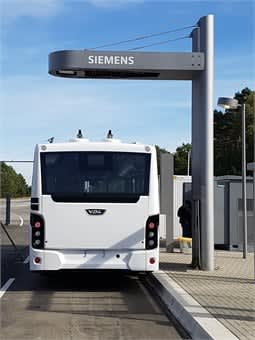
Siemens offers charging technologies from Level 2 chargers for cars all the way up to 600 kilowatt overhead systems for buses. Siemens
In good news, the technologies are there, and the industry is getting smarter. We are moving beyond the days where charging stations are viewed like an appliance. Many clients have established excellent project management teams, but now they're trying to figure out ‘How do I most cost-effectively integrate and scale these systems over time?’ They're learning new things about the performance characteristics of the electric bus, what defines its range, what defines its compatibility, where can it be used, where are certain limitations, how can they use it with minimum impact to route planning and route design. But then, ultimately, how does it become an effective asset in their fleet.
But as a city is dealing with its new vehicle types, a more basic problem arises — how can a vehicle itself connect into infrastructure — ultimately where and how should I plug into the grid. And while the charging itself is the most visible aspect a project, behind the scenes is an important electrical upgrade, the electrical planning, coordination with the utility. And, we need to achieve all these things efficiently in the start and effectively over time. These are some of the challenges that we see kind of on a day-to-day basis as each one of these organizations tries to get their arms wrapped this momentous change and to grow effectively over time
Do you think transit agencies need to have a combination of depot and on-route charging infrastructure?
Absolutely. Sometimes, I hear a philosophical argument from one technology or the other, but at the end of the day, when we take a step back, what we see is an incredible diversity in the needs of different transit authorities. That diversity comes from the nature of the city, from the geography, it comes from the parking lots of where the buses are located, it comes into the routes and how they're planned and designed. What's exciting about the blend of both depot and on-route charging is that you can then build a solution that matches to that unique need. We find it tends to be more cost-effective where you can deploy large amounts of depot charging. We see there's consolidation toward larger and larger depots, and we're also starting to see megawatt-level depots that are now being constructed where you might need to electrify 25, 50, or 100 buses.

John DeBoer
We see the electrical complexity of those sites growing step-by-step. So, this is no longer plugging a single charger on a concrete pad into the grid, but more so considering how you design a complete electrical system and scale it over time. In many cases, you have to have on-route chargers for weather concerns, for instance, which could impact the range of the vehicles. But also, on-route chargers help agencies deal with different elevation, or grade requirements, or different asset optimization routines for the bus.
What are transit agencies overlooking as they seek to integrate electric buses and the necessary infrastructure?
Three things stand out: awareness of the problem being solved, communication, and an attention to the total service life of the system.
I've seen a strong improvement in this, but I think like any new industry, there's a ton of lessons that we're all learning along the way, ourselves included. The first lesson for this industry is that it truly is solving a unique problem. We’ve taken many lessons from the early days of electrifying the car industry, but I think oftentimes the unique challenges of that infrastructure project aren't understood at the onset. The charging infrastructure of a bus or truck depot is some of the most heavily utilized charging equipment in the industry with new and unique timing constraints. Properly setting up a depot for continuous operations requires a new level of design, project management, and coordination.
And, that leads to the second thing that we see as one of the most common lessons to keep working on, which is communication to the new cross-functional set of stakeholders. One of the most critical of those is working with your electric utility. The electrical planning process can oftentimes be something that sneaks up on projects and can take six or more months if not properly coordinated.
The third piece that we run into is the whole industry working through what does the service and support model for electrified transport look like because it's not the same. There are new skill sets that are required, there are new electrical unions that in many cases already have stretched staff that need to be engaged. And so, there's both a cross-training and a new set of skills that are required to both complete the projects, but also support the organization moving forward. So, those are kind of the big three that we see.
Do you feel that initiatives to move to all-electric, like L.A. Metro's 2028 deadline for the Olympics, are realistic, both from the technology standpoint, as well as the time needed to educate agencies and stakeholders?
The typical lifecycle of a metro transit fleet is centered around a 10- to 12-year window, so when we talk about 2028 or 2030, what that really means is 'full change today.' This is the complete overhaul of a fleet in a cycle time that is on par or shorter than their normal replacement plans for the vehicle side.
There are real challenges that must be worked through right now to be able to enable that at scale success of electrified transport. The good news is I think we've gotten over a lot of those early industry and technology hurdles through some pain along the way in the last two years. As an industry, we’re living in an exciting time and are starting down the path of the complete electrification of metro transit.
Subscribe to Our Newsletter
More Zero Emissions
Ohio’s METRO RTA Turns Electric Buses into Mobile Power Sources at PorchROKR
See how three Gillig battery-electric buses powered festival stages while the agency’s new Park & Ride service carried approximately 1,000 attendees, demonstrating another potential use for transit agencies’ electric fleets.
Read More →
CALSTART and Forth Combine to Form Catalyst Mobility
The new name represents a renewed vision for the nonprofit focused on advancing clean, equitable, and affordable transportation solutions that move people and goods.
Read More →
Building a Flexible Path to Transit Electrification
John Hroncich discusses BAE Systems’ modular and scalable approach, lessons learned from decades of real-world operations, and how agencies can identify electrification strategies that fit their fleets.
Read More →
California's VVTA Begins Phased Rollout of Hydrogen Fuel Cell Buses
The agency is introducing 13 zero-emission buses into revenue service while evaluating performance across its urban, rural, and long-distance routes.
Read More →
Inside Look: University at Buffalo Puts First 8 Electric Buses Into Stampede Service
UB, transportation solutions provider WeDriveU, and fleet electrification specialist Zenobē marked the deployment in the presence of students, university administrators, and local officials.
Read More →
Biz Briefs: OCTA Taps Clean Energy for Hydrogen Station, Stadler to Supply Via Rail Vehicles, and More
From manufacturers and suppliers to transit agencies and motorcoach operators, these updates offer a snapshot of the projects, partnerships and business moves driving the industry forward.
Read More →
AC Transit’s Cecil Blandon on Building the Next Generation of Transit Maintenance Leaders
The agency’s maintenance chief discusses leadership, workforce development, zero-emission technology, and preparing technicians for the future of public transportation.
Read More →
CTDOT Taps STV for Electric Bus Facility Design
The firm will work with CTDOT and RVT to define the facility layout, operational requirements, and long-term flexibility for RVT’s growing electric fleet.
Read More →
Chicago’s Pace Deploys 24 Hybrid-Electric Buses in Will County
The new buses reduce emissions and fuel consumption while advancing the agency's long-term goal of transitioning to a fully zero-emission fleet.
Read More →
DASH Breaks Ground on First On-Route Electric Bus Chargers in D.C. Region
The fast-charging infrastructure will help extend electric bus range, improve fleet utilization, and support DASH's goal of transitioning to a fully zero-emission fleet.
Read More →